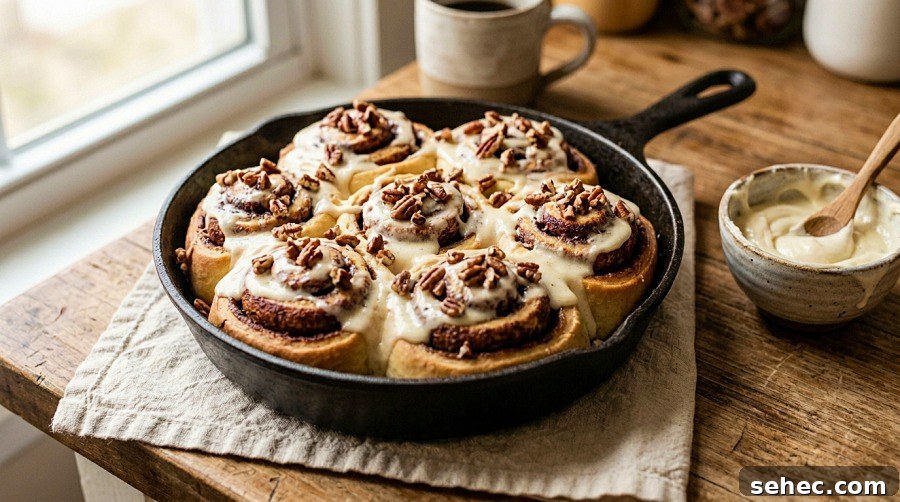
Some weekends feel made for a pan of warm cinnamon buns. The only drawback is that many recipes make twelve rolls, which is a lot if you are baking for a small household. This small batch cinnamon buns recipe gives you six soft, tender rolls baked in one 8-inch pan, with plenty of cinnamon brown sugar filling and a creamy finish on top.
This recipe is designed for mornings when you want homemade cinnamon buns without days of leftovers sitting on the counter. The dough is rich but not heavy, the filling stays tucked inside the swirls, and the rolls bake close together so the sides stay soft and pull-apart tender. It is a manageable recipe for a slow Saturday, a cozy brunch, or a small family breakfast.
Table of Contents
Small Batch Cinnamon Buns Recipe at a Glance
This small batch cinnamon buns recipe makes 4 to 6 rolls instead of a full dozen. It uses about 1 cup of flour, a half packet of instant yeast, and one egg yolk for a soft, balanced dough. The full process takes about 2 hours and 30 minutes, including rising time. Bake the rolls at 350°F until golden, then spread cream cheese frosting over them while they are still warm.
| Detail | Spec |
|---|---|
| Prep time | 25 minutes |
| Rise time (combined) | 1 hr 45 min |
| Cook time | 22 minutes |
| Total time | 2 hr 30 min |
| Servings | 6 buns |
| Difficulty | Intermediate |
| Approx. calories | 385 per bun with frosting |
| Cuisine | American |
The recipe includes two topping options: classic cream cheese frosting and a maple bourbon glaze. You will also find an overnight method, freezing tips, and simple troubleshooting advice for tall, fluffy homemade cinnamon buns.
Why This Small Batch Cinnamon Buns Recipe Works
Scaling down cinnamon buns is not always as simple as cutting every ingredient in half. Small doughs are more sensitive to moisture, flour, and yeast, so the ratios matter.
One egg yolk keeps the dough rich without making it too wet. A whole egg can overwhelm a small batch and leave the dough loose. Using only the yolk adds fat and tenderness while keeping the dough easy to roll and shape.
Warm milk activates the yeast properly. Milk should be warm, not hot. Aim for about 110°F, or use the wrist test: it should feel like warm bathwater. Milk that is too hot can damage the yeast and stop the dough from rising.
Soft butter keeps the filling in place. Melted butter often leaks out as the rolls are cut and baked. Softened butter mixed with brown sugar creates a spreadable paste that stays inside the cinnamon swirls.
Ingredients
For the best texture, bring the egg yolk, butter, milk, and cream cheese close to room temperature before you begin. Cold ingredients can slow the yeast and make the dough harder to mix.
For the dough
- 1 cup (130g) all-purpose flour, plus 1 to 2 tbsp extra if needed
- 2 tbsp granulated sugar
- 1¼ tsp instant yeast, about half a standard 7g packet
- ¼ tsp fine salt
- ¼ cup (60ml) whole milk, warmed to about 110°F
- 2 tbsp unsalted butter, softened
- 1 large egg yolk, room temperature
For the brown sugar filling
- 3 tbsp unsalted butter, softened but not melted
- 1/3 cup (65g) packed dark brown sugar
- 1 tbsp all-purpose flour
- 1½ tsp ground cinnamon
- ¼ tsp vanilla extract
- ¼ cup toasted pecans, chopped, optional
For the cream cheese frosting
- 2 oz full-fat cream cheese, softened
- 2 tbsp unsalted butter, softened
- ¾ cup (90g) powdered sugar
- ½ tsp vanilla extract
- Pinch fine salt
- 1 to 2 tsp milk, if needed
For the maple bourbon glaze (alternative finish)
- ½ cup (60g) powdered sugar
- 1½ tbsp pure maple syrup
- 1½ tsp bourbon, or warm water
- Pinch of salt
Honest notes on swaps
- Whole milk vs 2% milk: Whole milk gives the richest result. 2% milk works well, while skim milk produces a slightly leaner roll.
- Bread flour vs all-purpose flour: Bread flour creates more chew. All-purpose flour keeps these cinnamon buns tender and soft.
- Active dry yeast: Use 1½ tsp active dry yeast. Stir it into the warm milk with a pinch of sugar and let it sit for 8 to 10 minutes until foamy before continuing.
- Leftover yeast: Store any remaining yeast in a sealed jar in the freezer to help it stay fresh for future baking.
Equipment You Will Need
You do not need many tools, but using the right size pan makes a big difference.
- 8-inch round cake pan, 8×4 loaf pan, or 8-inch cast iron skillet
- Stand mixer with dough hook, or a large mixing bowl
- Rolling pin
- Bench scraper, sharp serrated knife, or unflavored dental floss
- Instant-read thermometer, optional but helpful
- Parchment paper
An 8-inch pan keeps the rolls close enough to rise into one another, creating soft sides and a tender pull-apart texture. A pan that is too large can make the buns bake up drier around the edges.
How to Make Small Batch Cinnamon Buns
Step 1: Mix the dough (10 minutes)
In the bowl of a stand mixer fitted with the dough hook, whisk together the flour, sugar, instant yeast, and salt. If you are using active dry yeast, proof it in the warm milk first.
Add the warm milk, softened butter, and egg yolk. Mix on low speed for about 1 minute, until the dough looks rough and shaggy. Increase the speed to medium and knead for 5 to 6 minutes, until the dough becomes smooth and pulls away from the sides of the bowl.
The dough should feel soft and slightly tacky, but it should not cling heavily to your fingers. If it is too sticky, add flour 1 tablespoon at a time. Turn it out onto a lightly floured counter and knead by hand for 1 more minute.
Step 2: First rise (60 to 90 minutes)
Lightly grease a clean bowl. Place the dough inside, turn it once to coat the surface, and cover with a clean towel or plastic wrap. Let it rise in a warm place until doubled in size, about 60 to 90 minutes.
If your kitchen is cool, warm the oven on its lowest setting for 2 minutes, then turn it off. Place the covered bowl inside the turned-off oven and let the gentle warmth help the dough rise.
Step 3: Make the filling (5 minutes)
While the dough rises, mix the softened butter, brown sugar, flour, cinnamon, and vanilla until smooth and spreadable. The mixture should look like a thick cinnamon sugar paste.
If using pecans, toast them in a dry skillet over medium heat for 4 to 5 minutes, stirring often, until fragrant. Chop them and set aside.
Step 4: Roll, fill, and shape (10 minutes)
Gently press down the risen dough and transfer it to a lightly floured work surface. Roll it into a rectangle about 10 inches by 8 inches and roughly ¼ inch thick.
Spread the cinnamon filling evenly over the dough, leaving a ½-inch border along one long edge. Sprinkle with toasted pecans if using, then press them lightly into the filling.
Starting at the long edge closest to you, roll the dough into a tight log. Pinch the seam to seal. Slice the log into 6 even rolls. For the cleanest cuts, use unflavored dental floss by sliding it under the dough, crossing it over the top, and pulling to cut.
Step 5: Second rise (30 to 45 minutes)
Line an 8-inch pan with parchment paper. Arrange the rolls cut-side up with a little space between them. Cover loosely and let them rise for 30 to 45 minutes, until puffy and nearly touching.
While the rolls rise, preheat the oven to 350°F (175°C).
Step 6: Bake (20 to 22 minutes)
Bake in the center of the oven for 20 to 22 minutes, until the tops are deep golden and the centers look set. If the tops brown too quickly, loosely tent the pan with foil around the 15-minute mark.
If using a thermometer, the center of the middle roll should read 190°F to 200°F. This helps ensure the buns are baked through without turning dry.
Step 7: Frost while warm (5 minutes)
Let the cinnamon buns cool in the pan for 5 to 10 minutes. They should be warm, not piping hot, before frosting.
For the cream cheese frosting, beat the softened cream cheese and butter until smooth. Add powdered sugar gradually, then mix in the vanilla and salt. Beat until fluffy. If needed, loosen with milk 1 teaspoon at a time.
Spread the frosting generously over the warm rolls and serve.
For the maple bourbon glaze, whisk the powdered sugar, maple syrup, bourbon, and salt until smooth. Add a few drops of warm water if needed, then drizzle over the rolls.
5 Pro Tips for the Best Small Batch Cinnamon Buns
- Weigh the flour if possible. Small doughs are sensitive to extra flour. For this recipe, 130g gives the best balance.
- Use properly softened butter. It should hold its shape but give easily when pressed. Butter that is melted or greasy can make the filling leak.
- Do not skip the flour in the filling. That small amount helps thicken the filling as it bakes and reduces leaking.
- Watch the tops as they bake. If they brown before the centers are done, cover the pan loosely with foil.
- Serve them warm. Homemade cinnamon buns are best shortly after baking, when the frosting softens into the tops.
Easy Variations
- Classic pecan or walnut: Add toasted nuts to the filling for crunch and extra flavor.
- Orange cinnamon: Add 1 tsp orange zest to the dough and another 1 tsp to the frosting.
- Chocolate chip cinnamon buns: Sprinkle 3 tbsp mini chocolate chips over the filling before rolling.
- Apple cinnamon: Add ½ small peeled apple, finely diced and tossed with cinnamon sugar, over the filling.
- Brown butter glaze: Brown 2 tbsp butter, cool slightly, then whisk with ¾ cup powdered sugar, 1 tbsp milk, and ½ tsp vanilla.
Storage, Make-Ahead, and Freezing
Room temperature: Store covered for up to 2 days. If the rolls are topped with cream cheese frosting, refrigerate after the first day.
Refrigerator: Keep covered for up to 4 days. Warm individual rolls in the microwave for 12 to 15 seconds before serving.
Freezer, baked and unfrosted: Wrap each roll in plastic wrap and foil, then freeze for up to 2 months. Thaw overnight at room temperature, warm in a 300°F oven for about 8 minutes, and frost before serving.
Overnight rise method: Shape the rolls and place them in the prepared pan. Cover tightly with plastic wrap and refrigerate overnight, up to 16 hours. In the morning, let the pan sit at room temperature for 45 minutes to 1 hour while the oven preheats, then bake as directed.
Freeze unbaked: Shape the rolls, place them in the pan, cover tightly, and freeze. The night before baking, move them to the refrigerator to thaw. In the morning, proof at room temperature for 1 to 1.5 hours, then bake. Add a few extra minutes to the bake time if needed.
Serving Suggestions
These small batch cinnamon buns are rich enough to stand on their own, especially with hot coffee or tea. For a bigger breakfast, pair them with something salty, such as crisp bacon, or serve them with fresh fruit to balance the sweetness.
They also work well as part of a weekend brunch spread. Since the recipe makes only six rolls, it is a practical choice when you want something homemade and special without filling the kitchen with leftovers.
Frequently Asked Questions
Can I make small batch cinnamon buns the night before?
Yes. Shape the rolls in the pan, cover tightly, and refrigerate overnight. In the morning, let them sit at room temperature for 45 to 60 minutes while the oven heats, then bake as directed.
Why didn’t my cinnamon buns rise?
The yeast may have been expired, or the milk may have been too hot. Yeast can be damaged at high temperatures. A cold kitchen can also slow the rise, so move the dough to a warmer spot if needed.
Can I make the dough by hand without a stand mixer?
Yes. Mix the ingredients in a large bowl until shaggy, then knead on a floured counter for 8 to 10 minutes, until the dough is smooth and elastic. Add only as much extra flour as necessary.
What is the best pan for a small batch of cinnamon buns?
An 8-inch round cake pan or an 8-inch cast iron skillet works best. Both keep the rolls close together so they bake up soft on the sides. An 8×4 loaf pan can also work.
How do I know when they are done baking?
The tops should be golden brown, and the dough between the rolls should look set rather than shiny. If using a thermometer, the center of the middle roll should reach 190°F to 200°F.
Why are my cinnamon buns dry?
Dry cinnamon buns are usually caused by too much flour or overbaking. Weigh the flour if you can, and begin checking the rolls a few minutes before the suggested bake time ends.
Can I use puff pastry instead of yeast dough?
You can make a quick cinnamon pastry with puff pastry, but the result will be flaky and crisp rather than soft and pillowy. It is a different style of pastry, not a direct substitute.
How long do cinnamon buns last at room temperature?
Unfrosted cinnamon buns can be kept covered at room temperature for up to 2 days. If they are topped with cream cheese frosting, keep them at room temperature for no more than one day, then refrigerate.
A Few Final Notes
This small batch cinnamon buns recipe is ideal when you want the comfort of homemade rolls without making a large tray. Six buns give you the right balance of soft dough, cinnamon filling, and frosting in every bite. You can stretch the dough into eight smaller rolls, but six gives the best texture and swirl.
The best part of baking cinnamon buns is the way the kitchen fills with the smell of yeast, butter, cinnamon, and warm sugar. Serve them shortly after baking, while the centers are tender and the frosting is soft. They are simple enough for a relaxed weekend morning and special enough for brunch guests.
Happy baking.