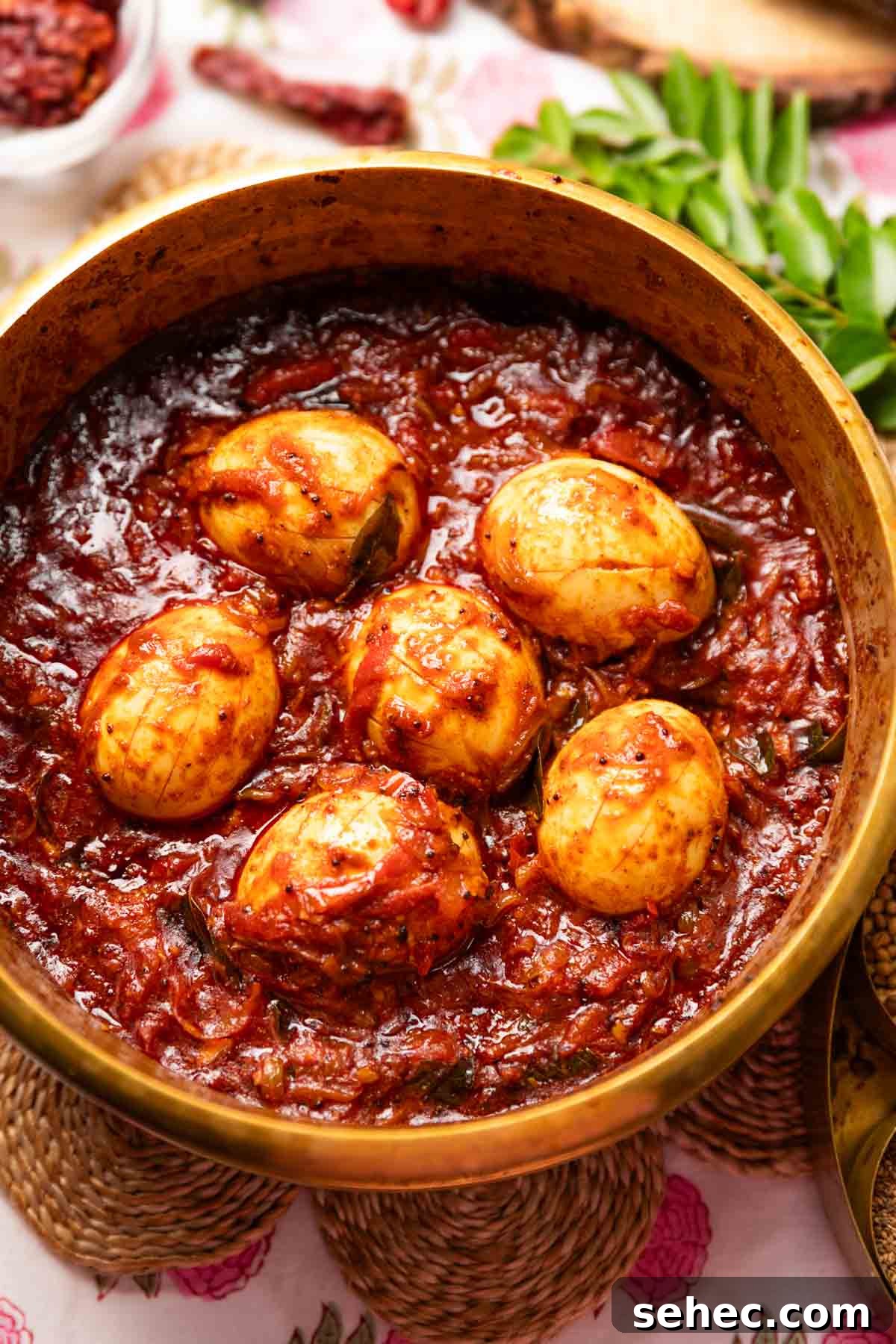
Spicy, garlicky, and deeply aromatic with the unmistakable richness of coconut oil, this Kerala Egg Roast, also known as Mutta Roast, brings together the bold South Indian flavors we love in one satisfying dish.

Kerala-style recipes have a way of turning simple ingredients into something memorable. The balance of coconut oil, curry leaves, onions, tomatoes, chillies, and warm spices creates layers of flavor without making the cooking process complicated. This Kerala Egg Roast is a great example of that. It uses everyday pantry ingredients, yet the final dish tastes rich, comforting, and special enough for a weekend meal.
This recipe is built around boiled eggs simmered in a thick onion-tomato masala. The eggs are slit so they soak up the spicy gravy, while the masala slowly roasts until the oil begins to separate from the sides of the pan. That roasting step is what gives the dish its deep flavor and slightly intense, almost smoky character. It is not a runny curry; it is a rich egg roast with a coating gravy that clings beautifully to the eggs.
The best part is that this Kerala Egg Roast comes together quickly. With boiled eggs ready, the whole recipe takes under 30 minutes from start to finish. Serve it with Malabar parotta for a classic combination, or pair it with ghee rice, roti, pulao, or any simple Indian bread or rice dish you enjoy. It is a wonderful option for weeknight dinners when you want something easy but full of flavor.
Jump to section: Kerala Egg Roast
- Ingredients Overview
- Frequently Asked Questions
- Watch How To Make Kerala Egg Roast
Ingredients Overview
For four servings of this Kerala Egg Roast recipe, you will need five boiled eggs. Hard-boiled eggs work best because they hold their shape while being roasted in the masala. Slitting the eggs before adding them to the pan helps the spices seep in, making every bite more flavorful.
Coconut oil forms the base of this dish and gives it its signature Kerala-style aroma. Mustard seeds are added first and allowed to crackle, followed by curry leaves, dried red chillies, green chilli, crushed ginger, and crushed garlic. These ingredients create a fragrant tempering that immediately builds depth in the masala.
Sliced onions are cooked until soft and translucent, then seasoned with red chilli powder, Kashmiri chilli powder, coriander powder, turmeric powder, pepper powder, and salt. Tomatoes are added to bring body and a gentle tang to the gravy. Once the masala cooks down and begins to roast, the boiled eggs are added and coated in the thick, spicy mixture. A final garnish of fresh coriander leaves adds freshness before serving.
Frequently Asked Questions
Traditional Kerala-style roasts usually focus on the main protein, but you can add vegetables if you like. Add them after the tomatoes and cook them until tender before adding the boiled eggs. Keep in mind that vegetables may change the texture of the roast and make the masala slightly lighter.
Yes. This onion-tomato masala works well as a base for other roasts too. You can use it with chicken, mutton, or paneer, adjusting the cooking time depending on the ingredient you choose. Eggs are the quickest option because they are already boiled before going into the masala.
Kerala Egg Roast tastes especially good with Malabar parotta because the flaky layers scoop up the thick masala beautifully. It also pairs well with ghee rice, roti, pulao, or any simple rice dish. Since the gravy is thick and flavorful, it works best with something that can balance the spice and soak up the masala.
Store leftovers in an airtight container in the refrigerator for up to 2 days. Reheat gently on the stovetop or in a microwave until warmed through. If the masala has thickened too much, add a small splash of water while reheating.
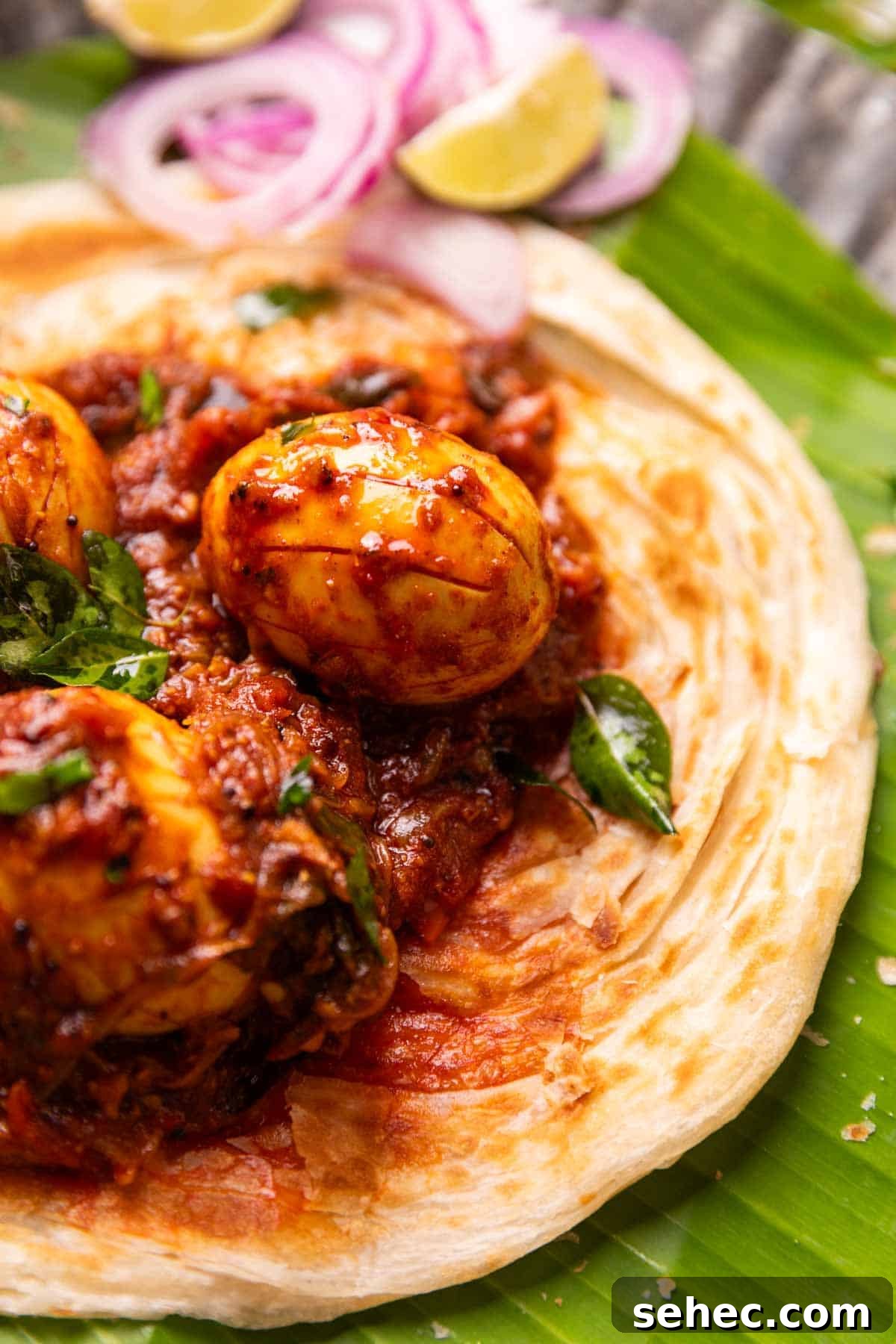
If your usual egg curry dinners need a fresh twist, this Kerala-style egg roast is a simple way to make them more exciting. It is bold without being complicated, spicy without overpowering the eggs, and aromatic because of the coconut oil, curry leaves, ginger, and garlic. The roasted masala coats the eggs beautifully, making this dish feel hearty and complete with very little effort.
Make it for a quick dinner, serve it for brunch with parotta, or add it to a larger South Indian-style meal. However you serve it, this Mutta Roast is a flavorful recipe worth adding to your regular egg recipe rotation.
Watch How To Make Kerala Egg Roast
Kerala Egg Roast | Mutta Roast
Ingredients
- 5 boiled eggs
- 3 tablespoons coconut oil
- ½ teaspoon mustard seeds
- 15–20 curry leaves
- 2 dried red chillies, broken into 2 pieces each
- 1 green chilli, broken into 2 pieces
- 1 ½ inches ginger, crushed
- 10 cloves garlic, crushed
- 1 ½ cups onions, sliced
- ½ teaspoon red chilli powder
- 1 ½ tablespoons Kashmiri chilli powder
- 1 tablespoon coriander powder
- ¼ teaspoon turmeric powder
- ½ teaspoon pepper powder
- ½ teaspoon salt
- ¾ cup tomatoes, finely chopped
- 1 tablespoon finely chopped coriander leaves
Instructions
-
Heat coconut oil in a pan. Add the mustard seeds and let them crackle. Add the curry leaves, dried red chillies, green chilli, crushed ginger, crushed garlic, and sliced onions. Sauté until the onions turn translucent and the aromatics smell fragrant.
-
Add the red chilli powder, Kashmiri chilli powder, coriander powder, turmeric powder, pepper powder, salt, and chopped tomatoes. Cook over medium heat and sauté for about 3 minutes, until the tomatoes begin to soften and the spices blend into the onion mixture.
-
Add warm water and cook on low heat for 10 minutes, or until the masala thickens, roasts well, and oil starts separating from the sides of the pan.
-
Slit the boiled eggs and add them to the pan. Gently coat the eggs in the masala and roast on low heat for 5 minutes so they absorb the flavor.
-
Garnish with finely chopped coriander leaves and serve hot with Malabar parotta, ghee rice, roti, or pulao.
Video
Nutrition
Carbohydrates: 16g,
Protein: 11g,
Fat: 18g,
Saturated Fat: 11g,
Polyunsaturated Fat: 1g,
Monounsaturated Fat: 4g,
Cholesterol: 233mg,
Sodium: 467mg,
Potassium: 435mg,
Fiber: 4g,
Sugar: 6g,
Vitamin A: 1887IU,
Vitamin C: 120mg,
Calcium: 103mg,
Iron: 2mg
This article was written and researched by Navya Khetarpal.