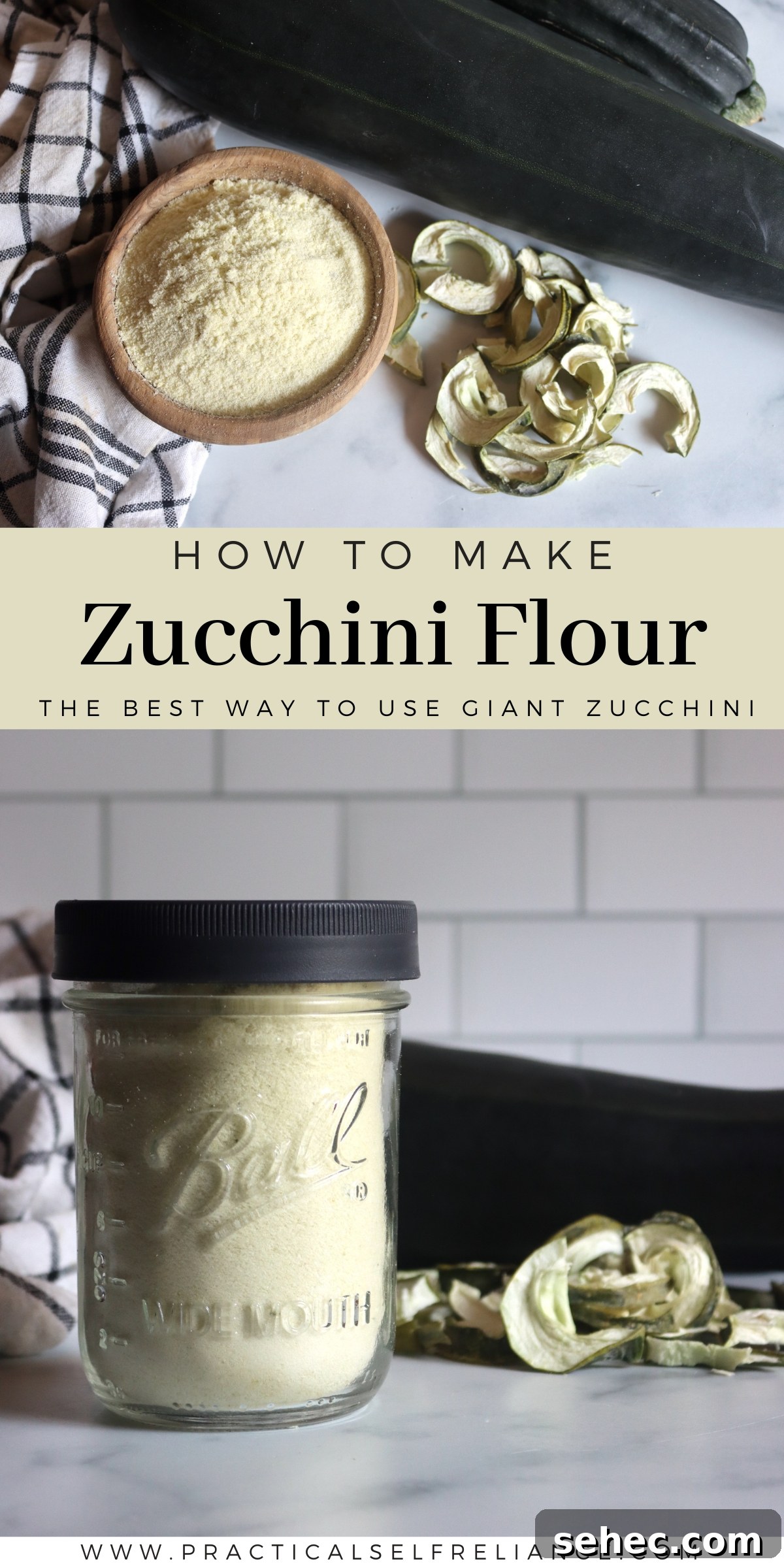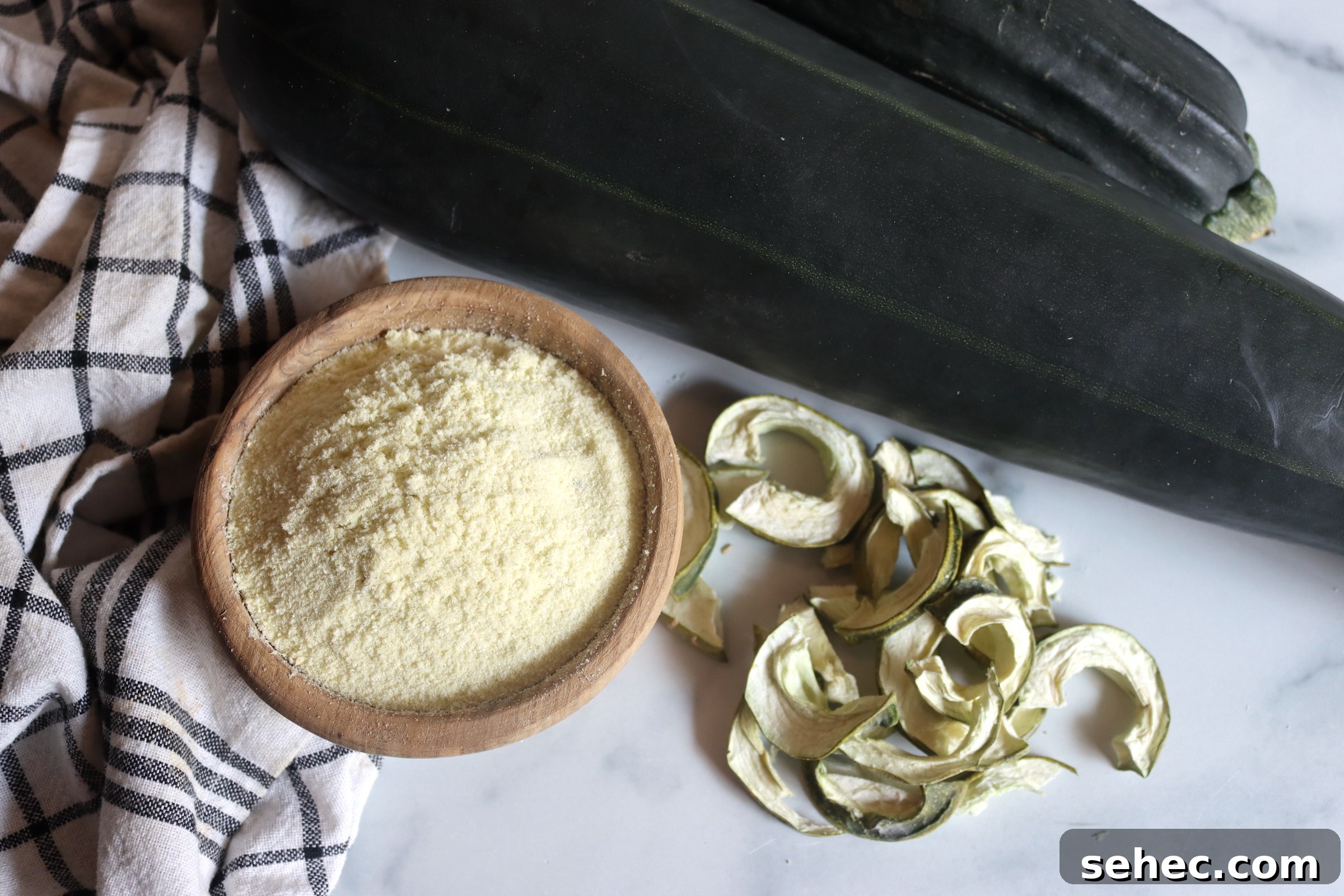
Zucchini flour is a practical, old-fashioned way to preserve extra summer squash and turn it into a useful pantry ingredient. By drying zucchini until it is completely crisp and grinding it into a fine powder, you can make a naturally gluten-free flour that works well in baking, cooking, thickening soups, and adding vegetables to everyday meals. It is especially helpful when the garden produces more zucchini than you can cook fresh, including the oversized squash that seem to appear overnight.
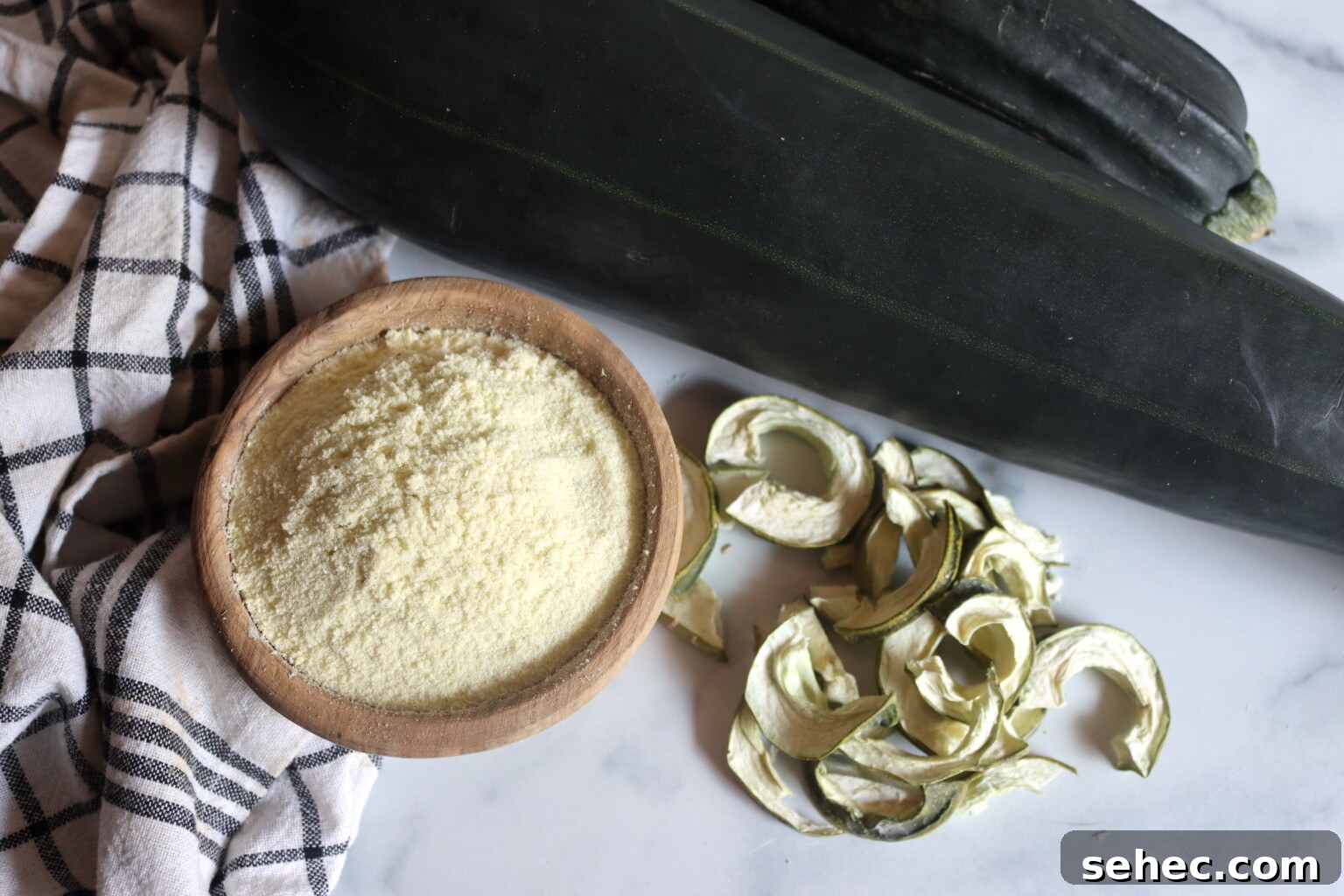
Homemade zucchini flour is simple to make, inexpensive, and surprisingly versatile. If you grow your own zucchini, it is also one of the most budget-friendly gluten-free flour alternatives available. Instead of letting excess squash go to waste, you can dehydrate it, grind it, and store it for months in a jar on the pantry shelf.
This method is sometimes called Amish zucchini flour because it has long been used in traditional home kitchens as a way to preserve food without waste. Drying squash for storage is an old practice, and once the squash is fully dry, it can be ground into a powder using anything from a mortar and pestle to a modern blender or food processor. During times when wheat flour was harder to come by, dried vegetable powders were also useful for stretching flour in recipes.
Today, making zucchini flour is much easier with a dehydrator, oven, freeze dryer, or even sun drying in the right climate. The finished flour is light, mild, and easy to blend into many recipes. It will not behave exactly like wheat flour because it contains no gluten, but it is a valuable ingredient when used in the right amounts.
What Is Zucchini Flour?
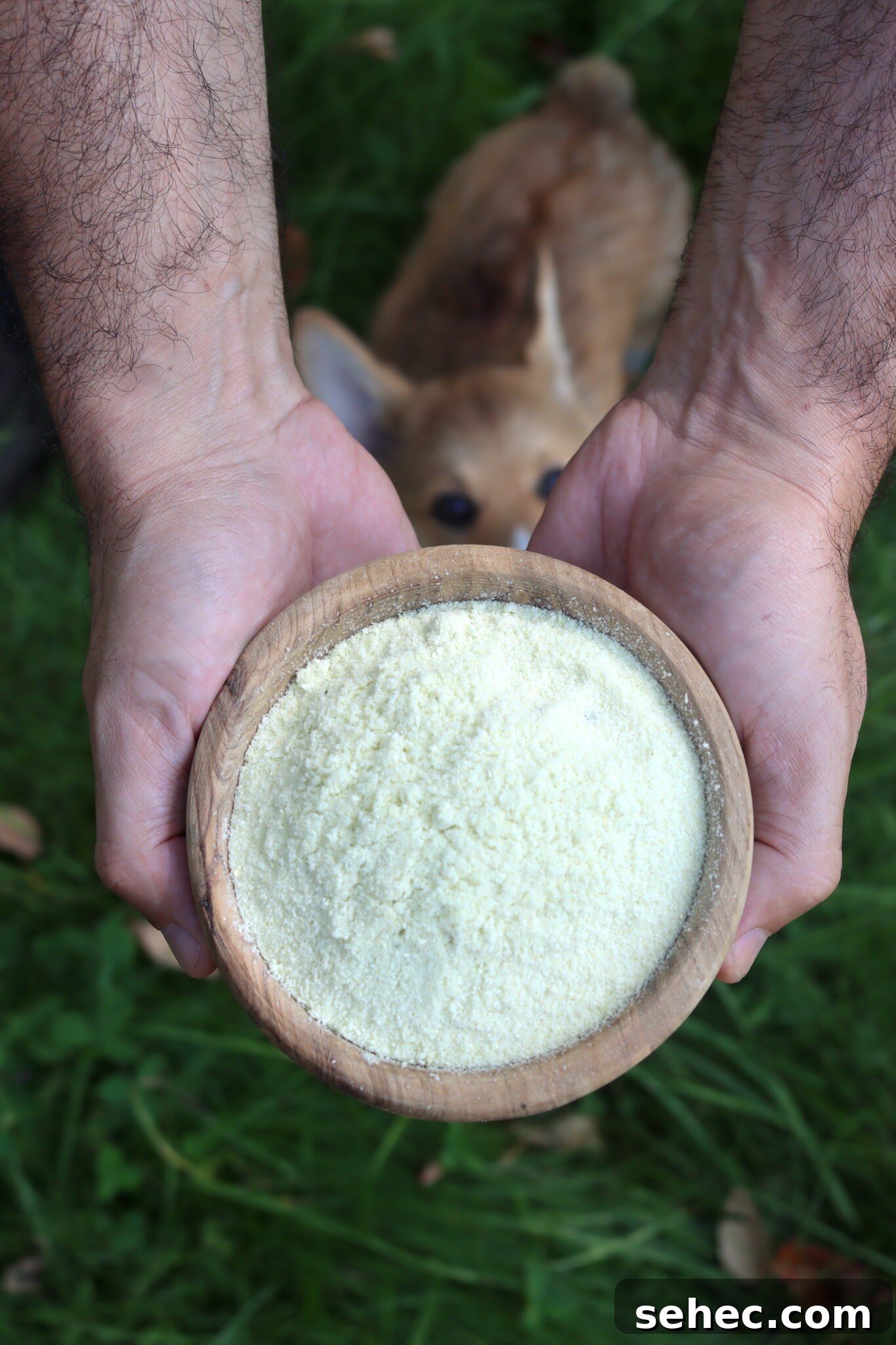
Zucchini flour is simply zucchini that has been dried until brittle and then ground into a fine powder. It is naturally gluten-free, shelf-stable when properly dried, and a convenient way to add vegetables to baked goods, savory dishes, and sauces.
You can make zucchini flour from green zucchini, yellow summer squash, spaghetti squash, or some types of winter squash. Keep in mind that sweeter winter squashes can change the flavor, color, and moisture balance of recipes, so they may not work exactly the same way as mild summer squash.
Compared with other gluten-free flours, zucchini flour is especially appealing because it can be made from a garden surplus. It is also a smart way to use large, mature zucchini that may be too tough or watery for fresh eating but are still perfectly useful for drying.

Best Zucchini for Flour
Large, overgrown zucchini are excellent for making flour. They usually have a mild flavor, and their size gives you more material to work with. Since zucchini is mostly water, it shrinks dramatically as it dries, so starting with larger squash helps improve the final yield.
The tough skins and large seeds in mature zucchini may not grind as smoothly as the flesh, but that is easy to fix. If you sift the flour after grinding, the larger pieces of peel and seed can be removed quickly. For that reason, peeling and seeding are optional. If you want the fastest method, wash the zucchini, trim the ends, shred or slice it, dry it, grind it, and sift the finished powder.
Smaller zucchini can also be used. They tend to have a fresher, more noticeable zucchini flavor, which can be pleasant in savory recipes such as flatbreads, crackers, or vegetable-based batters.
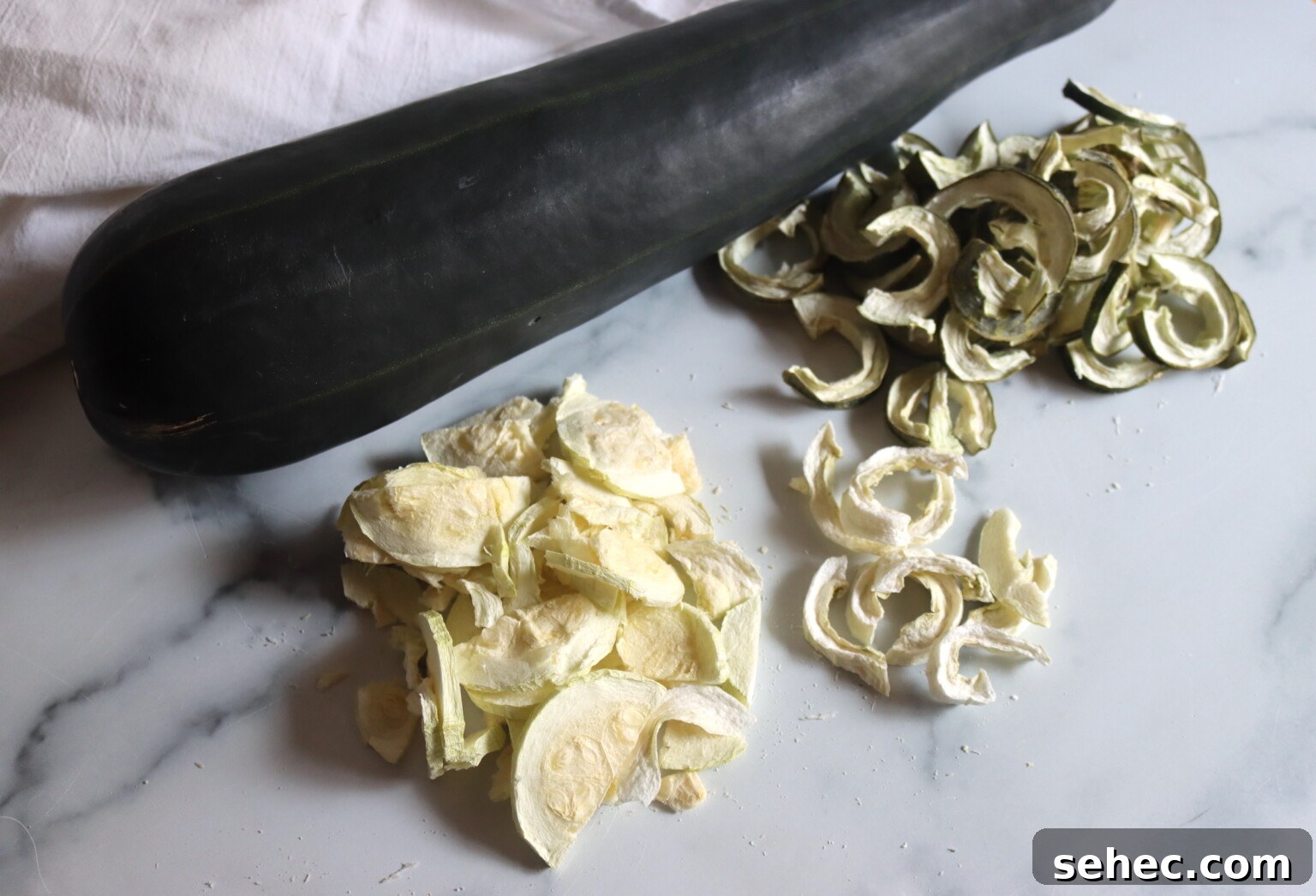
How to Make Zucchini Flour
Start by washing the zucchini well and trimming off the stem and blossom ends. If the squash is very large, you may cut it lengthwise and scoop out the seeds, but this step is optional. Any firm pieces that remain after grinding can be removed with a fine mesh strainer.
Shred the zucchini with a box grater or food processor. Shredded zucchini dries faster than thick slices and is easier to grind once dry. Thin slices also work, but they may take longer to become fully brittle. To speed drying, place the shredded zucchini in a colander for 15 to 20 minutes so excess liquid can drain. You can also gently squeeze the shreds in a clean towel.
Choose the drying method that works best for your kitchen:
- Dehydrator: Spread shredded zucchini in a thin, even layer on dehydrator trays. Dry at 125–135°F until completely crisp and brittle, usually 8–12 hours, depending on humidity and thickness.
- Freeze Dryer: A freeze dryer produces a very light, fine powder with a long shelf life. Follow the manufacturer’s instructions. Freeze-dried zucchini usually grinds easily and rehydrates well.
- Oven Drying: Place zucchini on parchment-lined baking sheets. Use the oven’s lowest setting, prop the door open slightly, and stir or flip the zucchini occasionally. This method usually takes 2–5 hours, depending on the oven, moisture level, and thickness.
- Sun Drying: In a hot, dry climate, zucchini may be dried in full sun on mesh screens or as thin slices hung on a line. This traditional method takes several days and works best where humidity is low.
No matter which method you use, the zucchini must be fully dry and brittle before grinding. If any moisture remains, the flour can clump, mold, or spoil during storage.
Once dry, transfer the zucchini to a high-speed blender, food processor, grain mill, or mortar and pestle. Grind until it becomes a fine, flour-like powder. If using a powerful blender, let the dust settle for a few seconds before opening the lid.
For the smoothest homemade zucchini flour, sift the powder through a fine mesh strainer. This removes any unground seed or peel pieces. The sifted flour is best for baking, while unsifted zucchini flour works well in soups, sauces, breading, and rustic savory recipes.
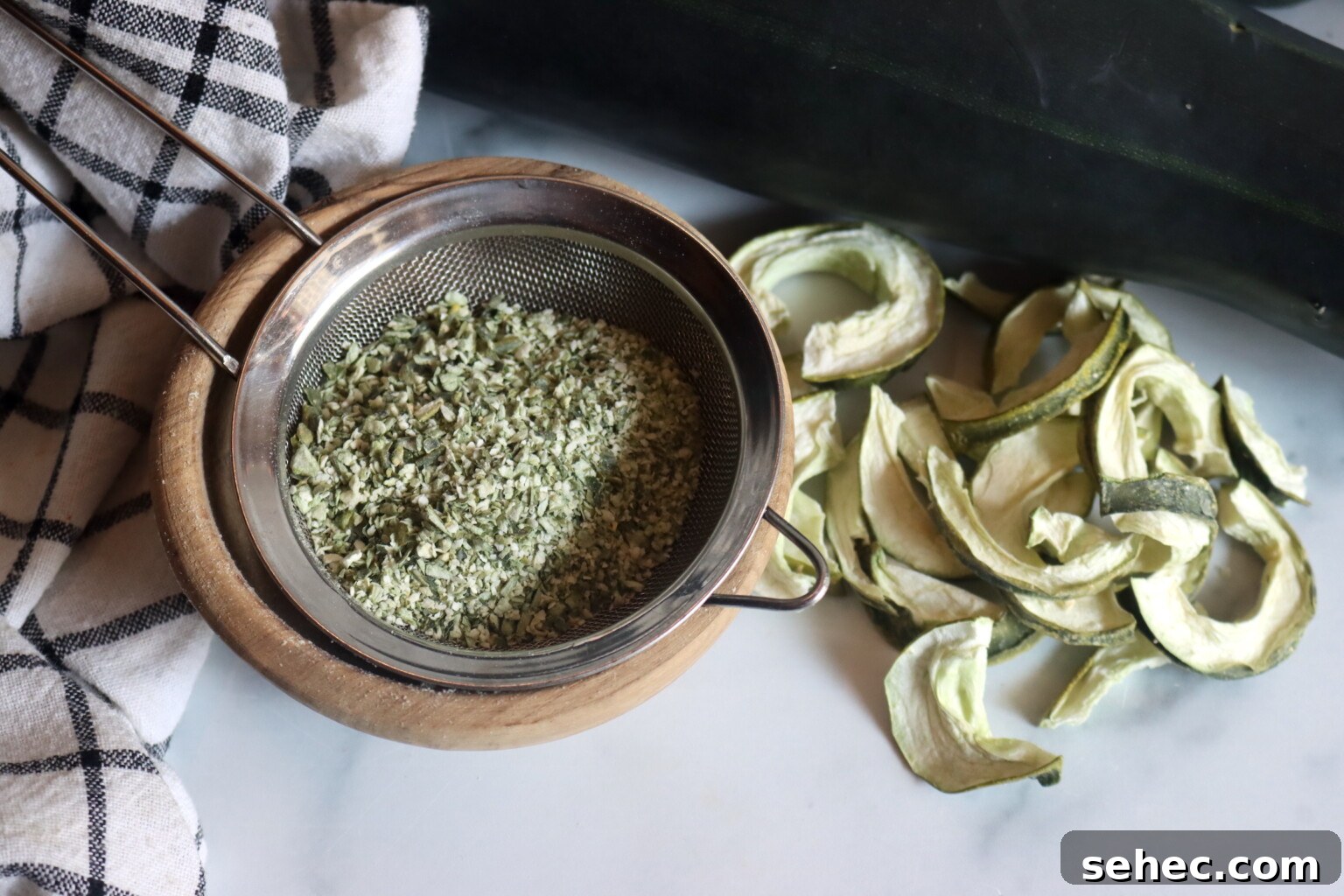
How to Use Zucchini Flour
Zucchini flour does not contain gluten, so it should not be treated as a complete replacement for wheat flour in most baked goods. It is best used as a partial substitute or as a moisture-absorbing vegetable flour in specific recipes.
- Replace up to 1/3 cup of all-purpose flour with zucchini flour for every 1 cup of flour in many baking recipes.
- Use it 1:1 in place of coconut flour in recipes where strong moisture absorption is expected.
- Avoid using zucchini flour as a full replacement for almond flour, because it is lighter and less fatty.
Zucchini flour is especially useful in recipes where its mild vegetable flavor blends into the background. It works well in:
- Brownies and chocolate cakes
- Quick breads and muffins
- Crackers and flatbreads
- Soups, stews, and sauces that need thickening
- Breading for fish, chicken, or vegetables
In baked goods, zucchini flour can add subtle moisture, mild flavor, and extra fiber. Chocolate, warm spices, herbs, and savory seasonings all pair well with it, making it easy to use in both sweet and savory dishes.
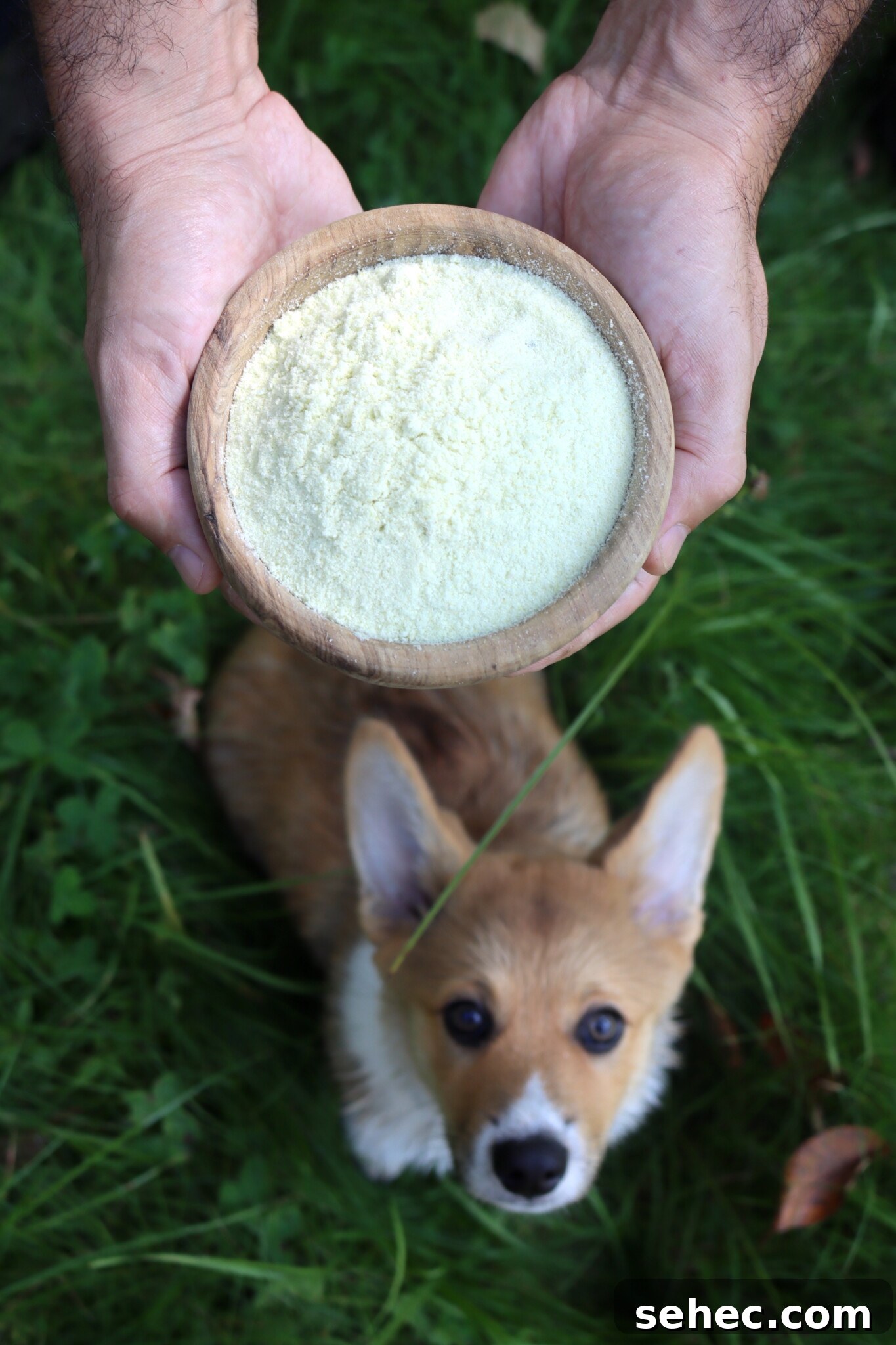
Storage Tips
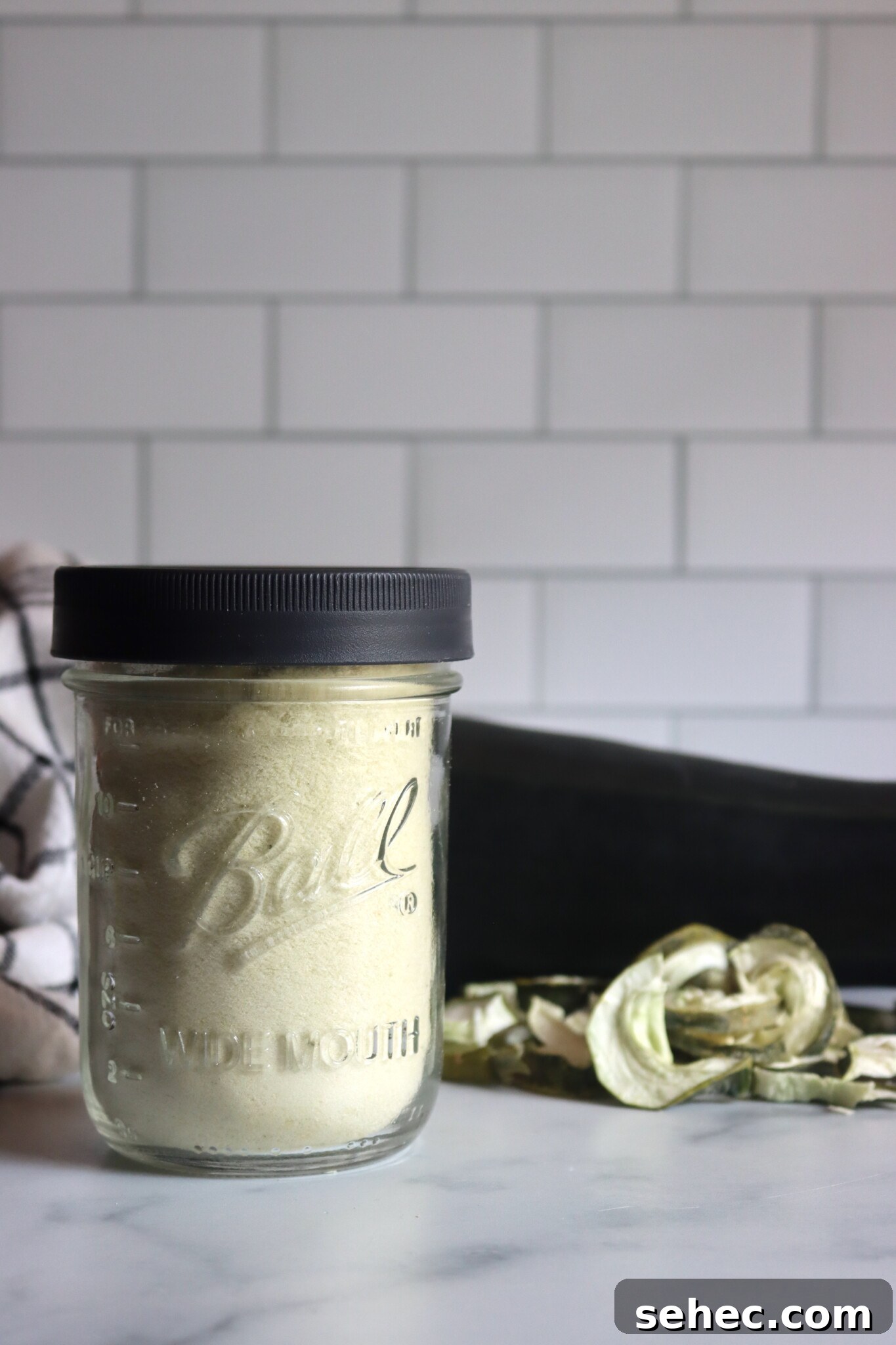
Store zucchini flour in a clean, dry, airtight container such as a mason jar. A silica gel packet can help absorb any extra moisture and improve shelf life. Keep the jar in a cool, dark, dry pantry rather than a humid area.
When thoroughly dried and tightly sealed, zucchini flour is commonly stored for 6–12 months. The key is removing as much moisture as possible before grinding and keeping the finished flour protected from humidity.
For longer storage, you can keep the zucchini in dried shreds and grind it only when needed. Dried shreds take up more space than flour, but they may store well and are less prone to clumping than a fine powder.
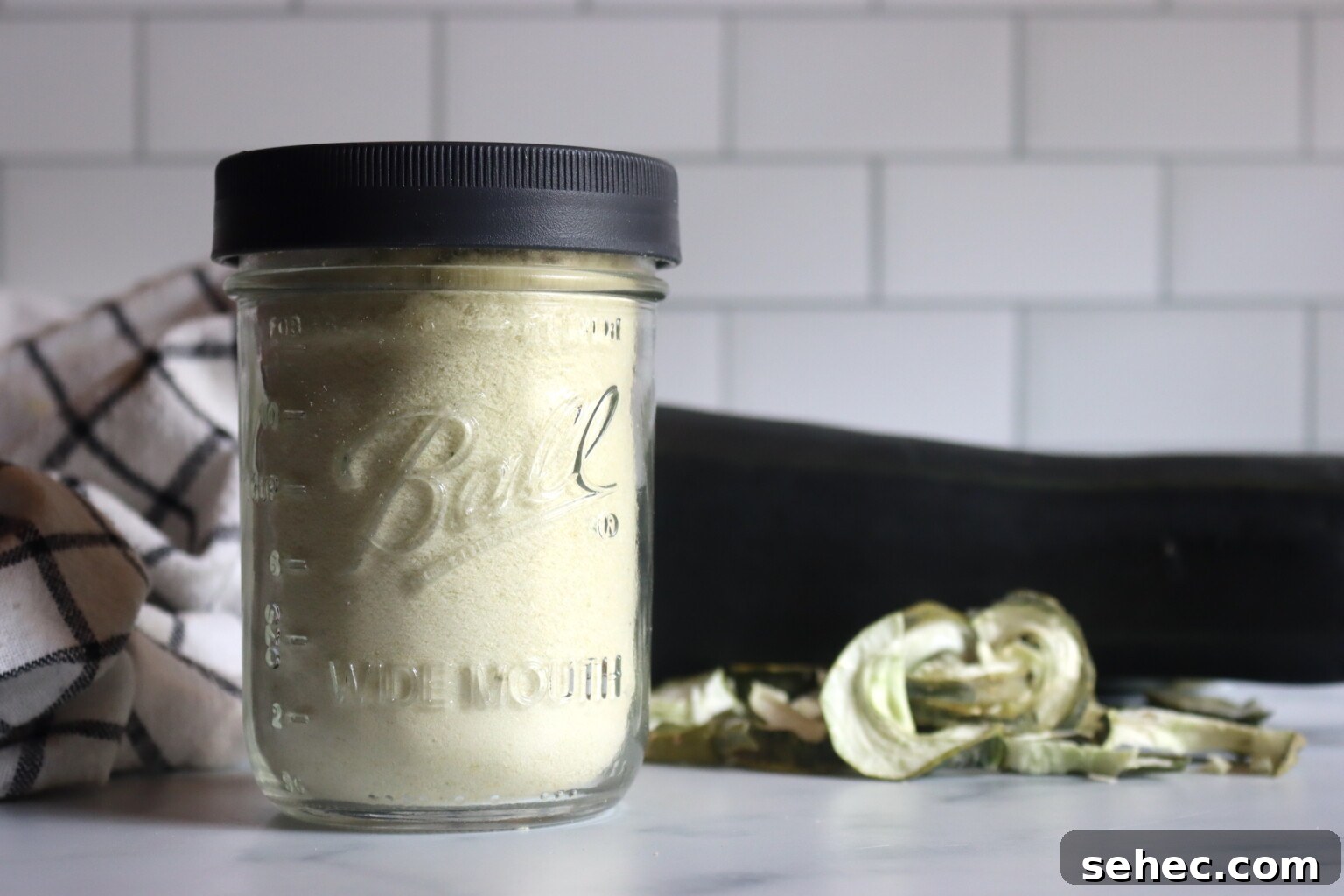
How Much Flour Does Zucchini Yield?
Zucchini contains about 90–95% water by weight, so it loses a great deal of volume and weight during drying. The finished flour is very light, but it takes quite a bit of fresh zucchini to fill a jar.
- 2 cups of shredded zucchini usually dries down to less than 1/2 cup of flour.
To fill a pint jar with about 2 cups of zucchini flour, expect to use roughly 3 to 4 extra-large zucchini, or about 8 to 10 cups of shredded zucchini. The exact amount will vary depending on the size, moisture level, and seed content of the squash.
Yes. Yellow summer squash, spaghetti squash, and some winter squashes can be dried and ground into flour. Sweeter squash varieties may change the flavor, color, and moisture level of baked goods.
One large zucchini, about 12–14 inches long, usually gives about 2 to 2 1/2 cups of shredded zucchini. Once dried and ground, that amount becomes less than 1/2 cup of flour.
No, peeling and seeding are optional. The peel and seeds may not grind completely, but they can be sifted out after processing. If you want a very smooth flour, sift the finished powder before storing or baking with it.
Yes. Use the oven’s lowest temperature, prop the door open slightly to let moisture escape, and stir the zucchini occasionally. Oven drying usually takes about 2 to 5 hours.
Keep zucchini flour in an airtight container in a cool, dark, dry place. A silica gel packet can help control moisture. For longer storage, the flour may also be vacuum sealed or frozen, as long as it is protected from humidity.
Yes. Storing fully dried zucchini shreds and grinding them as needed is a good option. The shreds take up more room than flour, but they are easy to package and can be ground fresh when you are ready to cook or bake.
Zucchini flour works well in quick breads, muffins, brownies, crackers, flatbreads, soups, sauces, and breading. In most baking recipes, use it to replace up to 1/3 of the flour, or use it 1:1 in place of coconut flour where appropriate.
Zucchini Flour
Equipment
-
Dehydrator, oven, freeze dryer, or sun-drying setup
-
Food processor, blender, or mortar and pestle
-
Fine mesh strainer
-
Airtight storage jar
Ingredients
- 10 cups zucchini, shredded or thinly sliced, about 3 to 4 extra-large zucchini
Instructions
-
Wash the zucchini and trim off the ends. Peeling and seeding are optional. If you plan to sift the flour after grinding, you can leave the peel and seeds in place.
-
Shred the zucchini with a food processor or box grater, or slice it into thin pieces. Let shredded zucchini drain in a colander for 15–20 minutes, or gently squeeze it in a clean towel to remove extra moisture.
-
Dehydrator: Spread zucchini in a thin layer on trays and dry at 125–135°F for 8–12 hours, until brittle.
Oven: Spread zucchini on lined baking sheets, set the oven to its lowest temperature, prop the door open slightly, and dry for 2–5 hours, stirring occasionally.
Freeze Dryer: Use according to the manufacturer’s instructions for the best texture and long shelf life.
Sun Drying: Dry in full sun on mesh screens only in hot, dry weather with low humidity. -
Make sure the zucchini is completely dry and brittle before grinding. Any remaining moisture can cause spoilage or clumping.
-
Grind the dried zucchini in a blender, food processor, grain mill, or mortar and pestle until it becomes a fine powder.
-
Sift the flour through a fine mesh strainer if you want a smooth texture for baking. Unsifted flour can be used for soups, sauces, breading, and rustic recipes.
-
Store the zucchini flour in a clean, dry jar with a tight-fitting lid. Add a silica gel packet if desired and keep it in a cool, dark, dry pantry.
Notes
- Use up to 1/3 cup of zucchini flour per 1 cup of all-purpose flour in many baking recipes.
- Zucchini flour can often be used 1:1 in place of coconut flour.
- It works best in chocolate baked goods, spiced recipes, crackers, flatbreads, soups, sauces, and breading.
- For best storage, keep the flour airtight and dry. Properly dried zucchini flour is commonly stored for up to 12 months.
Nutrition
Nutrition information is automatically calculated and should be used only as an approximation.