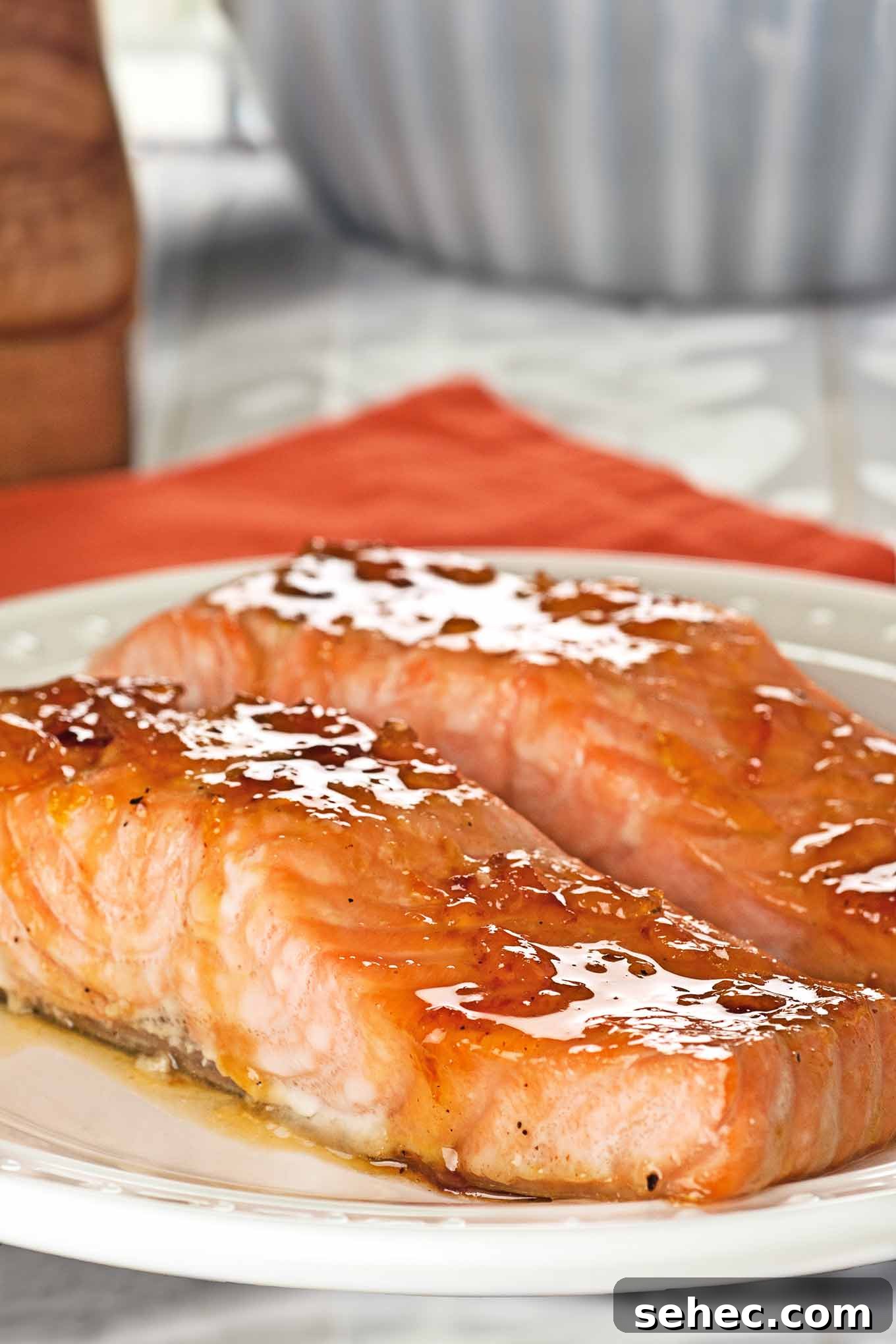
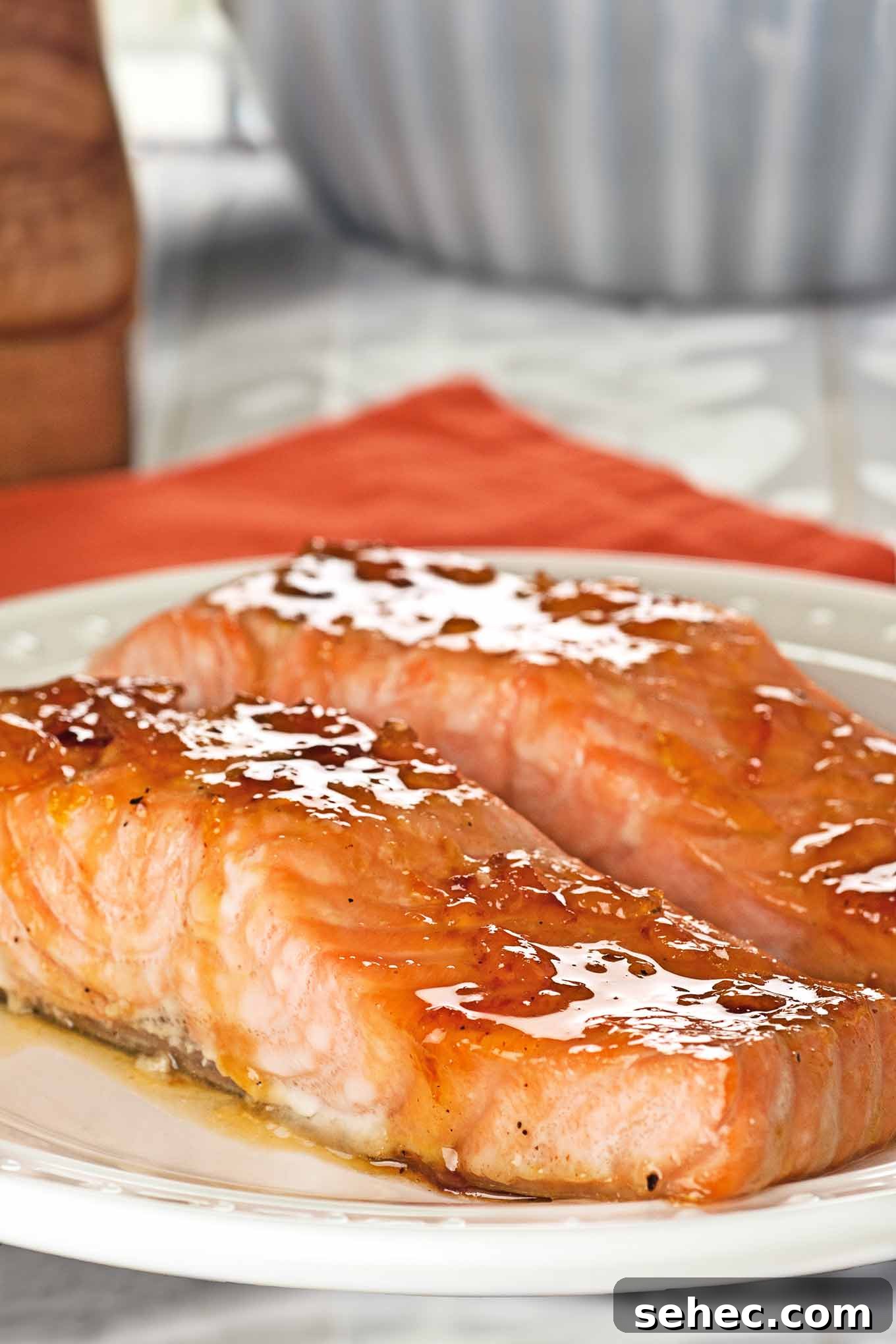
A Simple Glaze That Adds Big Flavor
Orange marmalade and bourbon glazed salmon is a quick, flavorful seafood dinner that feels special without requiring much work. Salmon is ideal for busy weeknights because it cooks quickly, stays tender when roasted properly, and pairs beautifully with bold sweet-savory flavors. In this recipe, orange marmalade creates the base of the glaze, adding bright citrus flavor, natural sweetness, and a lightly textured finish.
The bourbon gives the glaze a gentle smoky depth that balances the sweetness of the marmalade. A small amount of brown sugar helps the surface caramelize in the oven, while a pinch of cayenne adds warmth and keeps the glaze from tasting too sweet. The result is tender roasted salmon coated in a glossy citrus bourbon glaze with a rich, balanced flavor.
Roasting the salmon at a fairly high temperature helps the glaze set and lightly caramelize while the fish remains moist. Because the glaze is made from a few pantry-friendly ingredients, this orange bourbon salmon recipe is easy to prepare with very little chopping or advance planning.
Ingredient Notes and Substitutions
A few key ingredients make this recipe work. The complete list with quantities is included in the recipe card below.
- Salmon fillets: Use skin-on salmon fillets that weigh about 5 to 6 ounces each. Try to choose pieces that are similar in thickness so they cook evenly. Atlantic, king, or sockeye salmon can all be used, although the exact cooking time may vary depending on the variety and thickness.
- Orange marmalade: Marmalade gives the glaze its citrus flavor, sweetness, and slightly chunky texture. If available, choose a marmalade made with sugar rather than high-fructose corn syrup. Apricot preserves can be used instead for a different fruit flavor.
- Bourbon: Bourbon adds mild smoky and oak-like notes that complement the orange marmalade. Any decent-quality bourbon or whiskey will work. For an alcohol-free glaze, use an equal mixture of orange juice and lemon juice in place of the bourbon.
- Cayenne: A small pinch of cayenne adds gentle heat and balances the sweet glaze. You can reduce it, increase it slightly, or omit it if you prefer a milder salmon recipe.
- Butter: Stirring in a small amount of butter at the end gives the glaze a smooth, glossy finish and helps it coat the salmon evenly.
A Quick Look at Preparation
How to Make Orange and Bourbon Glazed Salmon
Here is how this oven-roasted salmon comes together, along with a few simple tips for the best texture and flavor. Full instructions are included in the recipe card below.
Start by preparing the glaze. Orange marmalade, bourbon, light brown sugar, and cayenne are simmered together in a small saucepan until the mixture thickens slightly and the flavors blend. Once it is off the heat, butter is stirred in to create a smooth glaze that looks glossy and spreads easily over the fish.
While the glaze cools for a few minutes, arrange the salmon fillets skin-side down on a foil-lined baking sheet. Season the fish with salt and freshly ground black pepper. Letting the glaze cool briefly is important because it thickens as it stands, which helps it cling to the salmon instead of sliding off onto the pan.
Spoon the orange bourbon glaze evenly over the fillets, then roast the salmon until the surface is lightly caramelized and the fish is cooked to medium doneness. The sugars in the marmalade and brown sugar brown quickly, so it is best to keep an eye on the salmon near the end of cooking. An instant-read thermometer is helpful for checking doneness without overcooking the fish.
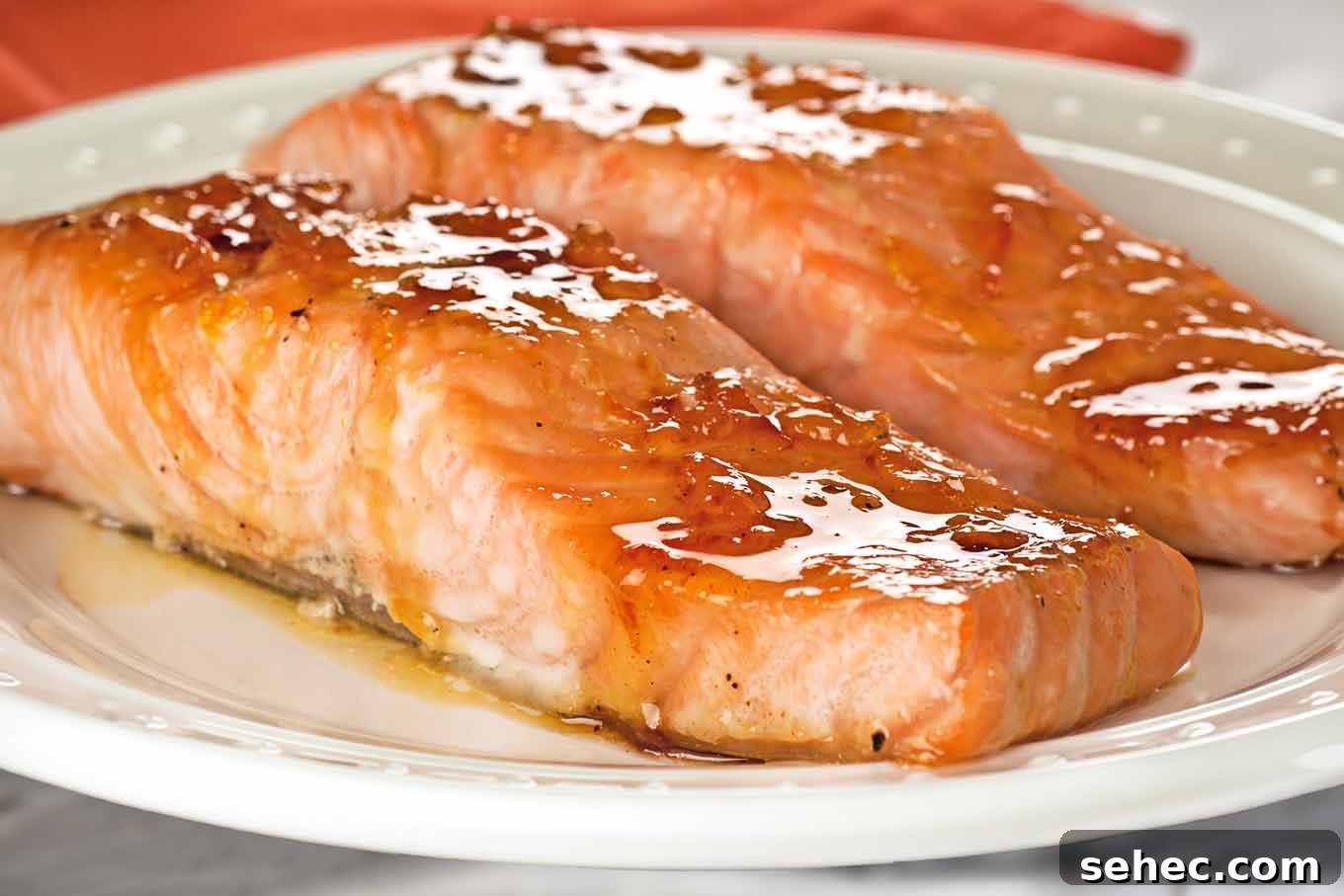
This is a fast main course, so it pairs well with simple side dishes. Pearl couscous tossed with butter and seasoning makes an easy base, and roasted green beans add a fresh vegetable side. Both options keep the meal balanced without adding much extra preparation time.
Tested Tips
- Choose evenly sized fillets: Similar thickness helps each piece finish cooking at the same time and prevents thinner portions from drying out.
- Let the glaze cool before spooning it on: A short cooling time allows the glaze to thicken slightly, helping it stay on top of the salmon during roasting.
- Cook the salmon to medium doneness: For moist, tender fish, cook wild salmon to 120°F and farmed salmon to 125°F in the thickest part of the fillet.
- Watch the glaze carefully: Because the glaze contains sugar, it caramelizes quickly. Remove the salmon before the glaze becomes too dark.
- Remove the skin after roasting if desired: Slide a thin spatula between the skin and the flesh before transferring the salmon to serving plates.
More Oven-Roasted Salmon Recipes
A well-made glaze is one of the easiest ways to make oven-roasted salmon more flavorful. Other sweet-savory salmon ideas include brown sugar glazed salmon served with potatoes and green beans, smoky bacon glazed salmon with a savory finish, and horseradish crusted salmon topped with buttery breadcrumbs, tangy horseradish, and a touch of honey.
Orange Marmalade and Bourbon Glazed Salmon
Ingredients
- 4 skin-on salmon fillets, 5 to 6 ounces each
- Salt and freshly ground black pepper
- 1/4 cup orange marmalade
- 3 tablespoons bourbon
- 1 tablespoon light brown sugar
- Pinch cayenne
- 1/2 tablespoon butter
Instructions
-
Preheat the oven to 400°F. Line a rimmed baking sheet with aluminum foil and coat it lightly with nonstick spray.
-
Place the salmon fillets skin-side down on the prepared baking sheet. Season them with salt and freshly ground black pepper.
-
Add the orange marmalade, bourbon, brown sugar, and cayenne to a small saucepan. Bring the mixture to a boil over medium-high heat.
-
Reduce the heat to medium and cook, stirring often, until the glaze thickens slightly and coats the back of a spoon, about 5 to 7 minutes.
-
Remove the pan from the heat. Stir in the butter until melted, then let the glaze cool for about 5 minutes.
-
Spoon the glaze evenly over the salmon fillets, coating the tops of each portion.
-
Roast until the glaze is lightly caramelized and the salmon reaches medium doneness, about 6 to 8 minutes depending on thickness. For best results, cook wild salmon to 120°F and farmed salmon to 125°F in the thickest part of the fillet.
-
Let the salmon rest for 1 to 2 minutes before serving. If desired, remove the skin before plating.
Nutrition
Nutrition information is automatically calculated and should be used as an approximation.