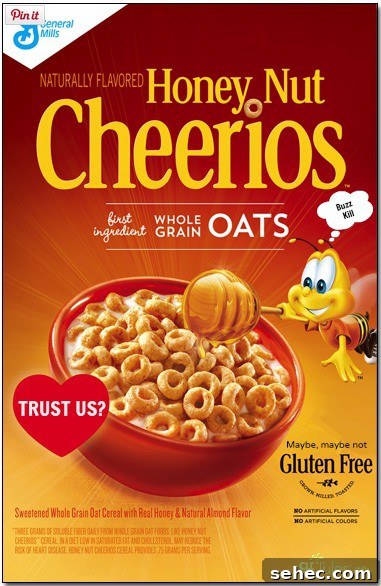
Is There Gluten In Cheerios?
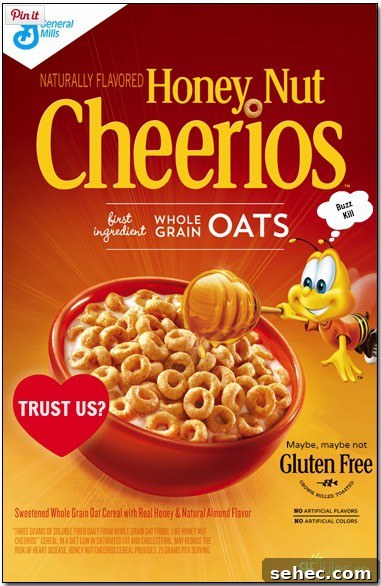 Many people who follow a gluten-free diet have asked the same question: is there gluten in Cheerios? The answer has been the subject of debate for years, especially among people with celiac disease and gluten sensitivity. General Mills has labeled certain Cheerios products as gluten free, but concerns have been raised about the oats used, the testing methods, and reports from consumers who said they became ill after eating the cereal.
Gluten in Cheerios 2015
In 2015, General Mills announced that several varieties of Cheerios would be made with oats processed to reduce contamination from gluten-containing grains. Instead of using oats grown, harvested, transported, and processed under a strict “purity protocol,” the company used oats that were mechanically separated to remove wheat, barley, and rye.
This distinction matters. Oats are naturally gluten free, but they are often contaminated with gluten-containing grains during growing, harvesting, storage, transportation, or processing. For people with celiac disease, even small amounts of gluten can cause symptoms and intestinal damage. Because of this, many gluten-free experts prefer oats that follow a dedicated purity protocol from field to finished product.
General Mills stated that its Cheerios batches would be tested in-house. However, critics objected to the company’s testing method. Instead of testing individual boxes for possible “hot spots” of gluten contamination, the company used composite samples made from multiple boxes and tested an average, or “lot mean.” Gluten contamination is not always evenly distributed, so one box could potentially contain a higher level of gluten even if the overall average appears to meet the gluten-free standard.
Concerns from gluten-free bloggers, advocates, and consumers led to public petitions and calls for stronger testing procedures. Many questioned whether mechanically sorted oats could be considered safe enough for people with celiac disease. The concern was not simply about the gluten-free label, but about whether the finished cereal could be trusted by those who rely on accurate labeling for medical reasons.
After Cheerios products labeled gluten free reached store shelves, reports of consumer illness began to appear. The FDA tested samples, and at least one sample from a recalled lot reportedly tested above the level allowed for foods labeled gluten free. Consumers who believe they have been made sick by Cheerios or any other packaged food may report the incident to the FDA MedWatch Adverse Event Reporting System.
In October 2015, General Mills disclosed that its Lodi, California facility had failed to test certain lots of gluten-free Cheerios for a 13-day period. During that time, oats had also been transported in containers that had previously been used for wheat. The issue led to a recall of approximately 1.8 million boxes of Yellow Box Cheerios and Honey Nut Cheerios produced during that period.
Gluten in Cheerios 2016
In 2016, the Canadian Celiac Association responded to the introduction of gluten-free Cheerios in Canada. The organization expressed concern because the products were made with mechanically or optically sorted oats rather than purity protocol oats. The association advised people with celiac disease and gluten sensitivity not to eat Cheerios products labeled gluten free unless stronger evidence of safety was provided.
The Canadian Celiac Association explained that oats are a high-risk grain for gluten contamination. It also noted that wheat and barley can be difficult to remove from oats using sorting technology alone because the grains may be similar in size, shape, or color. Broken kernels can make sorting even more difficult.
- Oats are considered a high-risk grain because of the possibility of gluten contamination.
- Mechanical and optical sorting may not remove all gluten-containing grains from oats.
- Gluten contamination may not be evenly distributed throughout a batch.
- Contamination “hot spots” can occur, making average-based testing less reliable for individual boxes.
Based on the information available at the time, the association’s scientific advisors were not convinced that the testing procedures described by General Mills were sufficient to detect all areas of contamination in oats, oat flour, or finished cereal boxes. The concern was that some boxes might test safely while others could contain gluten levels that were not detected through composite testing.
Gluten in Cheerios 2017
Reports from consumers who said they became ill after eating Cheerios continued in 2017. BuzzFeed reported on complaints obtained through a Freedom of Information request, including claims from people with celiac disease who believed Cheerios had caused symptoms. Some medical professionals continued to recommend caution with products made from mechanically or optically sorted oats because it was difficult to verify the safety of every finished package.
Later that year, the Canadian Celiac Association announced that the Canadian Food Inspection Agency had determined that the words “gluten-free” would be removed from Cheerios packages sold in Canada by January 1, 2018. General Mills stated that existing boxes already labeled gluten free would not be removed, but future replenished stock would not carry the gluten-free claim in Canada.
Melissa Secord, Executive Director of the Canadian Celiac Association, said the organization believed there was not adequate evidence to support the gluten-free claim for Cheerios sold in Canada. She also pointed to reports from consumers with celiac disease who said they reacted after eating the cereal. For the association, the safest recommendation was to advise Canadians with celiac disease or gluten sensitivity to avoid those products.
Gluten in Cheerios 2021
As of 2021, concerns remained about the testing approach used for Cheerios labeled gluten free in the United States. General Mills was still using mean test results from composite samples made up of sub-samples taken from multiple boxes of cereal. A “lot” could represent a 24-hour production cycle. Critics argued that this method could miss isolated areas of contamination because an average result does not identify which specific box may contain elevated gluten.
For people without celiac disease or gluten sensitivity, this debate may seem minor. For those who must avoid gluten for medical reasons, however, the reliability of gluten-free labeling is extremely important. A product can appear safe based on an average test result while still raising concerns if the ingredients or testing methods allow for uneven contamination.
The key issue is not whether oats are naturally gluten free. They are. The concern is whether the oats used in Cheerios are consistently free from cross-contact with wheat, barley, or rye and whether the final cereal is tested in a way that protects consumers who are highly sensitive to gluten. Many gluten-free advocates continue to recommend choosing certified gluten-free cereals made with oats from a purity protocol or cereals that do not rely on oats at all.
For more information about ongoing concerns related to Cheerios, gluten-free testing, and mechanically sorted oats, visit Gluten Free Watchdog.
To better understand the difference between mechanically separated oats and purity protocol oats, you can listen to the “You Had Me At Eat” podcast episode on the topic.
If you need a certified gluten-free O-shaped cereal, consider choosing a product that is clearly certified gluten free and made under testing standards you trust.