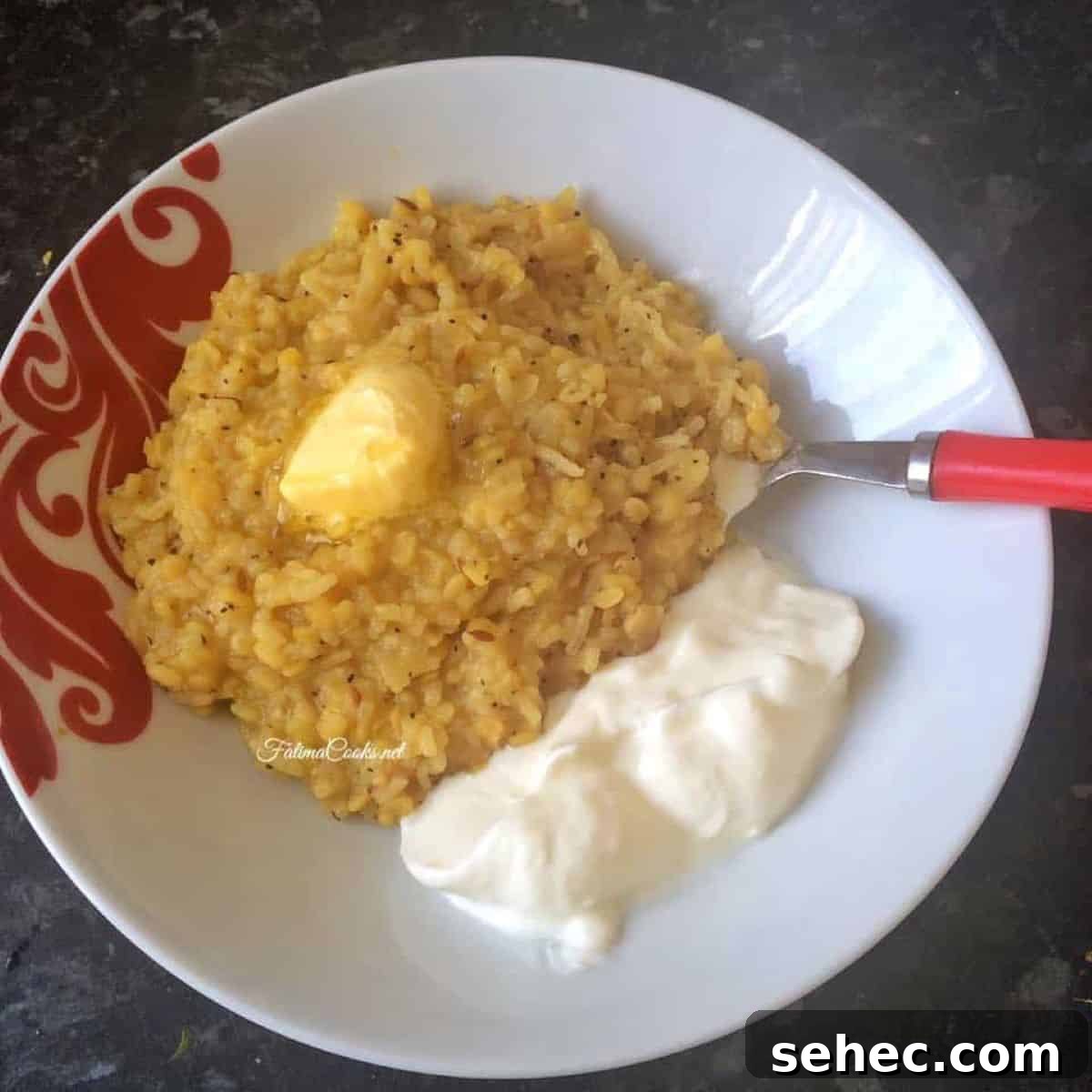
This simple Pakistani Khichdi recipe is the kind of comforting, one-pot meal you make when you want something warm, gentle and satisfying without spending too much time in the kitchen. Made with rice, lentils, mild spices and a little ghee or butter, it is soft, soothing and perfect for lazy days, sick days or whenever you need a bowl of easy homemade comfort food.
In many Pakistani households, Khichdi is closely associated with care. It is often cooked when someone is unwell, has an upset stomach, or needs something light and easy to digest. It is also a popular choice for babies who are being introduced to solid food because the texture is soft, the flavour is mild, and the spices can be adjusted easily.
Growing up, I remember my mother cooking a small pot of Khichdi almost every day for my younger brother when he was being weaned onto solids. His version was extra soft, moist and buttery. Sometimes she added tiny pieces of potato that seemed to melt into the rice, and occasionally she would add chicken too. I used to wait for him to leave a little behind so I could enjoy the leftovers myself.
Looking back, I have no idea why I never simply asked my mother to make a bowl for me as well. Childhood logic is a strange thing, but the memory of that buttery, soft Khichdi has stayed with me.
What is Khichdi?
Khichdi is a comforting rice and lentil dish with a texture that sits somewhere between a soft pilaf and a thick soup. It is simple, mild and incredibly soothing. Across different homes and regions, you will find many variations. Some versions include vegetables, beans or meat, while others are kept very plain and gentle.
This recipe is for a basic Pakistani Dal Khichdi, made with rice and lentils only. It is lightly seasoned with whole spices, black pepper and salt, then cooked until the rice and lentils become soft and creamy. The result is a warm, nourishing bowl that feels homely and familiar.
What kind of lentils can you use in Khichdi?
You can use almost any type of lentil for Khichdi. In this recipe, I use a mixture of masoor daal and moong daal, but you can choose the lentils you already have at home. The cooking time may change slightly depending on the type of lentil, especially if you use a firmer lentil such as chana daal.
The ratio of rice to lentils is also flexible. I prefer using equal amounts of rice and daal because it gives the dish a balanced, hearty texture. Some people prefer more rice and less daal, while others enjoy a more lentil-heavy version. The good news is that Khichdi is very forgiving. As long as the total quantity of rice and lentils remains roughly the same, you can adjust the ratio to suit your taste.
What is Khichdi good for?
Khichdi is ideal for days when you want food that is gentle, warm and not too rich. It is not meant to be a bold, heavily spiced dish. Instead, it is soft, lightly seasoned and deeply comforting. In this version, black pepper gives a little warmth, while cinnamon adds a subtle aroma that makes the whole pot feel extra cosy.
It also makes a lovely meal for young children. If you are serving Khichdi to a baby or a child who is sensitive to spice, simply reduce the black pepper and keep the seasoning mild. The texture can also be made softer by adding a little extra water and cooking it down until it becomes very smooth.
Khichdi is also the kind of recipe you will appreciate on a sick day. When rich curries or spicy food feel too much, a bowl of soft rice and lentils can be exactly what you need. It is plain enough to be easy on the stomach, but still warm and satisfying.
How to serve Khichdi
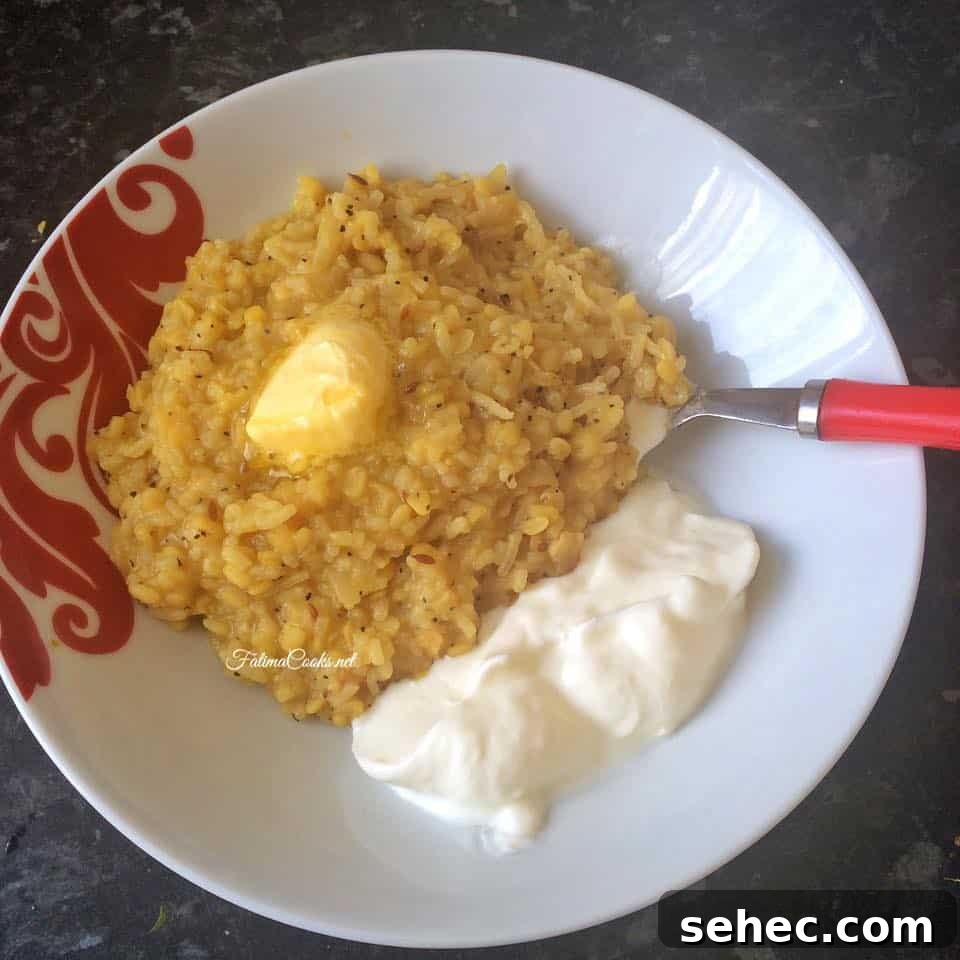
Khichdi is best served warm with a knob of butter and a spoonful of yogurt. In my family, yogurt has always been an essential side for Khichdi. The coolness of the yogurt balances the warmth of the rice and lentils beautifully.
You can also serve it with achaar, which is South Asian pickle, or with tomato chutney for a little brightness and tang. If you want to serve it alongside a curry, choose something simple with plenty of shorba, such as Aloo Gosht or Chicken Salan.
Many people enjoy finishing Khichdi with a tadka. This usually means frying onions with aromatics such as curry leaves, chillies, cumin seeds, garlic or mustard seeds in oil or ghee, then pouring the hot mixture over the cooked rice and lentils. A tadka adds a deeper, richer flavour. I do not usually add one to this particular recipe, but if that is how you like your Khichdi, it works very well.
Top Khichdi Tips
- The more you brown the onions at the beginning, the darker your Khichdi will be. For a lighter colour, cook the onions only until they are soft and translucent.
- Vegetables are a great addition. Cubed potatoes, carrots, peas and sweetcorn all work well. Add potatoes or carrots about 20 minutes before the end of cooking, and add frozen peas or sweetcorn about 10 minutes before the end.
- Grated vegetables can be stirred in for extra nutrition. Keep in mind that some vegetables may change the colour of the finished Khichdi.
- If you do not want to add butter at the end, you can leave it out and use a simple tadka instead. Fried onions, green chillies, cumin seeds, garlic and mustard seeds are all good options.
Enjoy this warm bowl of Pakistani dal Khichdi with love.
📋 Recipe
Khichdi – A Simple Pakistani Dal Khichdi
40
40
3
Ingredients
- ½ cup (100 g) white basmati rice
- ½ cup (100 g) lentils, any kind I used half moong and half masoor lentils
- 2 tablespoons ghee or butter
- 2 bay leaves
- 1 large piece of whole cinnamon
- 1 teaspoon cumin seeds
- 1 medium onion sliced
- 2 teaspoons salt or to taste
- 1.5 teaspoons coarsely ground black pepper or to taste
- yogurt and butter to serve
Instructions
-
Wash the rice and lentils, then soak them together in one bowl for at least 30 minutes. Drain before cooking.
-
Heat the ghee or butter in a pot. Add the sliced onion, cinnamon, cumin seeds and bay leaves. Cook over medium heat until the onions are soft and translucent. Avoid browning them too much unless you want a darker Khichdi.
-
Add the drained rice and lentils, followed by the salt, black pepper and 4 cups of water. Bring to a boil, then cook on high heat until most of the water has reduced and the Khichdi reaches your preferred consistency. Stir often, scraping the sides and bottom of the pot so it does not stick.
-
Once the Khichdi is as soft and thick as you like, turn the heat to the lowest setting. Cover the pot and let it steam for 5 to 10 minutes.
-
Serve warm with a spoonful of yogurt and a knob of butter.
Notes
- You can use more lentils than rice or more rice than lentils if you prefer. Just keep the total amount of rice and lentils to one cup.
- If you use a firmer lentil, such as chana daal, you may need to soak it for up to one hour.
- If you do not enjoy the aroma of cinnamon, use a smaller piece or omit it completely.