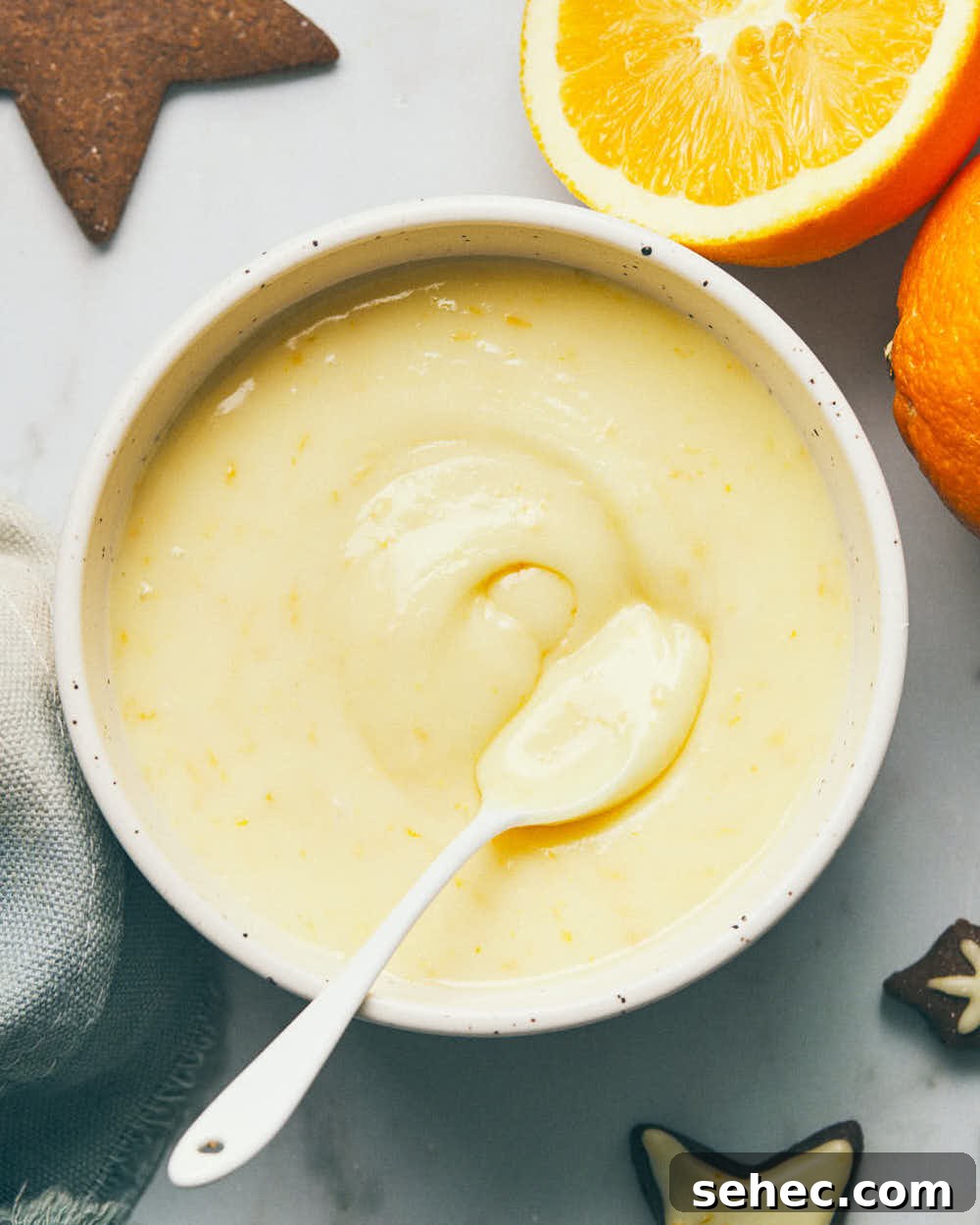
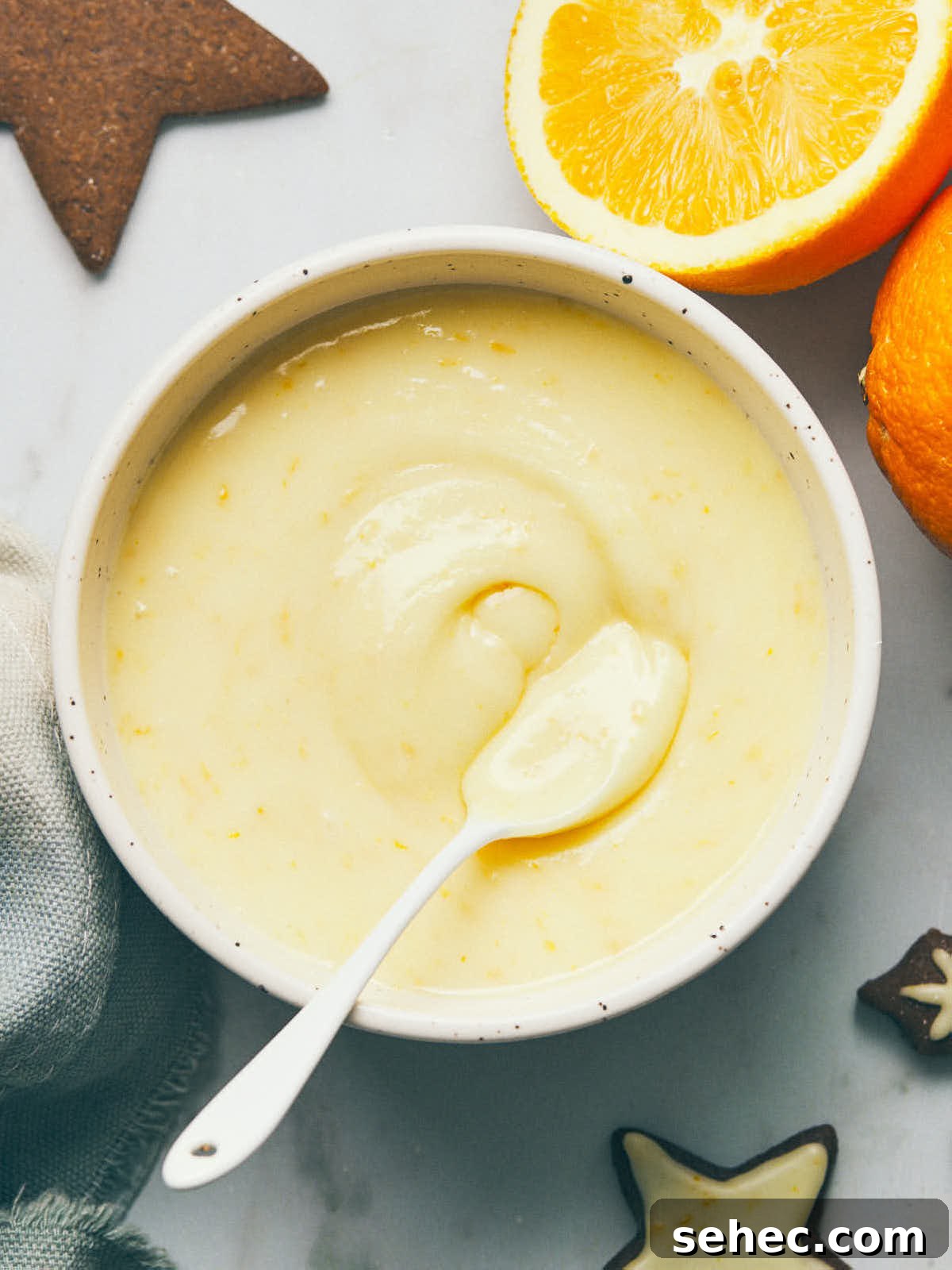
If you are tired of icing that tastes sweet but lacks real flavor, this easy orange icing is a simple upgrade. Fresh orange zest and orange juice give it a bright citrus taste that makes cookies, cakes, muffins, and scones feel more special. It is quick to make, easy to adjust, and does not require egg whites or meringue powder.
This orange icing recipe is especially good on gingerbread cookies, cardamom sugar cookies, earl grey shortbread, and other baked goods that benefit from a fresh, fragrant finish. Use it for piping, drizzling, or spreading. Once you try the clean orange flavor, plain icing may feel a little less exciting.
Why you’ll love this recipe
- Simple: This orange icing is very easy to make, even if you do not decorate baked goods often.
- Full of flavor: Fresh orange zest and juice add a natural citrus taste that balances the sweetness of powdered sugar.
- Just 2 ingredients: You only need powdered sugar and one orange to make a flavorful icing or glaze.
- Ready in minutes: The icing comes together in about 2 minutes with a bowl and a whisk.
- Versatile: Pipe it onto cookies, spread it with a small knife, or thin it slightly and drizzle it over pound cake, loaf cake, muffins, or scones.


Ingredients (and substitutes)
You only need 2 ingredients to make this fresh orange icing:
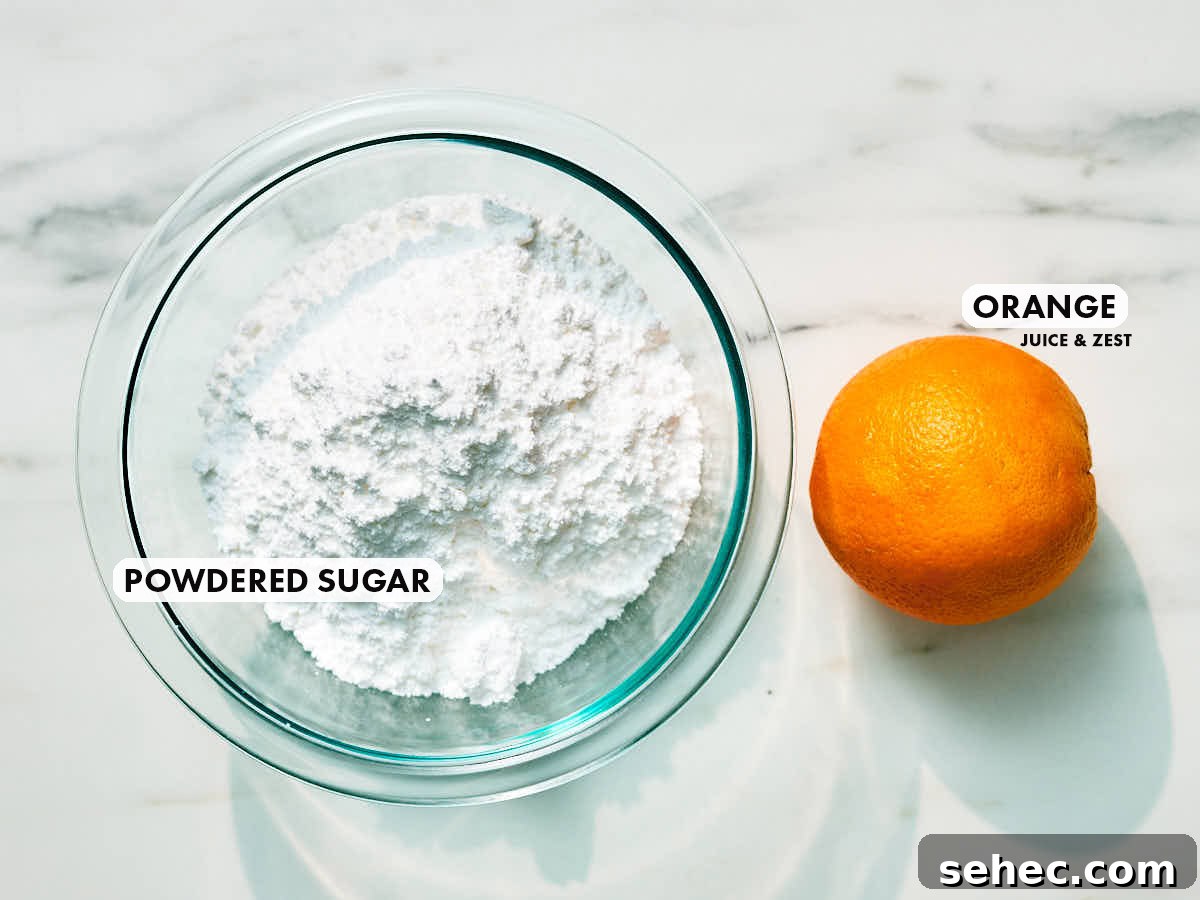
- Powdered Sugar: Also called confectioners’ sugar or icing sugar, powdered sugar is the best choice for smooth icing because of its fine texture. If your sugar has clumps, break them up before mixing. You can sift it, whisk it well, or pulse it briefly in a food processor.
- Orange: You will use both the zest and the juice. Zest the orange before cutting it open, because a whole orange is much easier to hold and grate. Use a fine grater to remove only the bright orange outer layer. Avoid the white pith underneath, as it can taste bitter. Then cut the orange in half and squeeze out the juice.
Find the recipe card below for the complete ingredient amounts and instructions.

How to make (step-by-step photos)
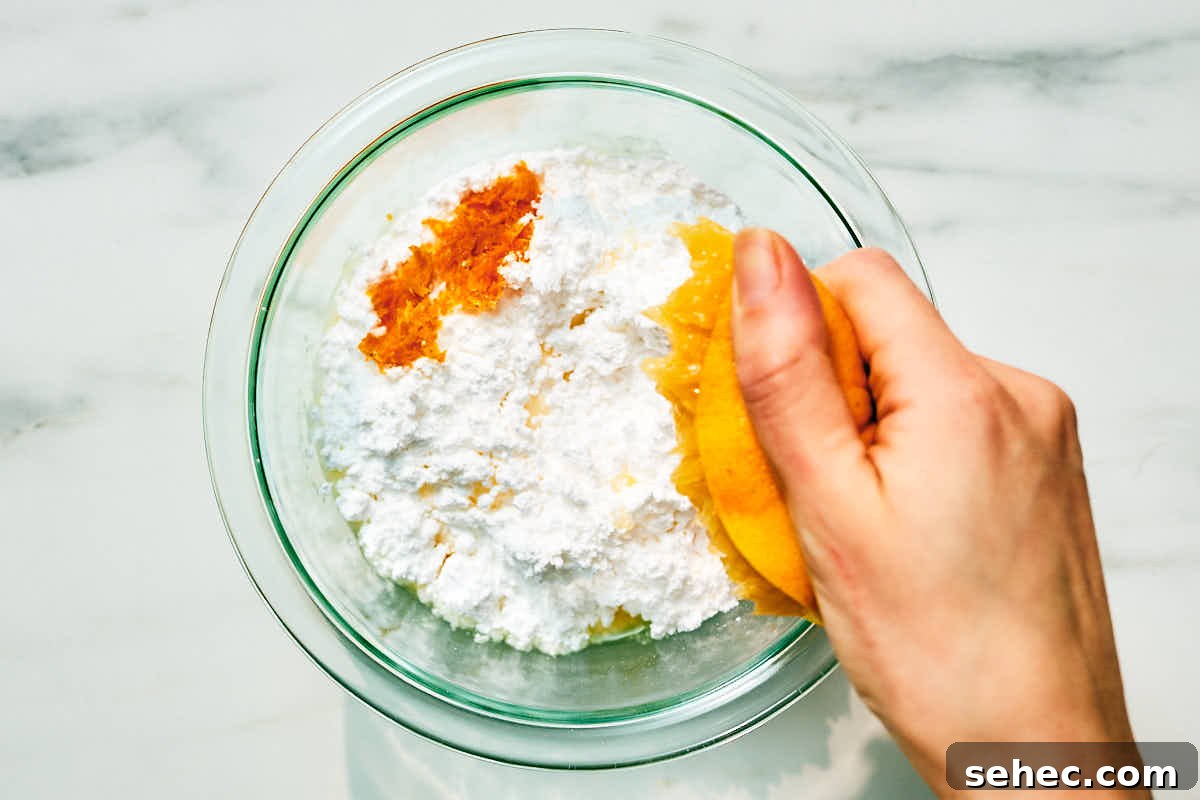
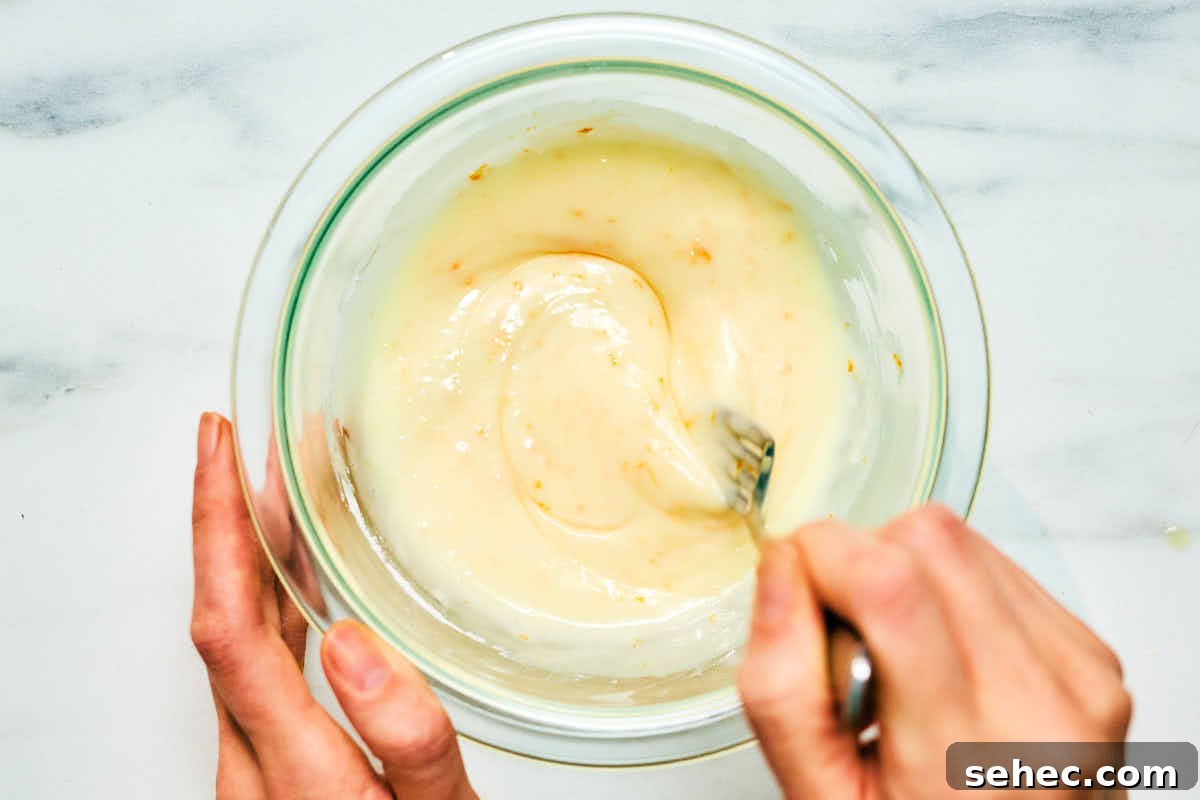
This easy orange icing is ready in just 2 minutes. All you need is a medium bowl, a whisk, and your ingredients.
Find the recipe card below for the complete recipe, including detailed instructions.
Tips
- Use clump-free powdered sugar: Smooth icing starts with smooth sugar. If the powdered sugar is lumpy, sift it or whisk it well before adding the orange juice.
- Zest before juicing: It is much easier to zest a whole orange than a squeezed one. Remove only the orange-colored zest and avoid the bitter white pith.
- Adjust the consistency: For thicker icing that is easier to pipe, add more powdered sugar. For a thinner glaze, add a little more orange juice, a small amount at a time.
- Cool baked goods completely: Do not ice warm cookies, cakes, muffins, or scones. Heat will melt the icing and make it run before it has time to set.
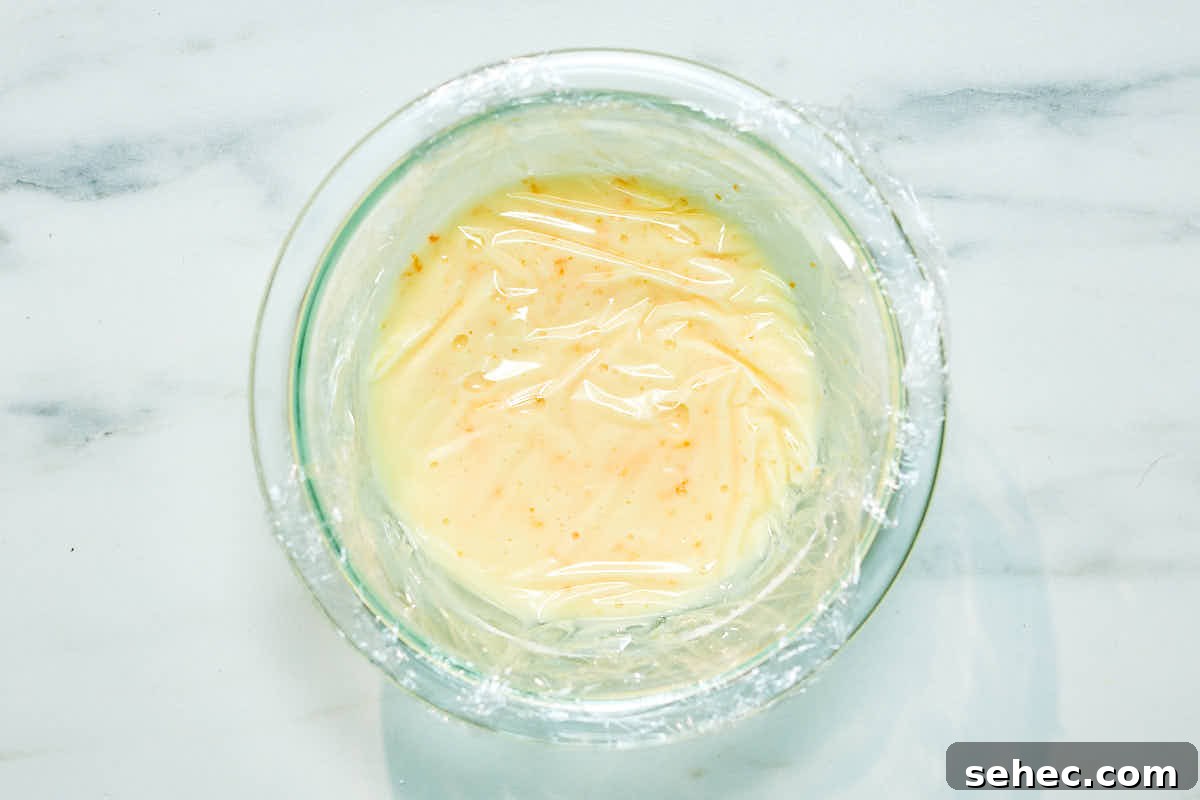
- Make it fresh when possible: This icing is best used soon after mixing because it firms up as it sits. If you need to store it, cover the surface tightly to reduce air exposure.
How to use orange icing
Orange icing pairs beautifully with warm spices and classic dessert flavors. It works especially well with cinnamon, cardamom, chocolate, cranberry, vanilla, and gingerbread. The citrus brightens rich baked goods and adds a fresh finish without making the recipe complicated.
Four desserts that pair especially well with this icing are:
- Best Vegan Gingerbread Cookies
- Best Cardamom Cookies (Soft & Chewy)
- Best Earl Grey Shortbread Cookies
- White Chocolate Raspberry Cookies
You can also use this orange icing as a glaze for:
- Pound cake
- Loaf cake
- Muffins
- Scones

Recipe FAQs
Choose a regular orange, such as a navel or Valencia orange, with smooth, unblemished skin. Organic and unwaxed oranges are a good choice when using the zest. Smaller oranges, such as mandarins, can be harder to zest without catching the bitter white pith.
Yes, this icing dries firm enough for decorating cookies. However, because it does not contain egg whites, it will not become as hard as traditional royal icing.
Yes. You can use the zest and juice from other citrus fruits, such as lemon, lime, or grapefruit. Adjust the amount to taste, because some citrus fruits are more tart than oranges.
This icing is best made fresh, because it firms up when exposed to air. If you have leftovers, press plastic wrap directly onto the surface of the icing, then cover the bowl with another layer of wrap. You can also store it in a freezer bag with as much air removed as possible. These methods help slow hardening. Store at room temperature for up to 2 days.

Love this recipe? Please leave a 5-star review below.
📖 Recipe
Orange Icing

Ingredients
- 1¾ cups powdered sugar (more as needed)
- ½ to ¾ teaspoons lightly packed orange zest
- 2 tablespoons fresh orange juice (more as needed)
Instructions
-
Mix the icing: Add 1¾ cups powdered sugar, ½ to ¾ teaspoons lightly packed orange zest, and 2 tablespoons fresh orange juice to a medium bowl. Whisk until smooth. Taste and adjust as needed. Add more powdered sugar to thicken, more orange juice to thin, or more zest for a stronger citrus flavor.
-
Decorate:
For cookies: Transfer the icing to a piping bag, or spread it onto cookies with a small spatula, spoon, or butter knife. The icing will firm as it dries.
For glaze: Thin the icing until pourable, then drizzle it over fully cooled baked goods.
Notes
- Powdered sugar: Also known as confectioners’ sugar or icing sugar. Remove any clumps before using. If you follow a vegan diet, check the package label because not all sugar is considered vegan.
- Ways to use orange icing: Use it to decorate gingerbread cookies, shortbread cookies, sugar cookies, or similar baked goods. You can also drizzle it over muffins, scones, loaf cakes, or pound cake.
- Storage tips: This icing is best made fresh and used right away. To store leftovers, press plastic wrap directly on the surface and cover the bowl, or place the icing in a freezer bag with the air removed. Store at room temperature for up to 2 days. The icing hardens when exposed to air.
- Yield: Makes about ¾ cup icing. The nutrition estimate assumes 1 to 1½ teaspoons per serving.