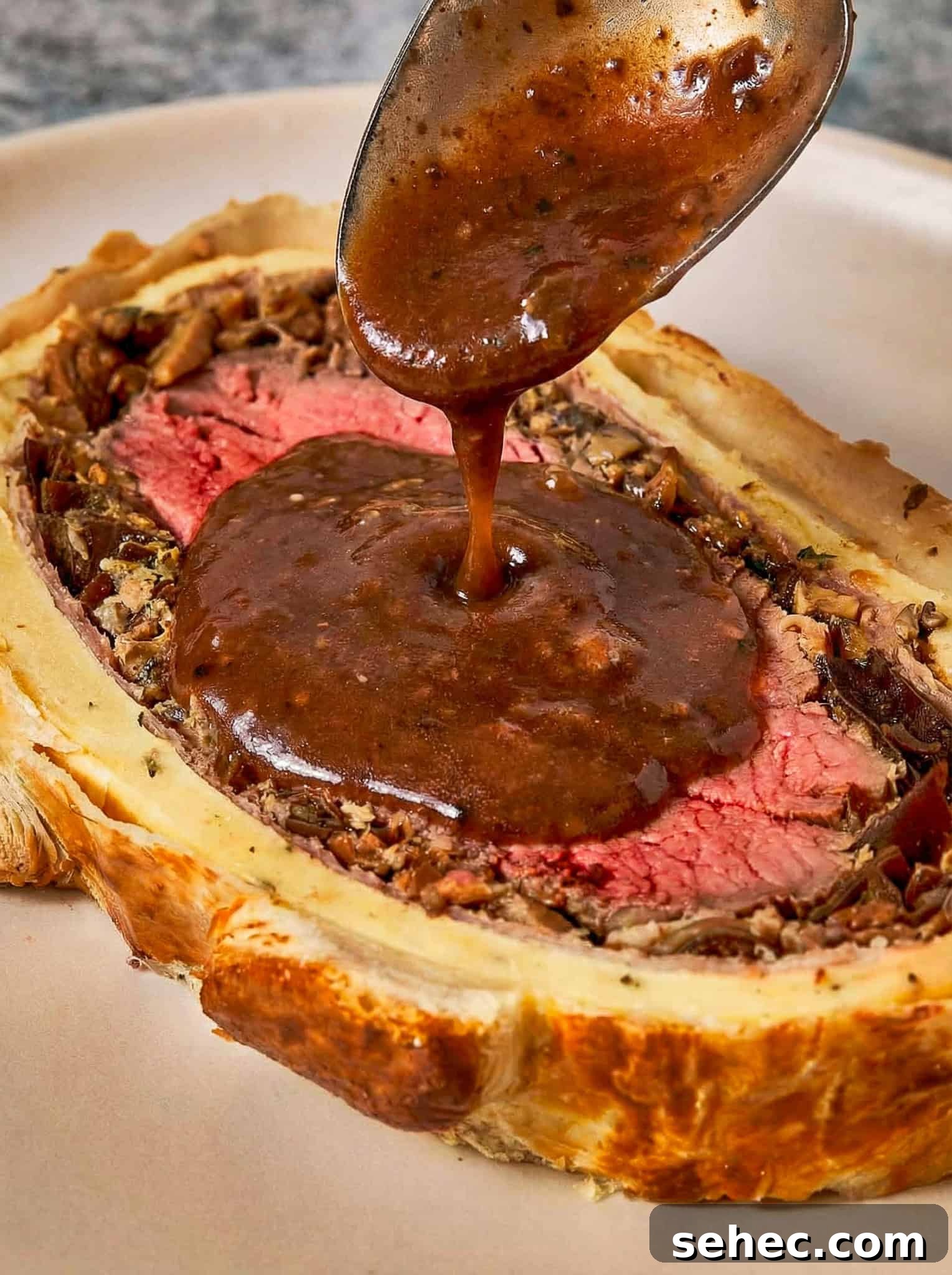
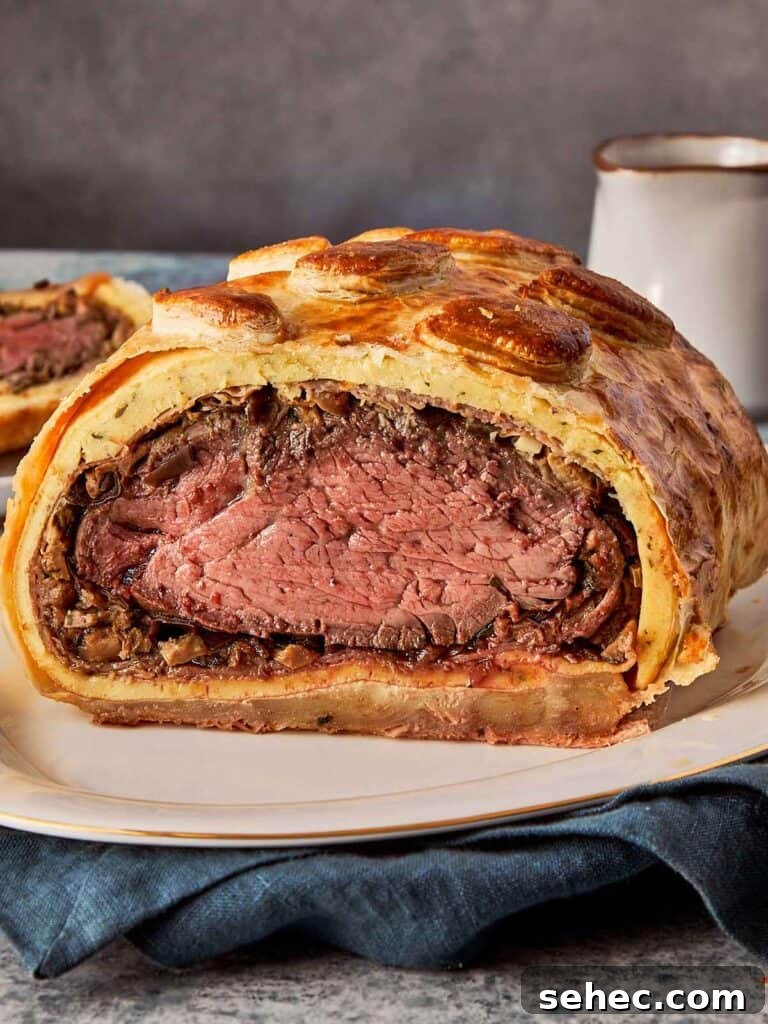
One of the most mouthwatering, beautiful and downright delicious meals I’ve ever made: buttery puff pastry, intensely flavored duxelles (a mushroom, shallot and herb mixture) and the juiciest, medium-rare beef tenderloin you’ll ever serve. This Beef Wellington is a showstopper for a special dinner but, step by step, it’s entirely achievable at home.
If you enjoy elevated steak dishes, this Beef Wellington is the perfect upgrade for your next celebration. It combines classic English presentation with French technique and includes a rich truffle red-wine sauce to finish. The recipe may sound technical, but careful preparation and the tips below will ensure excellent results without stress.
Why this recipe works (and why you can do it!)
A great Beef Wellington depends on a few key principles: controlling moisture, building protective layers around the beef, and using high-quality ingredients. The duxelles (a finely cooked mushroom paste) must be cooked until dry so it doesn’t release liquid into the pastry. A thin thyme crêpe acts as a final moisture barrier, and prosciutto adds both flavor and structure. Follow the chilling steps and the result will be a uniformly cooked, medium-rare center with crisp, golden puff pastry.
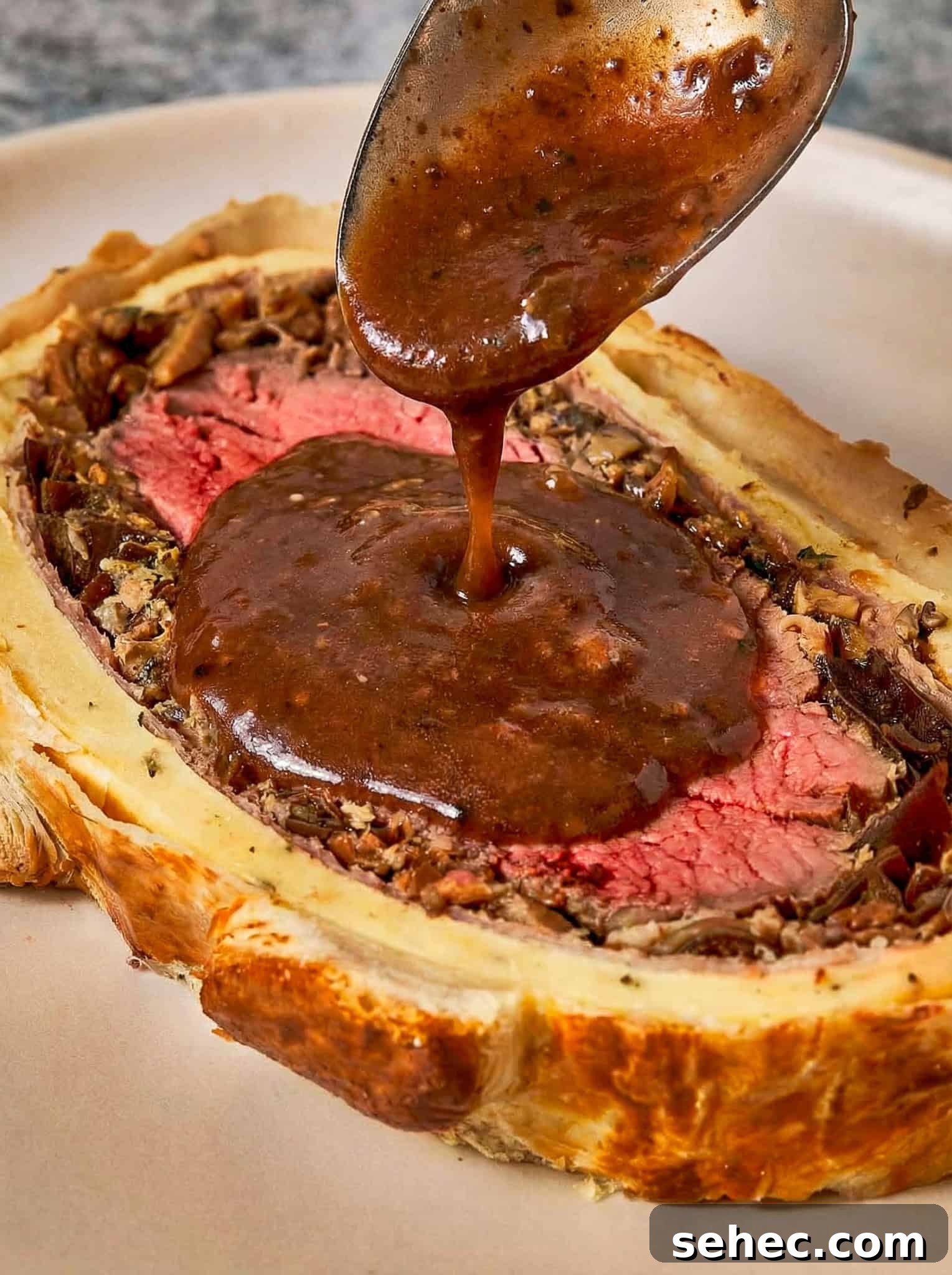
I pair the Wellington with a reduced red-wine and Madeira sauce finished with a little dark chocolate and truffle paste for depth, gloss and an earthy lift. The chocolate is not meant to make the sauce sweet — it deepens color and texture just like many professional pan sauces do.
The 5 essential layers of a Wellington
Understanding each layer helps you assemble the Wellington correctly so every slice looks and tastes perfect.
- The Tenderloin (Filet Mignon) — use the center cut (Chateaubriand) so the roast is uniform and cooks evenly.
- The Duxelles — mushrooms cooked down to a dry, concentrated paste that adds deep umami flavor without releasing excess moisture.
- The Prosciutto — thinly sliced prosciutto creates a salty layer and a moisture barrier that protects the pastry.
- The Thyme Crêpe — a thin crêpe that soaks up juices and prevents the pastry from becoming soggy.
- The Puff Pastry — use all-butter puff pastry for the best flavor and texture; keep it cold until the final wrap so the butter layers remain distinct.
Key tips for success: please read before starting
- Fresh vs. dried mushrooms — I recommend fresh Cremini (Swiss brown) mushrooms for the duxelles. Pulse them finely in a food processor so the texture is sand-like; if they remain too large the filling can be lumpy.
- Chill between steps — keep the beef log cold before wrapping in pastry. Warm meat will melt the butter in the pastry and cause a less flaky finish.
- The chocolate trick — a small piece of dark chocolate in the sauce enriches color and mouthfeel without sweetness. It’s a classic chef’s technique for glossy, velvety sauces.
Everything you need and why it matters
A Beef Wellington relies on great ingredients because there are few places to hide mistakes. Use quality tenderloin, real butter puff pastry, fresh mushrooms and good stock and wine for the sauce.
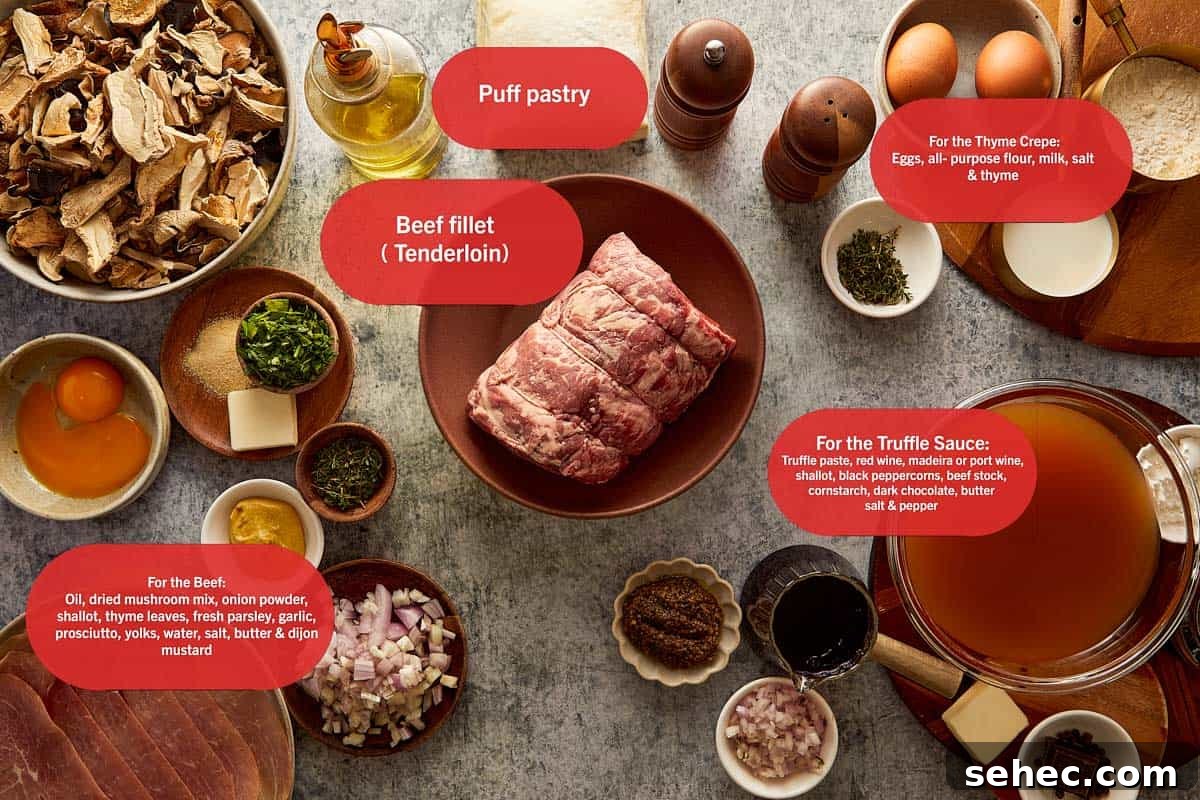
- Beef: center-cut tenderloin, trimmed of silverskin and chain for an even cylinder.
- Puff pastry: all-butter puff pastry gives the best flavor and flaky layers — keep it cold.
- Prosciutto: thin, freshly sliced prosciutto builds the barrier between duxelles and pastry.
- Truffle: jarred black truffle paste is an affordable way to add earthy aroma to the sauce.
- Mushrooms: fresh mushrooms reduce to a dry paste; water is the enemy of crisp pastry.
- Dijon mustard: brushed on the seared beef, it helps the duxelles adhere and adds a subtle tang.
- Wine for the sauce: a Cabernet Sauvignon with ripe fruit notes works well when reduced; choose a bottle you would also enjoy drinking.
Variations & substitutions
Adapt the recipe to suit diets or preferences without losing the core technique.
- Alcohol-free sauce: replace wines with reduced low-sodium beef stock, add a tablespoon of balsamic glaze or Worcestershire for depth and a splash of pomegranate for color; the dark chocolate remains important for richness.
- No pork: substitute prosciutto with bresaola (air-dried beef) or thin turkey ham as a moisture barrier.
- No mushrooms: use a thin layer of liver pâté or foie gras for a classic version, or caramelized onions blended with chestnuts for a sweet-savory alternative.
Detailed step-by-step masterclass
Break the recipe into three stages: prep, assembly and bake. Do the prep ahead so everything is cold and ready when you assemble.
The prep work
Cook the hot components and cool them completely. Heat will ruin puff pastry before it hits the oven.
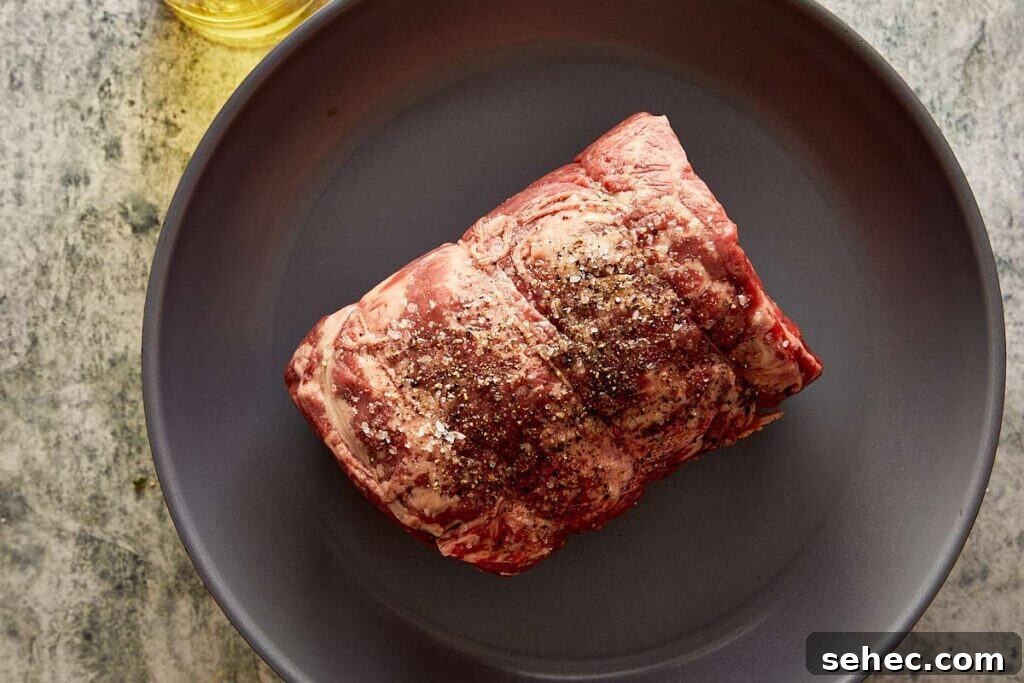
- Sear the beef: Pat the tenderloin dry, coat lightly with oil and season generously with salt and pepper. Sear in a very hot pan just to brown the outside — about 30 seconds per side including the ends. Remove and cool completely, then brush with Dijon mustard.
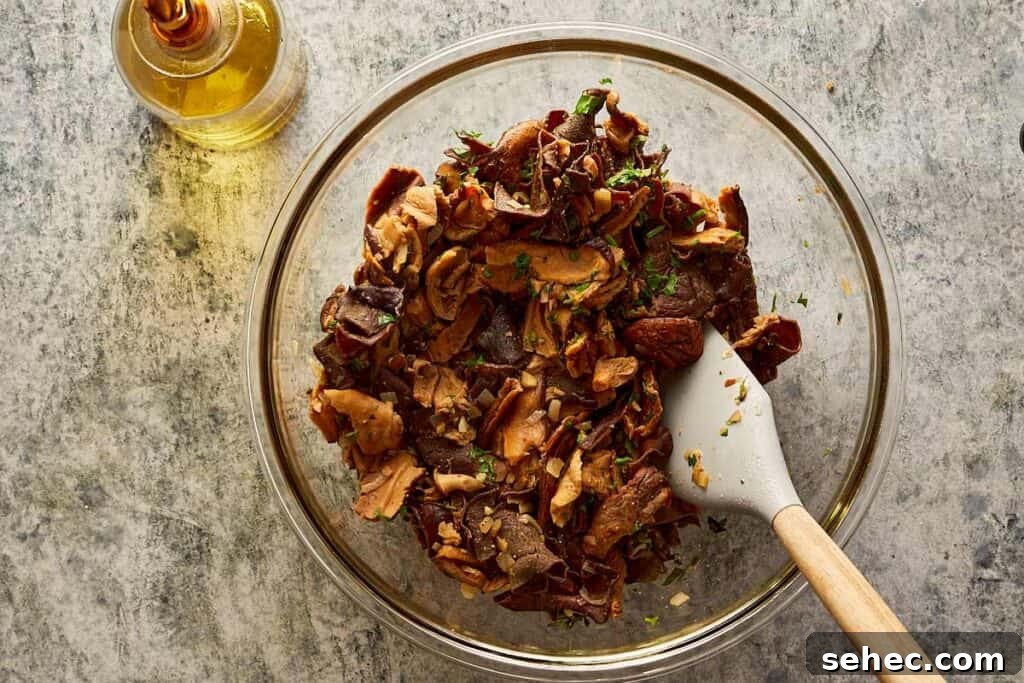
- The duxelles: Pulse fresh mushrooms in a food processor until finely chopped. Sauté in butter with shallots, garlic, onion powder, thyme, salt and pepper over medium heat until the mixture becomes a dark, thick, bone-dry paste and starts to stick to the pan. Stir in parsley and cool completely.

- The thyme crêpe batter: Whisk eggs, flour, milk, salt and chopped thyme until smooth.
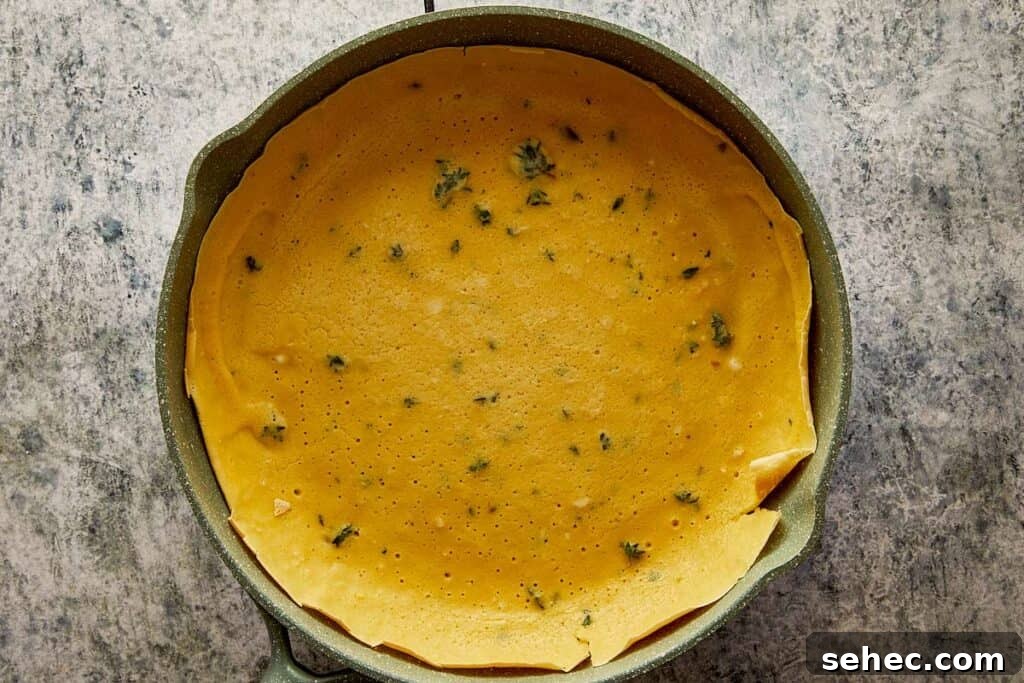
- Make the crêpe: Cook a large, thin crêpe in a lightly oiled non-stick pan (1–2 minutes per side). Cool and reserve.
The assembly
Work on a clear surface. Everything must be cold before you wrap in pastry.
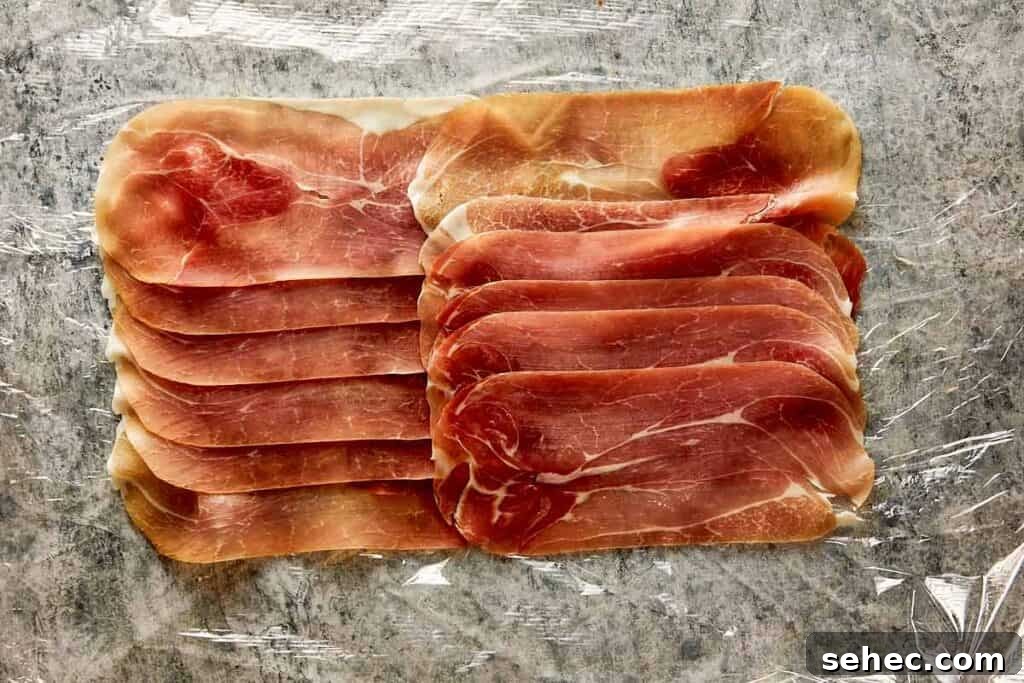
- The prosciutto layer: On a sheet of plastic wrap, overlap prosciutto slices to form a rectangle large enough to wrap the beef log.
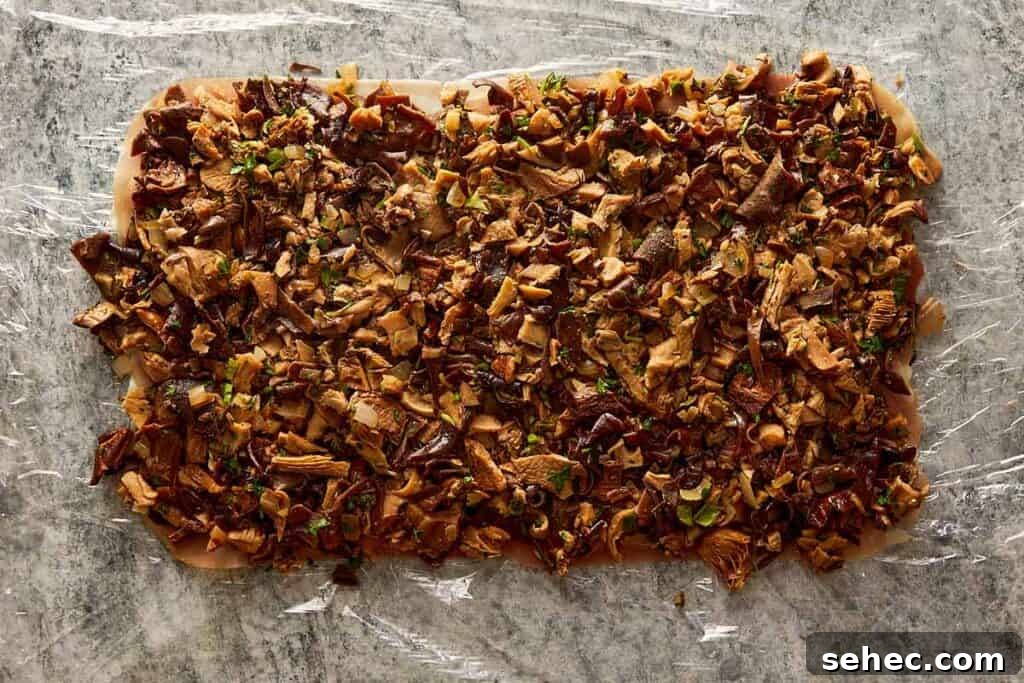
- Spread the duxelles: Spread the cold mushroom paste evenly over the prosciutto, leaving a 1-inch border along one edge.
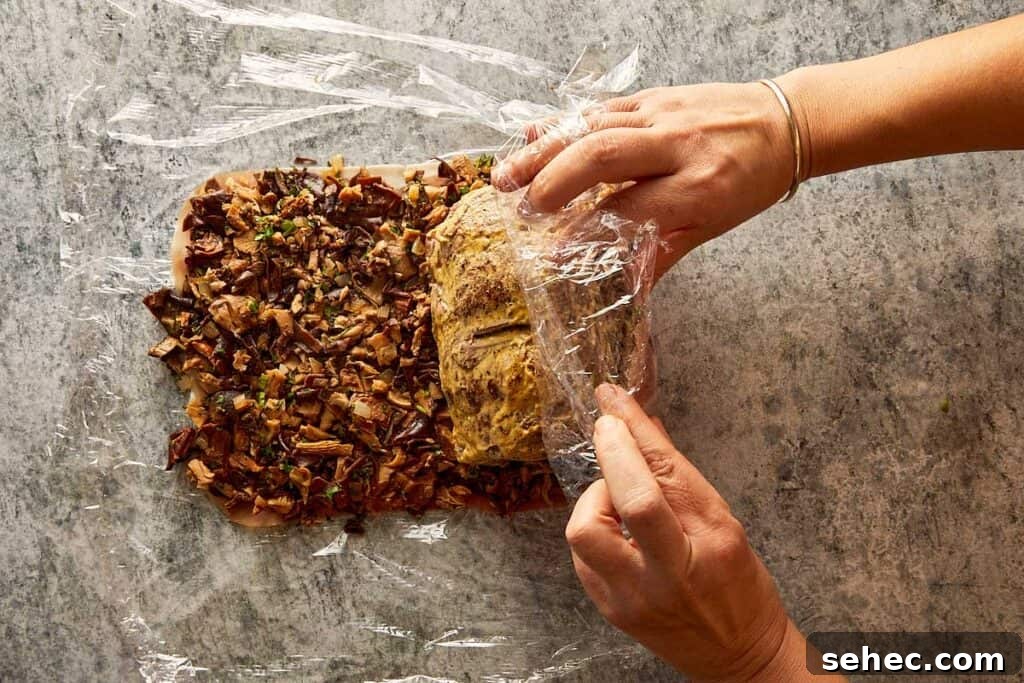
- The first roll (meat & mushroom): Place the cooled, mustard-coated beef at the bottom of the prosciutto rectangle. Use the plastic to roll tightly into a log, twist the ends and refrigerate for at least 1 hour to set the shape.
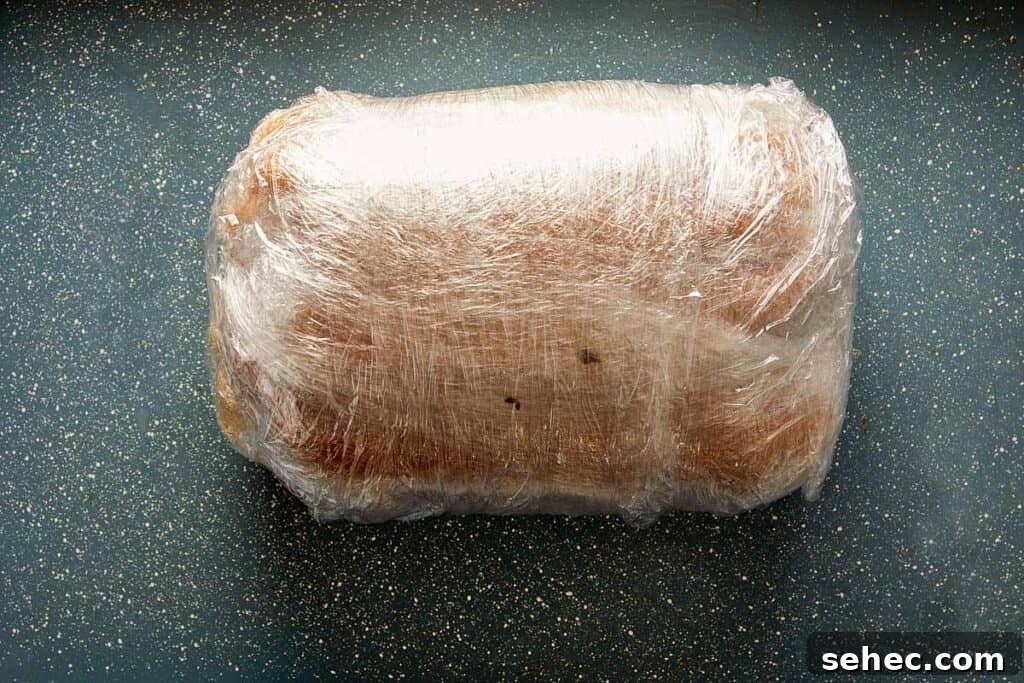
- The crêpe roll: Unwrap and place the thyme crêpe on fresh plastic. Roll the chilled beef log inside the crêpe, wrap tightly and chill another 30–60 minutes. The log must be very cold before the pastry step.
The bake & finish — showtime
Work quickly once the pastry comes out of the refrigerator so the butter remains layered in the dough.
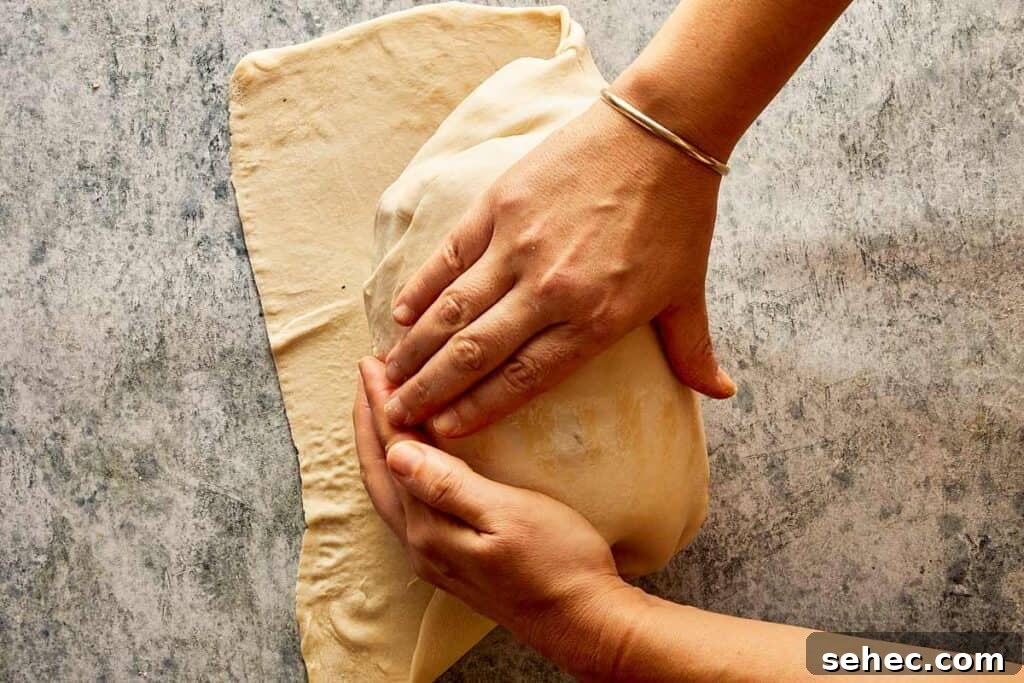
- The final wrap (puff pastry): Roll out chilled all-butter puff pastry to encase the log. Place the log on the pastry, brush edges with egg wash, and wrap tightly. Trim excess and place seam-side down on a parchment-lined baking sheet.
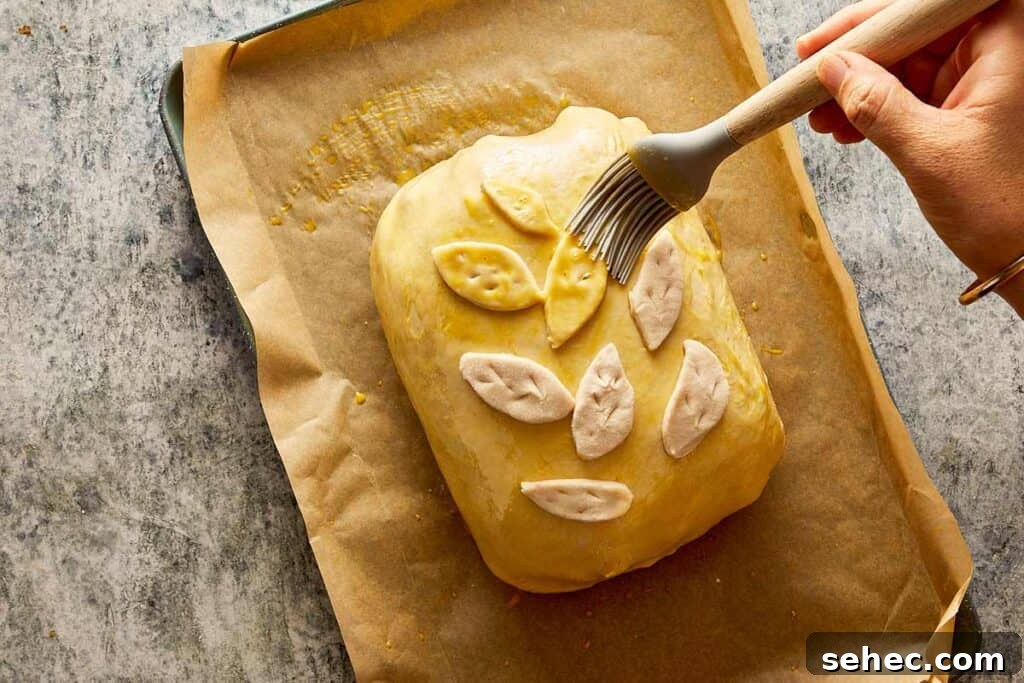
- Egg wash & decorate: Brush the pastry with egg yolk mixed with water. Score a pattern lightly or add simple pastry cutouts for a refined finish.

- The bake: Preheat the oven to 400°F (200°C). Bake 15 minutes to puff the pastry, then reduce to 350°F (180°C) and bake another 25–35 minutes until deep golden. Aim to remove the Wellington when the internal temperature reaches 125–130°F (52–54°C) for medium-rare.

- Resting: Transfer to a wire rack and rest at least 15 minutes before slicing. Resting keeps juices in the meat rather than on your cutting board.

- The truffle red-wine sauce: In a saucepan, boil red wine, Madeira (or port), minced shallot and crushed peppercorns until reduced by about three-quarters and syrupy. Add beef stock and boil briefly, then strain. Thicken with a cornstarch slurry if needed, turn off the heat and whisk in butter and a small piece of dark chocolate until glossy. Stir in truffle paste and season to taste.
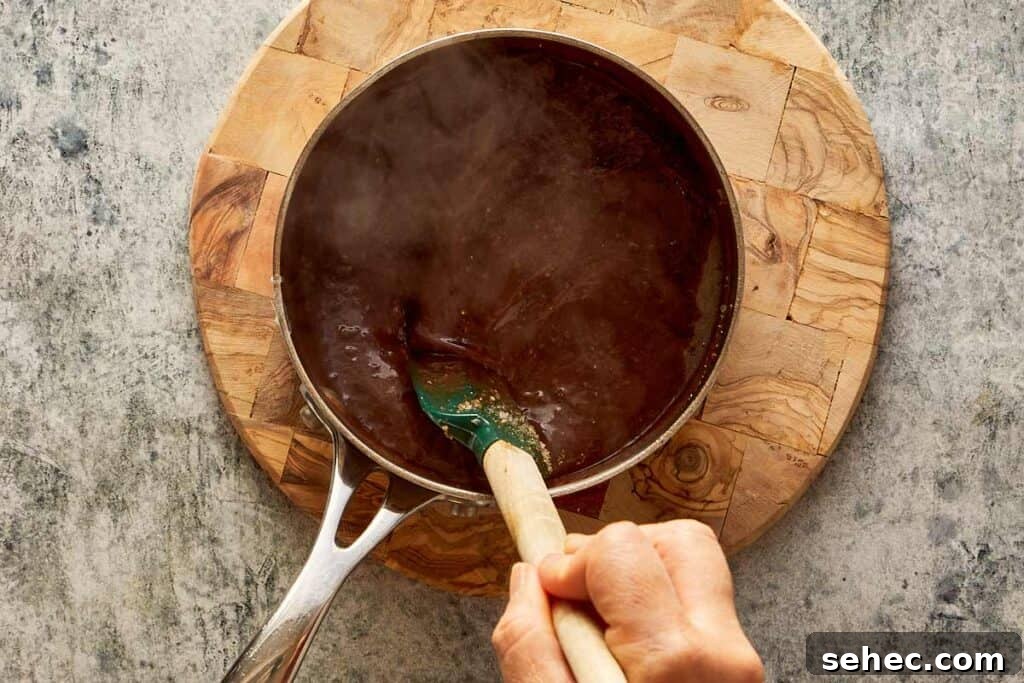
- To serve: Slice the Wellington into thick slabs and spoon the truffle sauce around the base of each slice — avoid pouring sauce over the crisp pastry to keep it crunchy.
What to serve with Beef Wellington
Classic pairings include creamy mashed potatoes, roasted mushrooms, browned butter roasted potatoes, or buttery asparagus. If you want to echo the truffle note, lightly truffled fries or a simple green vegetable with lemon and garlic complement the rich Wellington nicely.
Common FAQs
Cook the mushroom duxelles completely dry, wrap the beef in a crêpe to absorb any juices, and ensure the assembled log is well chilled before adding pastry. If needed, bake on a lower rack to help the bottom crisp.
Yes. You can assemble the Wellington up to the point before the final pastry wrap, or fully wrap it and refrigerate for up to 24 hours before baking. Chilling helps it hold shape.
Remove from the oven at 125–130°F (52–54°C) for medium-rare; it will rise a few degrees while resting. For medium aim for about 135°F (57°C) before resting.
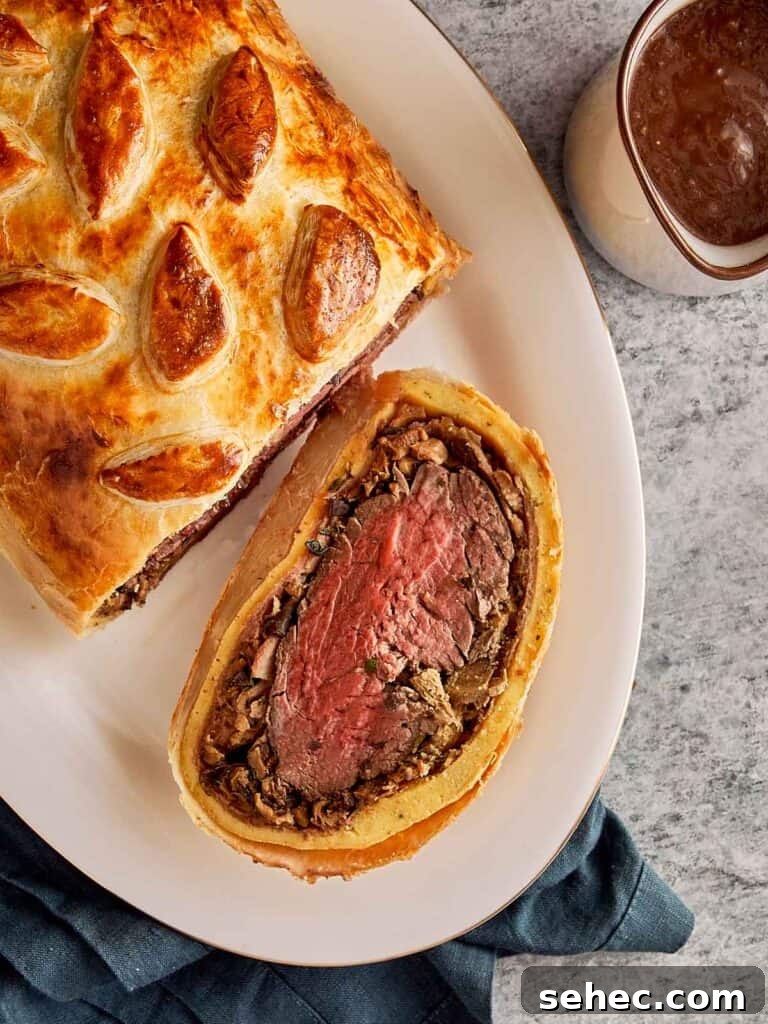
Beef Wellington with Truffle Red Wine Sauce
Ingredients
Stage 1, The Prep
- 1.3 lb center-cut beef fillet (tenderloin)
- 2 tbsp olive oil
- ½ tbsp salt and ¼ tbsp pepper (to season)
- 2 tbsp Dijon mustard
- 18 oz fresh mushrooms (Cremini, Swiss brown or button)
- 1 tbsp butter
- 2 large shallots, finely chopped
- 1 tsp onion powder
- 2 tsp chopped thyme leaves
- 1 tbsp garlic paste or 3 cloves crushed
- Salt and pepper to taste
- 1 tbsp chopped fresh parsley
For the thyme crêpe
- 2 large eggs
- ⅔ cup all-purpose flour
- ½ cup milk
- Pinch of salt
- ½ tbsp fresh thyme leaves, chopped
Stage 2, The Assembly
- 12 slices prosciutto, wafer-thin
- 18 oz all-butter puff pastry
- 2 large egg yolks + 1 tbsp water (egg wash)
Stage 3, The Bake & Sauce
- 1 cup red wine (Cabernet Sauvignon recommended)
- ½ cup Madeira or port
- 1 large shallot, minced
- 10 crushed black peppercorns
- 2 cups low-sodium beef stock
- 1 tbsp cornstarch mixed with water (slurry)
- 1 tbsp unsalted butter
- 1 small piece dark chocolate (about 10 g)
- 1 tbsp truffle paste (or finely grated fresh truffle)
- Salt to taste
Instructions
Stage 1, The Prep
- Coat the beef with olive oil, season well and sear quickly in a very hot pan until browned on all sides (about 30 seconds per side). Cool completely and brush with Dijon mustard.
- Pulse mushrooms in a food processor until finely chopped. Melt butter in a pan, add mushrooms, shallots, onion powder, thyme, garlic paste, salt and pepper. Cook, stirring, until all liquid has evaporated and the mixture becomes a dry paste. Stir in parsley and chill.
- Whisk eggs, flour, milk, salt and thyme; cook one large thin crêpe in a lightly oiled non-stick pan. Cool.
Stage 2, The Assembly
- On plastic wrap, arrange prosciutto slices in an overlapping rectangle. Spread the cold duxelles across the prosciutto, leaving a border.
- Place the mustard-coated beef at the bottom of the rectangle and roll tightly using the plastic wrap. Twist the ends and refrigerate for at least 1 hour.
- Unwrap, place the crêpe on fresh plastic, set the beef log on it and roll so the crepe encases the ham. Wrap and chill another 30–60 minutes.
- Roll out the puff pastry, remove plastic from the log and place the log in the center of the pastry. Brush edges with egg wash and wrap, sealing the seam. Place seam-side down on a parchment-lined tray. Brush with egg wash and decorate as desired.
Stage 3, The Bake & Sauce
- Preheat oven to 400°F (200°C). Bake the Wellington 15 minutes, then reduce to 350°F (180°C) and bake another 25–35 minutes until deep golden and internal temperature reaches about 125–130°F (52–54°C) for medium-rare.
- Rest the Wellington on a rack for at least 15 minutes before slicing.
- To make the sauce: reduce red wine, Madeira, minced shallot and peppercorns until syrupy. Add beef stock and boil briefly, then strain. Thicken with cornstarch slurry if needed. Off the heat, whisk in butter and the dark chocolate until glossy, then stir in truffle paste and season to taste.
- Slice the Wellington into generous slabs and serve with the truffle red-wine sauce around the base of each slice to preserve the crisp pastry.
Notes
- Use fresh mushrooms when possible. If using dried mushrooms, rehydrate, drain and squeeze completely dry before cooking.
- Cooking the duxelles until totally dry is essential to avoid a soggy pastry bottom.
- You can assemble ahead and refrigerate for up to 24 hours; you may also freeze the uncooked wrapped log for up to one month, thaw in the refrigerator before baking.
- If the pastry browns too quickly, tent loosely with foil until the center reaches temperature.
Nutrition info is approximate.