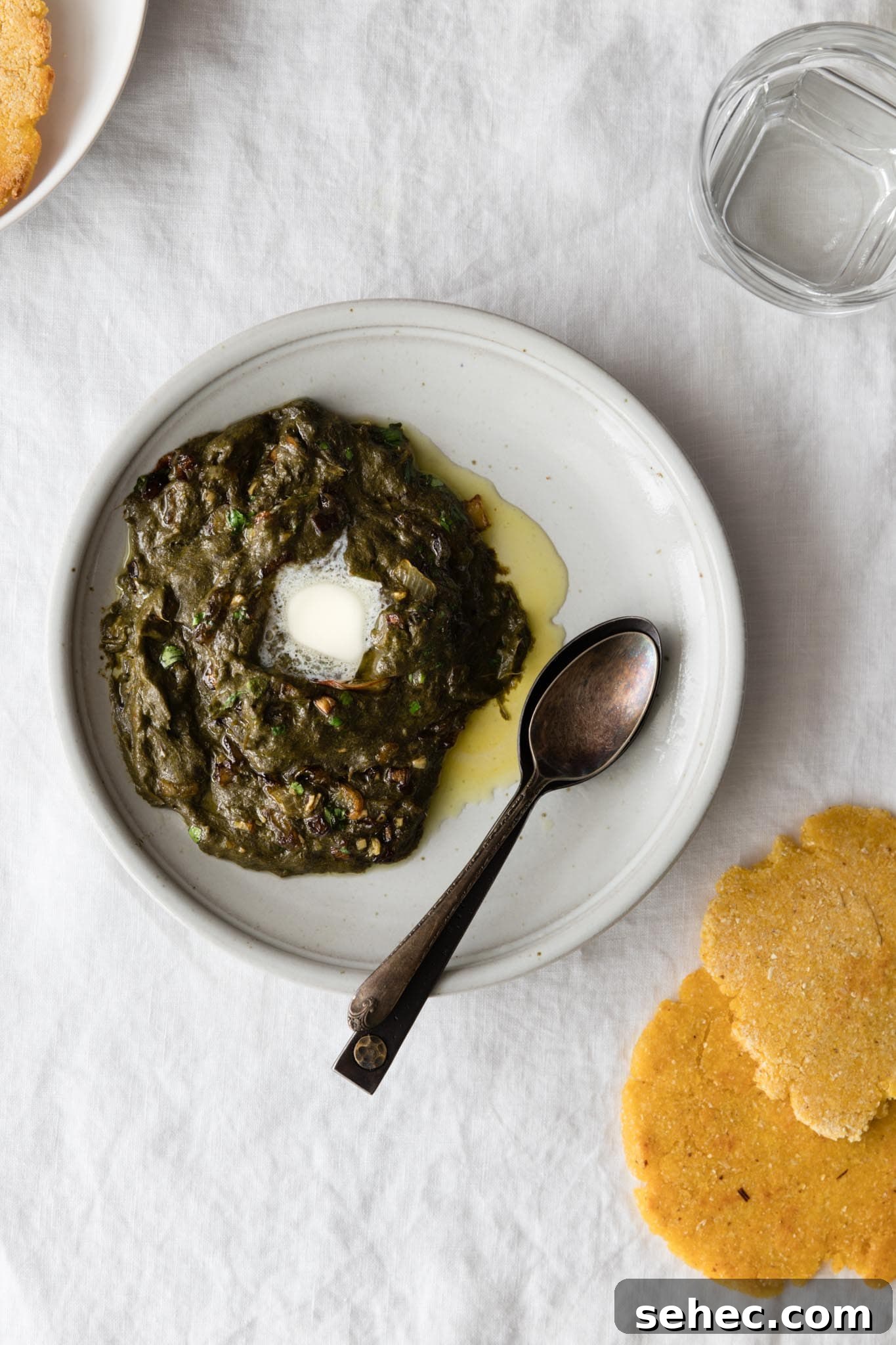
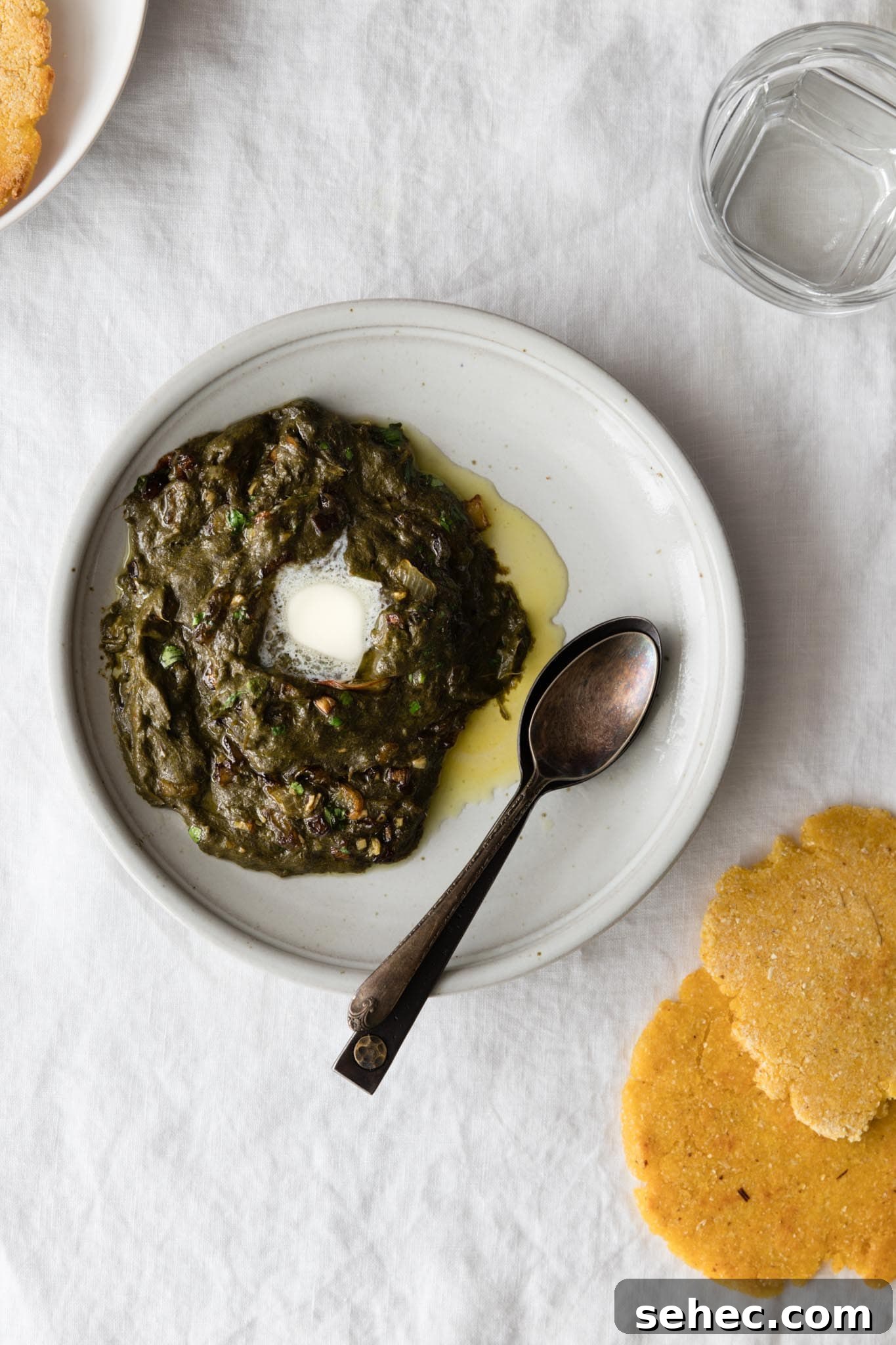
Learn how to make traditional Punjabi-style Sarson Ka Saag, a comforting mustard greens and spinach curry. This easy recipe includes both stovetop and Instant Pot instructions, along with practical substitutions if mustard greens are hard to find. Rich, earthy, and deeply nostalgic, this classic saag is a favorite vegetarian curry served best with makai ki roti.
“I’ve made this 3 or 4 times now, and it always comes out delicious! Thank you so so much for sharing!”
Gabby
Sarson Ka Saag is the kind of dish that turns a large pot of greens into something warm, satisfying, and memorable. At first glance, mustard greens may seem sharp or bitter, but once they are slowly cooked with spinach, green chilies, garlic, turmeric, and a fragrant tarka, they become deeply flavorful. Serve this Punjabi mustard greens curry with makai ki roti on a cold evening, and it is easy to understand why this meal is so loved across Punjab.
More Greens: Palak/Saag Paneer, 30-Minute Aloo Palak, Palak Chicken
Navigation
- What Is Saag, Particularly Sarson Ka Saag?
- Ingredients for Sarson Ka Saag
- How to Make Sarson Ka Saag
- About Mustard Greens
- What Other Greens Can I Use Besides Mustard Greens?
- How to Double This Recipe
- More Tips on Making Sarson Ka Saag
- What to Serve With Sarson Ka Saag?
- Easy Sarson Ka Saag Recipe
What Is Saag, Particularly Sarson Ka Saag?
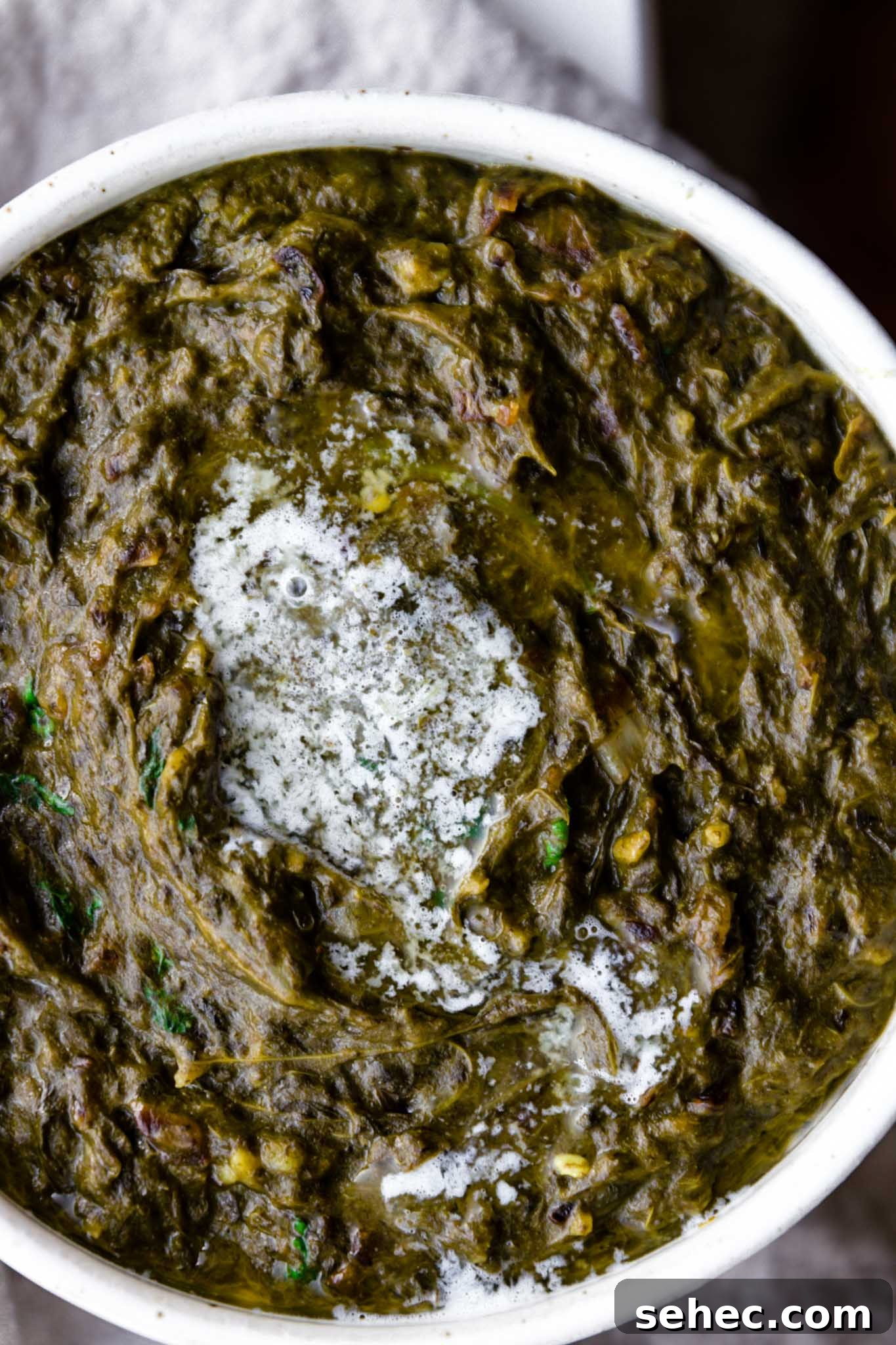
The word saag refers to leafy green vegetables. In cooking, it usually describes greens that are stewed, mashed, or blended into a rustic curry. Many different greens can be used to make saag, but mustard greens, known as sarson, are especially popular in Punjabi cooking in Pakistan and India.
In Punjabi cuisine, Sarson Ka Saag, also called Sarson Da Saag, is traditionally served with makai ki roti, a cornmeal flatbread. The combination is hearty, simple, and full of character.
This recipe is inspired by a family-style method learned from my mother-in-law. It keeps the ingredients simple and relies on the natural flavor of the greens, the heat of green chilies, and a final tarka of golden onions and ginger.
Ingredients for Sarson Ka Saag
This Sarson Ka Saag recipe uses a short list of everyday ingredients. The flavor comes from the greens, the cooking technique, and the finishing tempering rather than a long list of spices.
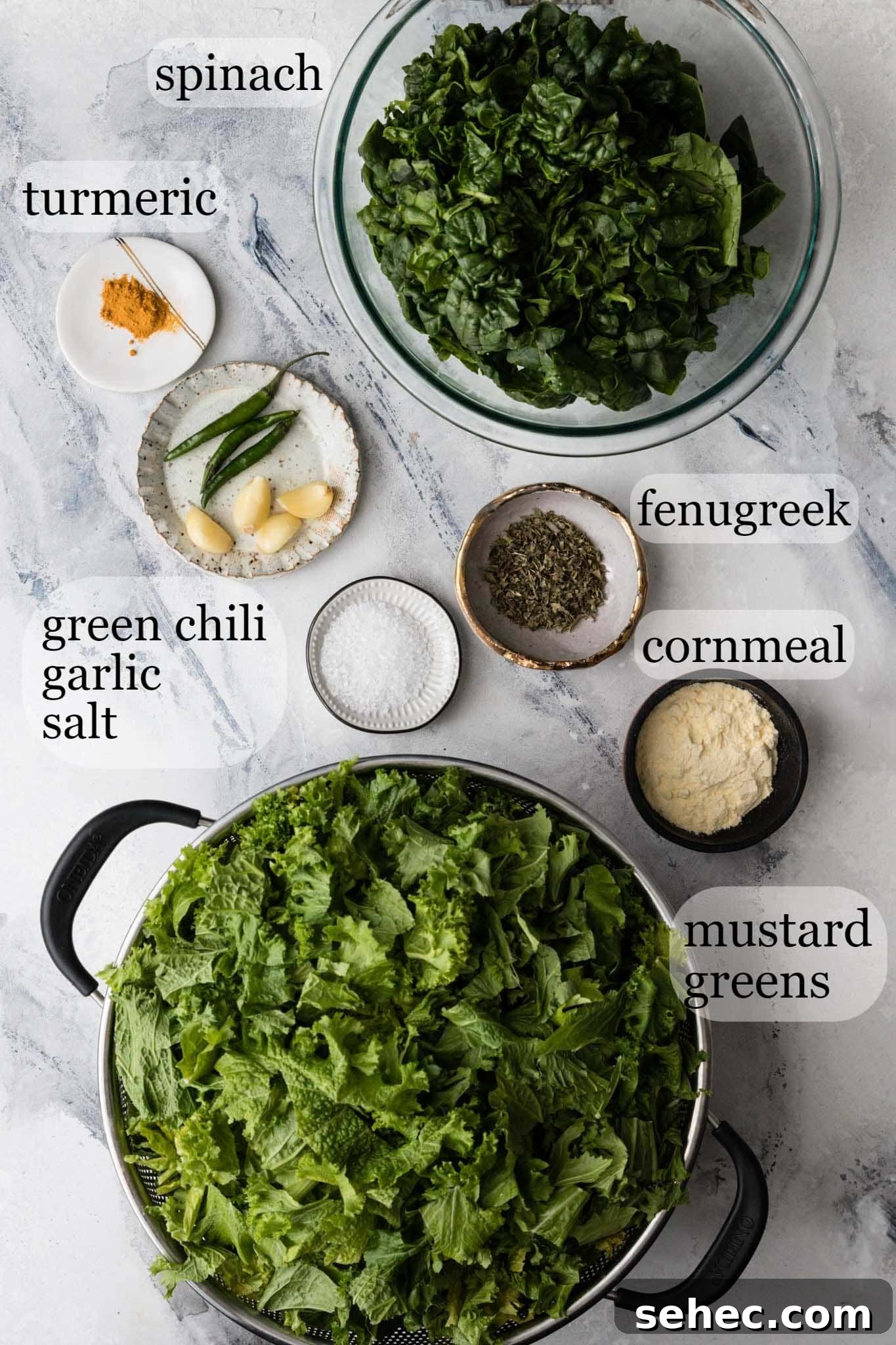
- Mustard Greens – These are the main ingredient. Fresh bunches, packaged greens, or frozen mustard greens can be used. Remove the tough stems as much as possible for a smoother, less bitter saag.
- Spinach – Spinach softens the bold flavor of mustard greens and helps create a balanced curry. Baby spinach or frozen spinach also works well.
- Green Chili Peppers – Since saag does not rely on many spices, green chilies add important heat and flavor. Thai chilies or serrano peppers are both good options.
- Garlic – Whole garlic cloves cook with the greens and are crushed before blending. Garlic adds depth without overpowering the dish.
- Turmeric Powder – This is the only ground spice used in the saag base. A small amount adds color and warmth.
- Yellow Corn Flour – Corn flour thickens the saag and gives it a traditional body. Fine-ground cornmeal can be used, but coarse cornmeal may taste gritty. Chickpea flour or masa harina can also be used as substitutes.
- Dried Fenugreek Leaves – Dried methi adds a distinctive savory aroma. Fresh methi may be used if available.
Tarka Ingredients
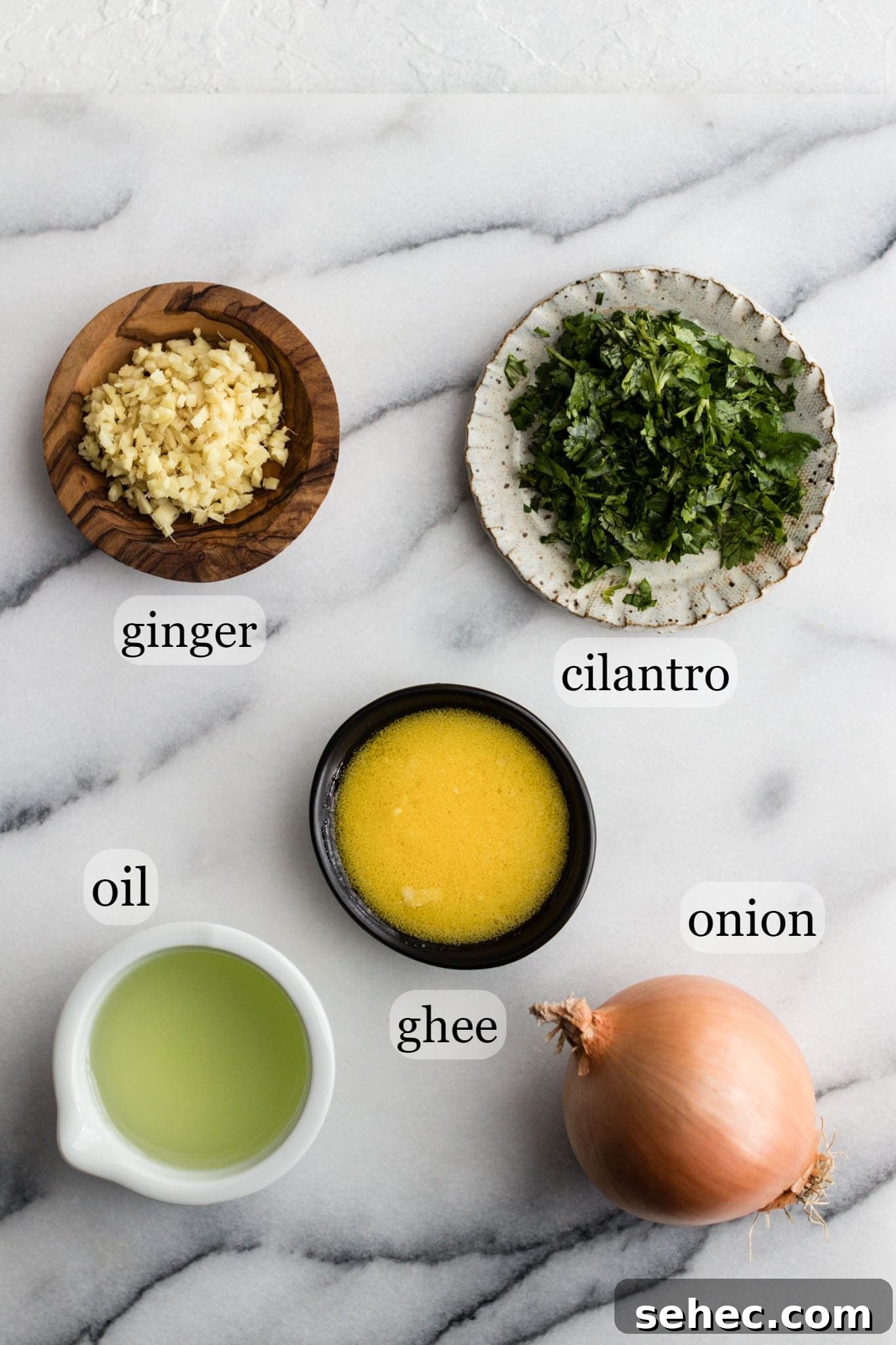
- Onion – Use a small onion. Too much onion can make the saag taste overly sweet.
- Oil and Ghee or Butter – A neutral oil works well. Ghee or butter adds richness, but you can replace it with more oil for a vegan version.
- Ginger – Finely minced ginger gives the tarka a bright, warm flavor. Mince it rather than crushing it so it mixes evenly into the onions.
- Cilantro – Fresh cilantro is added at the end for garnish and freshness.
How to Make Sarson Ka Saag
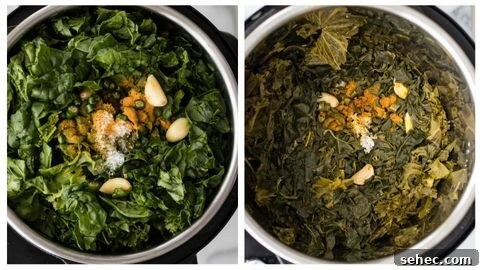
- Cook the mustard greens, spinach, green chilies, garlic, turmeric, salt, and water in either an Instant Pot or a Dutch oven. There is no need to finely chop the garlic or mix everything perfectly at this stage.
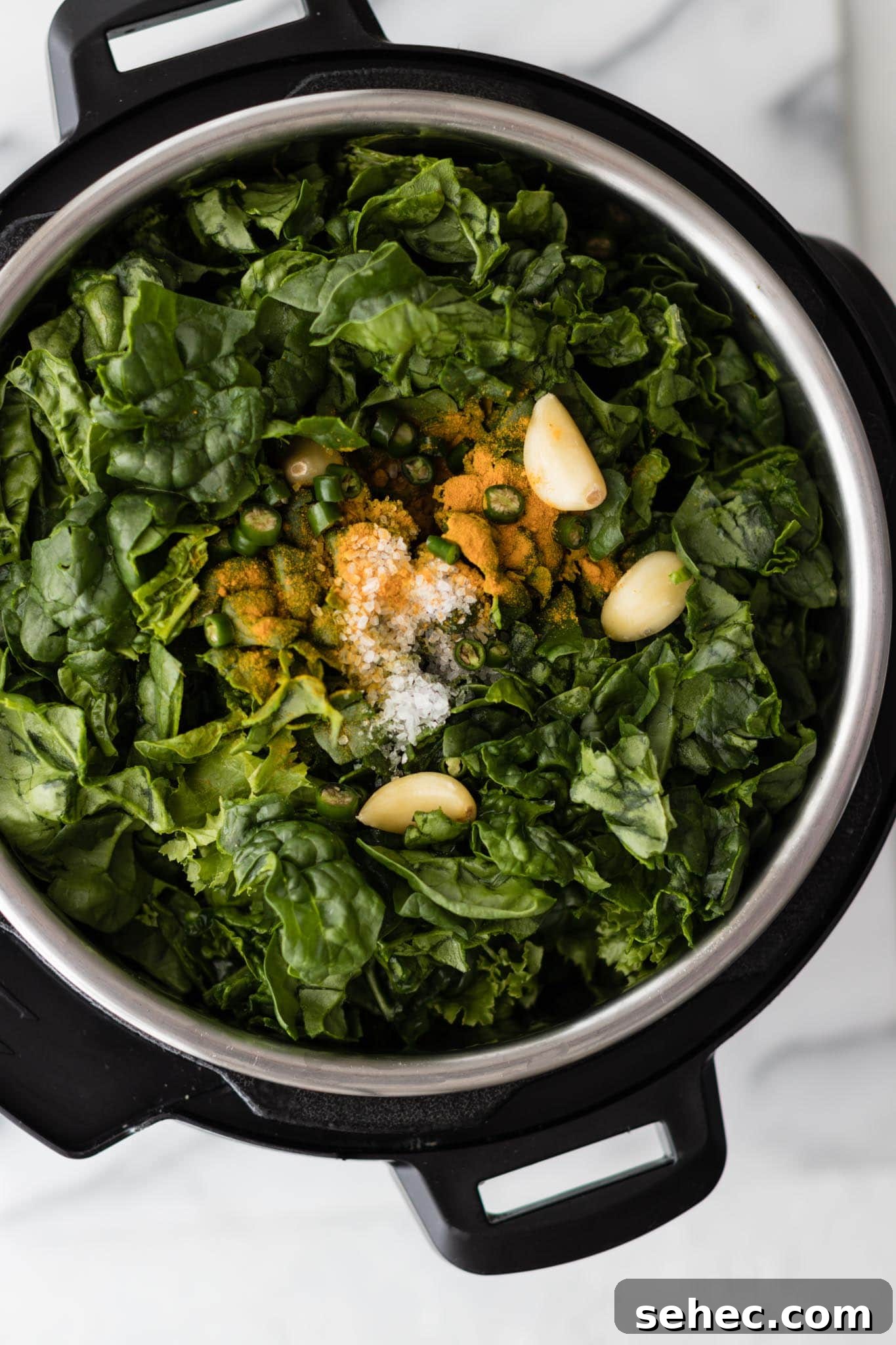
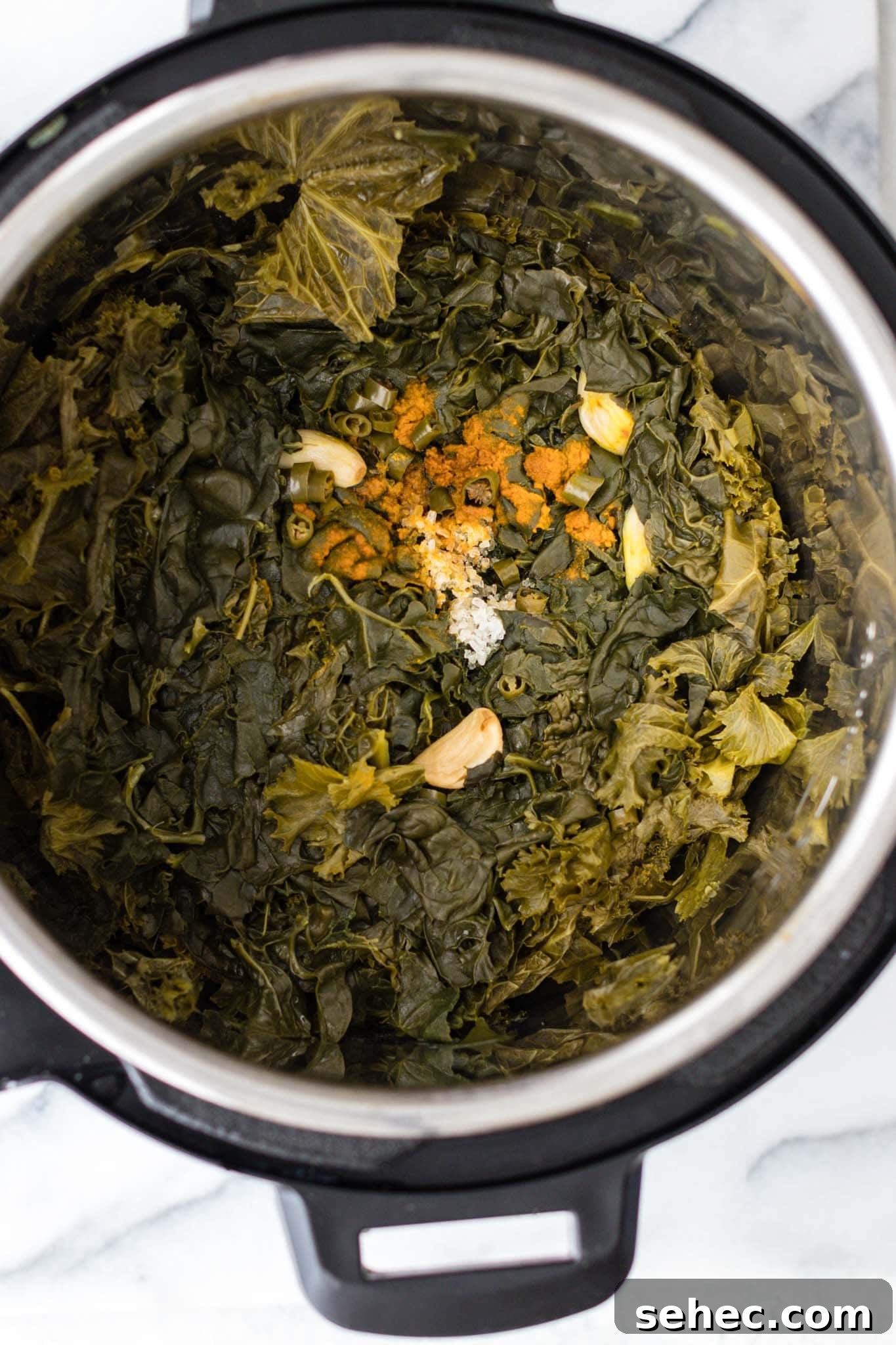
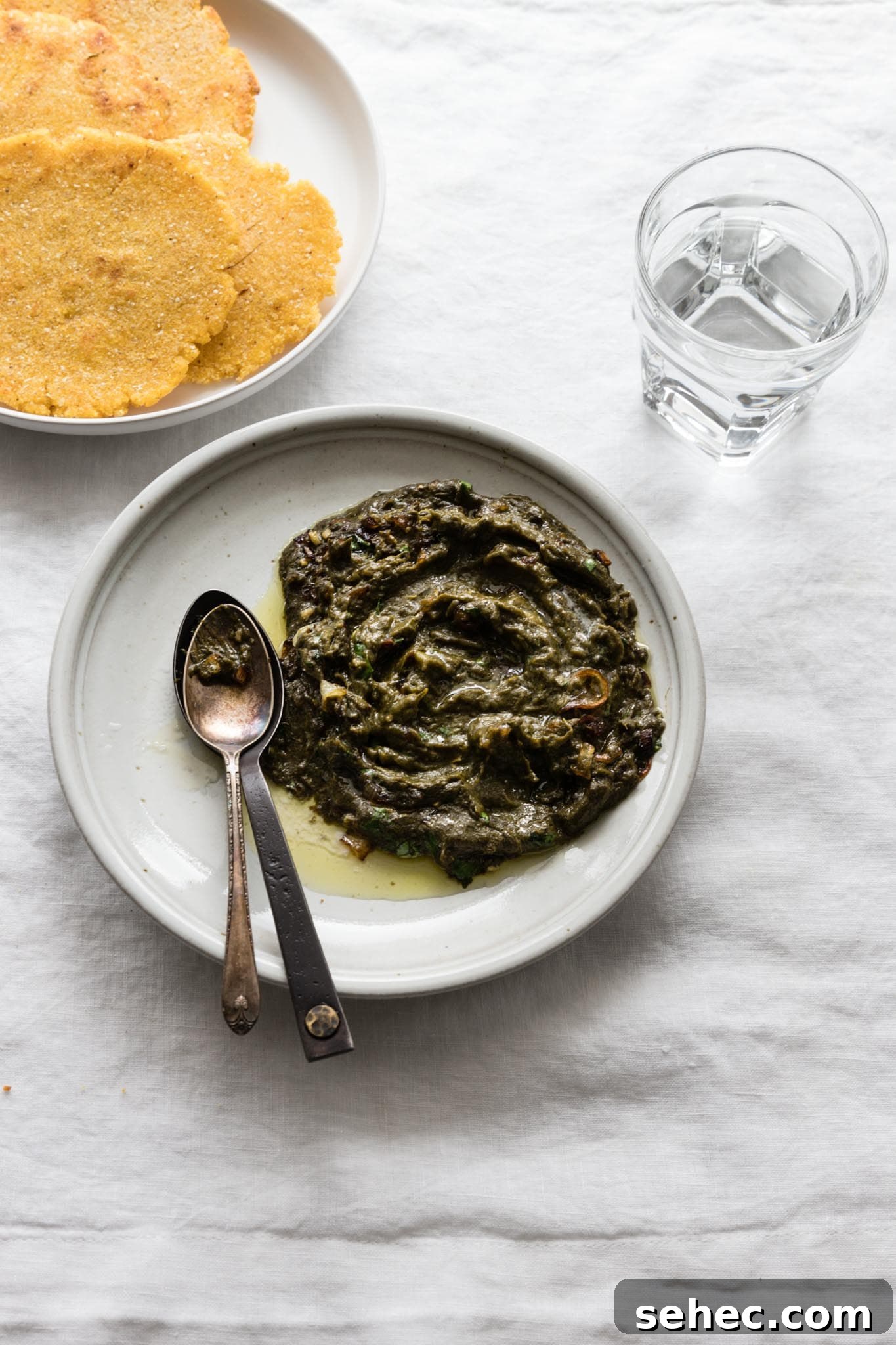
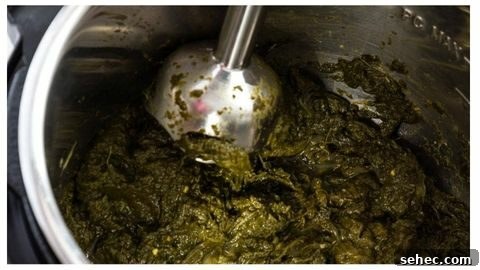
- Once the greens are tender, stir the mixture and crush the softened garlic cloves as you mix. Blend the cooked greens into a rough purée using an immersion blender or food processor. The texture should be mostly smooth while still retaining some body.
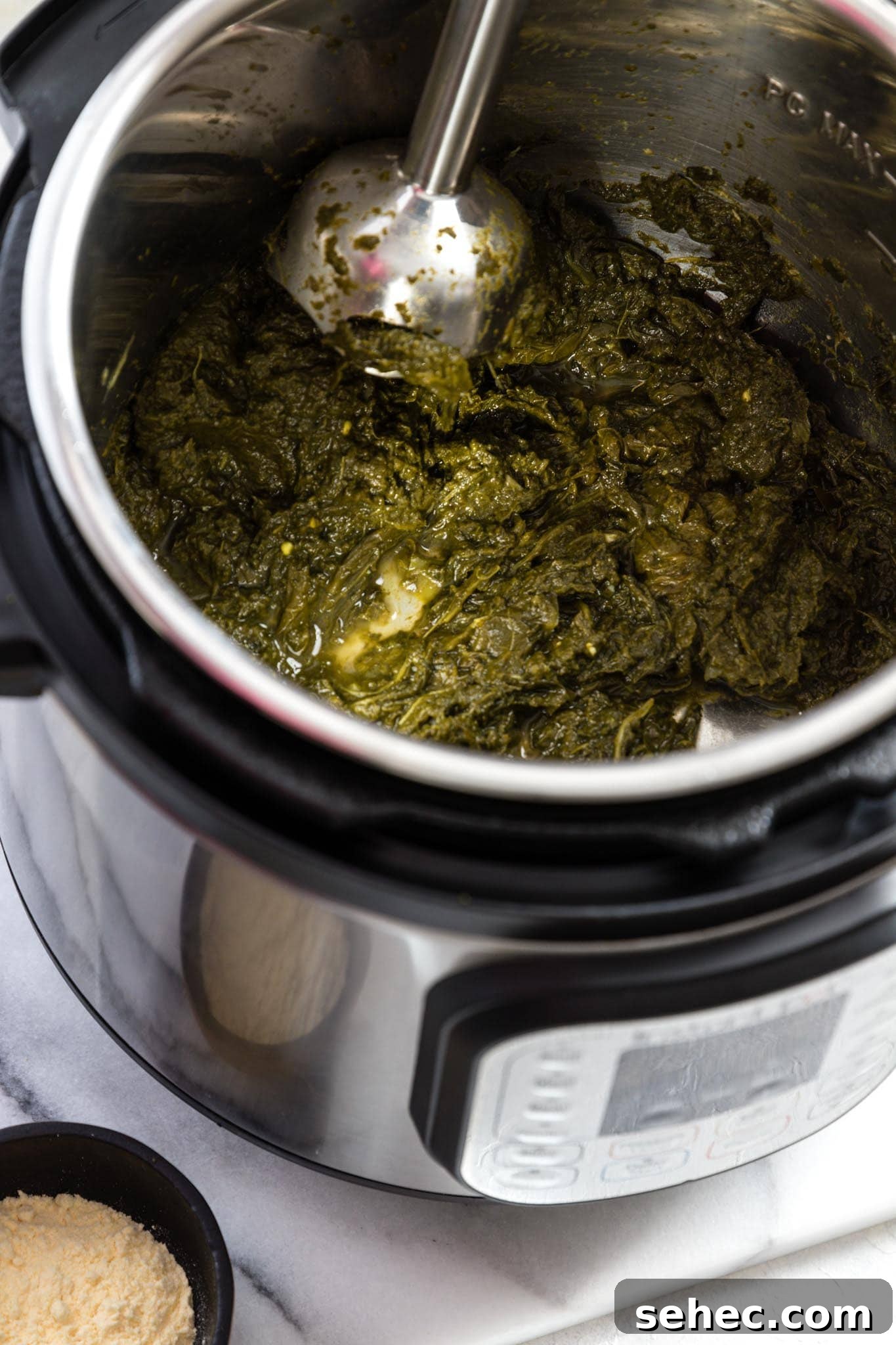
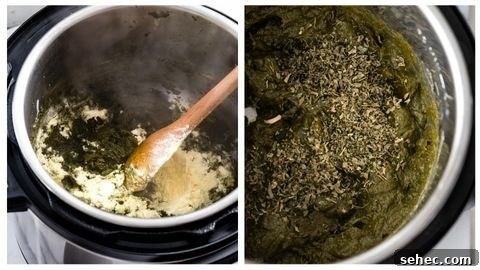
- Add the corn flour or fine-ground cornmeal and cook for several minutes. This thickens the saag and removes the raw flour taste.
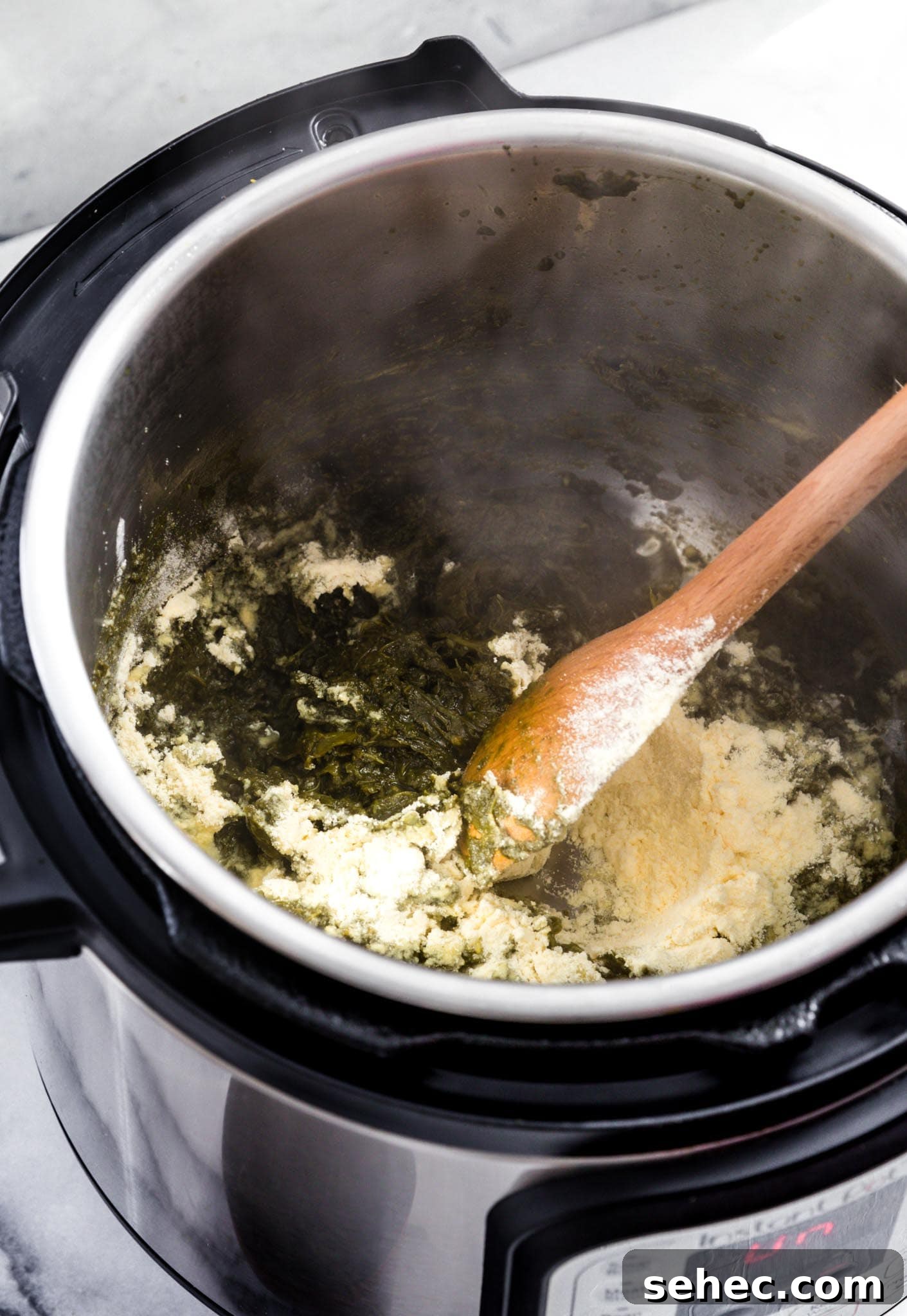
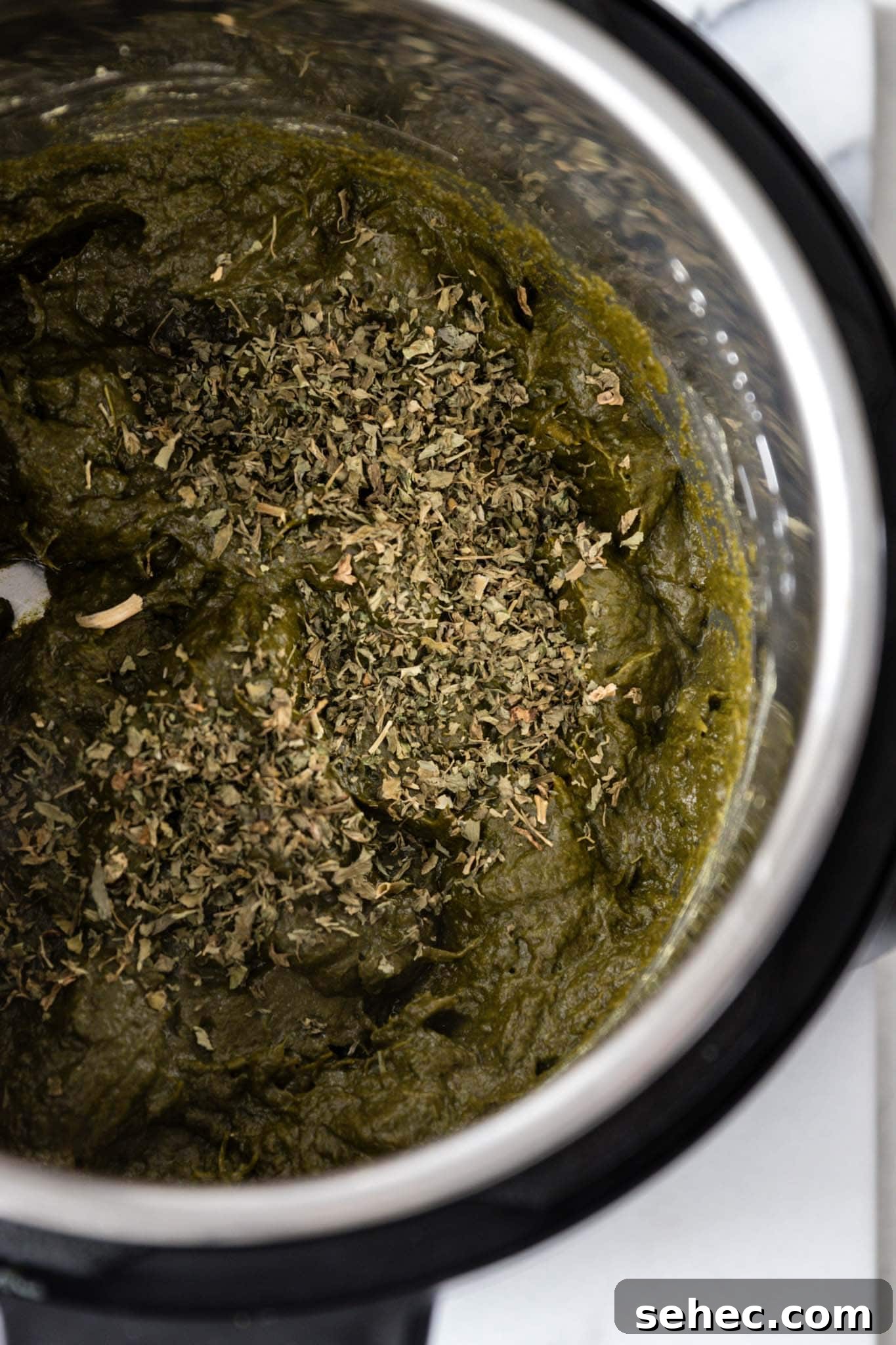
- Stir in the dried fenugreek leaves. Add hot water as needed so the saag becomes thick, creamy, and spoonable.
- If cooking on the stovetop, reduce the heat to low while you prepare the tarka.
- If using the Instant Pot, you may keep it on a low sauté setting while making the tarka so the saag stays hot.
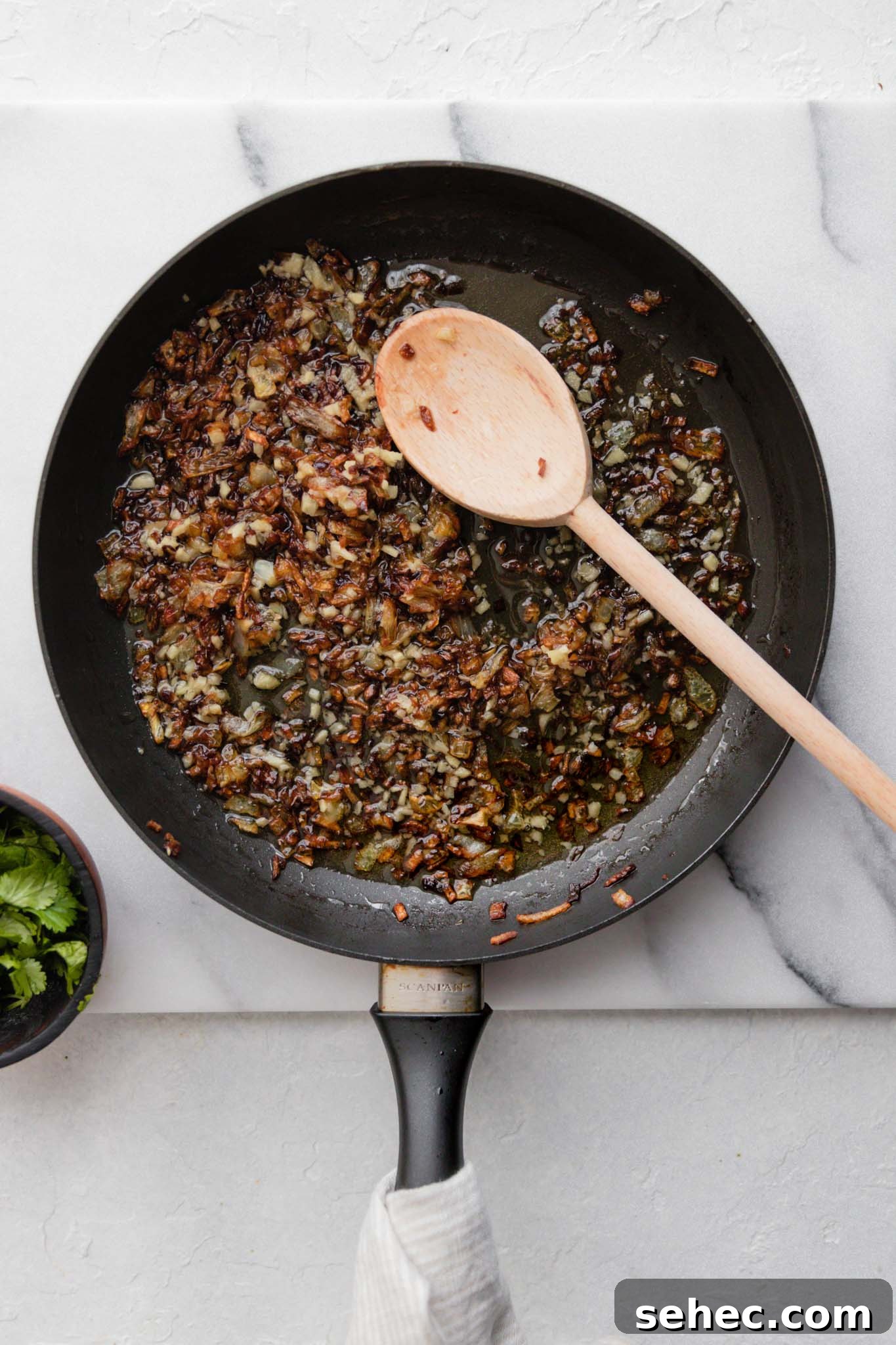
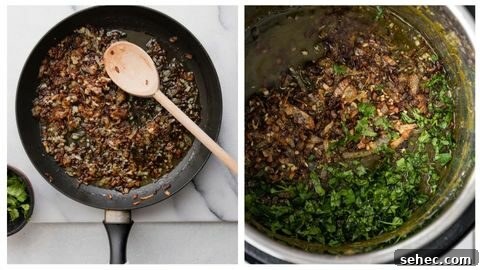
- For the tarka: Heat oil and ghee or butter in a skillet. Add the onion and cook until deeply golden. Stir in the minced ginger and cook briefly until fragrant.
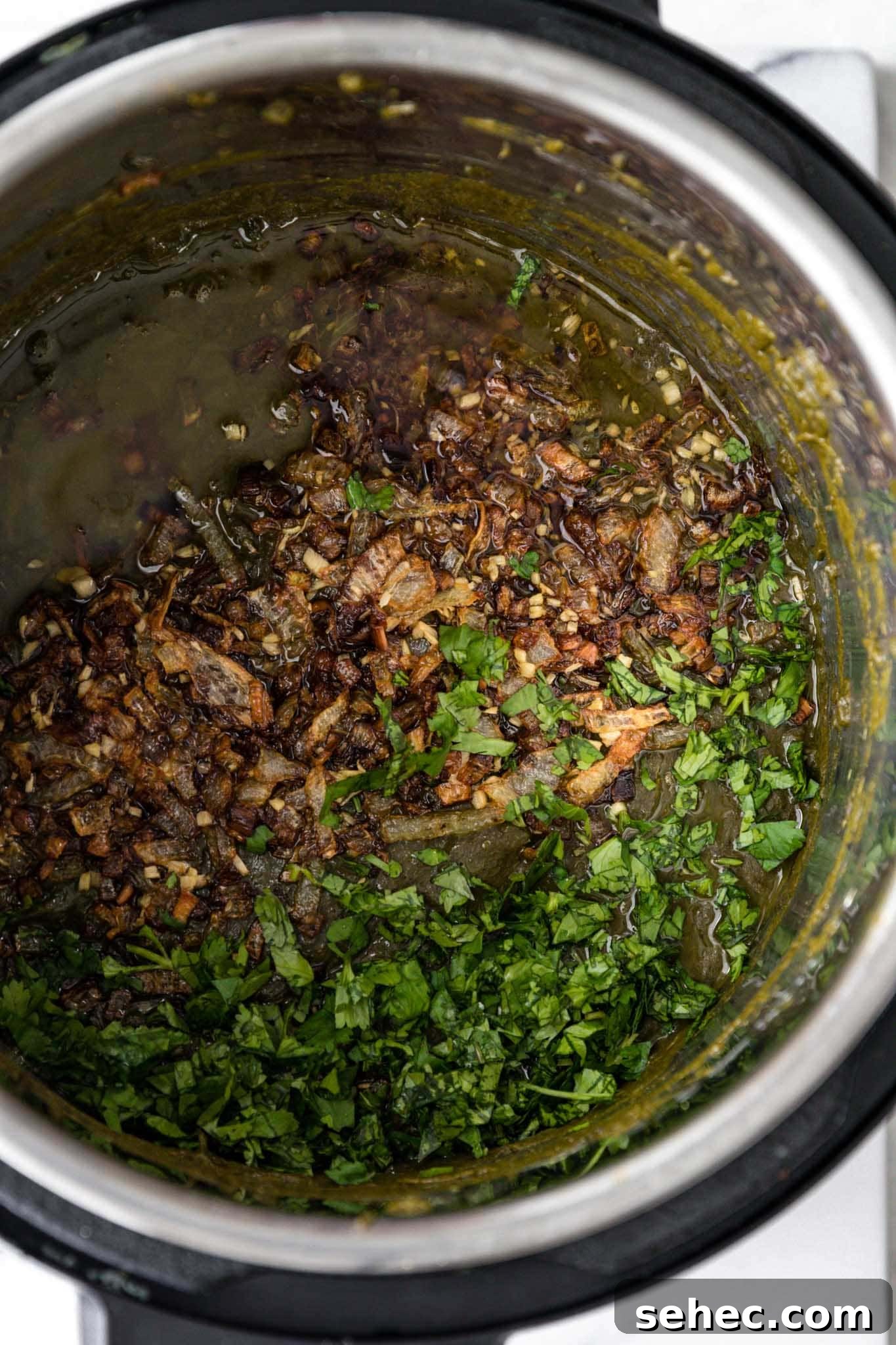
- Pour the tarka into the saag, mix well, and finish with chopped cilantro and a small pat of butter if desired.
About Mustard Greens
Mustard greens are the leafy part of the mustard plant. The same plant also produces mustard seeds, which are used whole or made into mustard powder, mustard oil, and prepared mustard.
There are many varieties of mustard greens, and the greens available in one region may taste slightly different from those found in India or Pakistan. Some are sharper, some are more tender, and some need a little extra trimming before cooking.
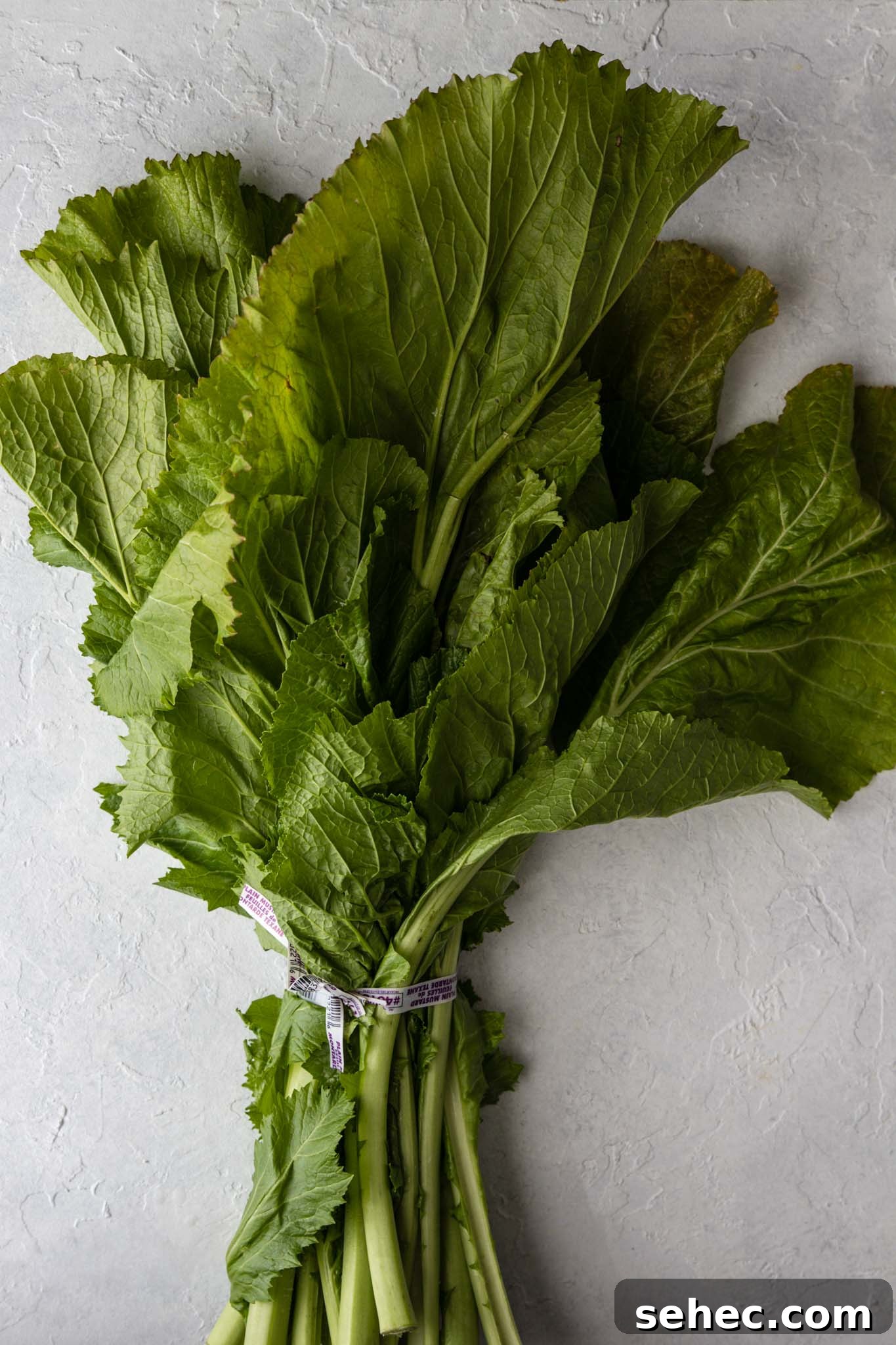
Where to Find Mustard Greens
Mustard greens are common in Punjab, but they can be harder to find in other parts of the world. Some grocery stores carry them during cooler months, and pre-washed or pre-cut greens can save time.
If your regular grocery store does not carry mustard greens, try Asian or South Asian grocery stores. It is helpful to call ahead before making a trip, especially if you are looking for fresh bunches.
What Other Greens Can I Use Besides Mustard Greens?
If mustard greens are not available, you can still make a flavorful saag with other greens. The taste will change slightly, but the method remains the same.
- Broccoli rabe or rapini can work well and gives the saag a pleasantly bold flavor.
- Turnip greens are a good substitute and can also be combined with mustard greens.
- Kale may be used, though the texture and flavor will be different.
- Broccoli is another easy-to-find option sometimes used in saag.
- Spinach can be used in place of mustard greens if needed, although the final dish will be milder.
How to Double This Recipe
Doubling this recipe in a 6-quart Instant Pot can be difficult because the raw greens take up a lot of space. If you want to make a larger batch, wilt the greens first or cook the recipe on the stovetop in a larger Dutch oven.
Freezing Tips
Saag freezes very well. For the best texture and flavor, freeze it after blending but before adding the tarka. When ready to serve, thaw the saag, reheat it on the stovetop, and then prepare the fresh tarka to finish the dish.
More Tips on Making Sarson Ka Saag
- Blend the saag until it is mostly smooth but still has some texture. A completely silky purée is not necessary.
- If the saag needs more heat after cooking, add red chili flakes. They blend in quickly and do not need to be cooked like fresh chili powder.
- Remove as many tough stems as possible from the greens because hard stems can make the saag taste bitter.
- Use hot or boiling water when thinning the saag so the cooking process is not interrupted.
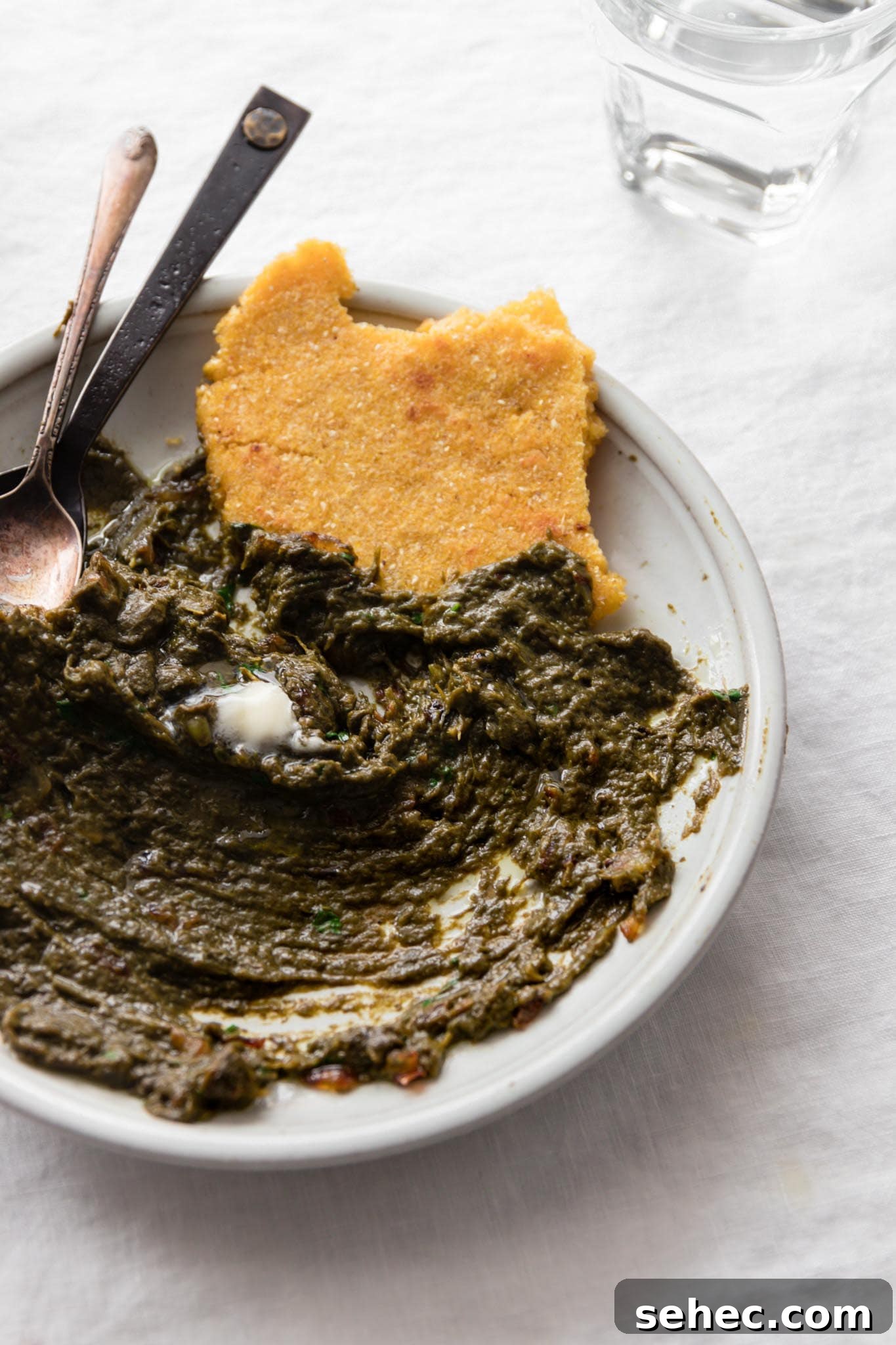
What to Serve With Sarson Ka Saag?
Sarson Ka Saag pairs beautifully with roti, naan, corn tortillas, or any simple flatbread. Its most traditional pairing is makai ki roti, a rustic cornmeal roti that complements the earthy greens.
A quick version of makai ki roti can be made by mixing 200 grams of cornmeal with a generous pinch of salt and 1 cup of boiling water. Stir with a spatula, cover, and let it rest until cool enough to handle. Roll it out like roti and cook on a nonstick pan over medium heat.
For another simple curry made with greens, try spinach and potato curry for a comforting everyday meal.
More Punjabi Curry Recipes You’ll Love
- Easy Baingan Bharta
- Spinach and Potato Curry – Aloo Palak
- Kadhi Pakora
- Matar Paneer
- Chana Masala
I hope you get a chance to make this Sarson Ka Saag recipe. It is cozy, nourishing, and full of the classic Punjabi flavors that make this dish so special.
Easy Sarson Ka Saag (Stovetop & Instant Pot)
Ingredients
Saag
- 2 cups water for stovetop (use 1/4 cup for Instant Pot)
- 2 bunches mustard greens, about 1 lb after stemming, washed, hard stems removed, and roughly chopped
- 1 bunch spinach, about 1/2 lb after stemming, washed, hard stems removed, and roughly chopped
- 3-4 Thai or bird’s eye green chili peppers, stemmed and roughly chopped
- 4-5 garlic cloves, left whole
- 1/4 tsp turmeric powder
- 1 1/4 tsp kosher salt
- 1/4 cup yellow corn flour or fine-ground cornmeal, or use chickpea flour or masa harina
- 1 1/2 tbsp dried fenugreek leaves
Tadka (Tempering)
- 1/4 cup neutral oil
- 3 tbsp ghee or butter, or use more oil
- 1 small onion, finely chopped
- 2 tbsp minced ginger
- 2-3 tbsp cilantro leaves, chopped
- Pat of butter, for serving
Instructions
Stovetop
-
Heat a 5-quart Dutch oven over medium heat. Add the mustard greens, spinach, green chilies, garlic, turmeric, salt, and 2 cups of water. Cover and simmer until the greens are very tender.
-
Turn off the heat. Stir the saag and crush the softened garlic cloves as you mix. Blend into a rough purée with an immersion blender or food processor. Remove any tough stems you notice.
-
Return the pot to medium-high heat. Add the corn flour and cook for 3-5 minutes to remove the raw taste. Stir in the dried fenugreek leaves. Taste and adjust salt if needed.
-
Reduce the heat to low-medium. Add 1 cup of hot water and simmer while preparing the tarka. Stir occasionally and add up to 1/2 cup more water if the saag becomes too thick.
-
Tarka: Heat oil and ghee or butter in a skillet over medium-high heat. Add the onion and sauté until deep golden, about 6-8 minutes. Add the ginger and cook for another minute. Stir the tarka into the saag, garnish with cilantro, and serve with a pat of butter.
Instant Pot
-
Add 1/4 cup water to the Instant Pot, followed by the mustard greens, spinach, green chilies, garlic, turmeric, and salt. Do not worry about mixing. Secure the lid, seal the vent, and pressure cook on High for 20 minutes. Let the pressure release naturally for at least 5 minutes, then manually release the remaining pressure.

-
Open the lid and stir the greens, crushing the garlic cloves as you mix. Blend into a rough purée using an immersion blender or food processor. Remove any tough stems.
-
Select Sauté on High. Add the corn flour and cook for 3-5 minutes, stirring often. Add the dried fenugreek leaves and mix well.
-
Add 1 cup of hot water and stir until incorporated. Taste and adjust salt if needed. If the saag is too thick, add another 1/2 cup water. Press Cancel.
-
Tarka: Heat oil and ghee or butter in a skillet over medium-high heat. Add the onion and sauté until deep golden, about 6-8 minutes. Add ginger and cook for another minute. Stir the tarka into the saag, garnish with cilantro, and finish with a pat of butter if desired.
Notes
If desired, keep the Instant Pot on a low sauté setting while browning the onions so the saag stays warm. Any browned bits at the bottom will loosen when the tarka is stirred in.
Carbohydrates: 11g,
Protein: 1g,
Fat: 22g,
Sodium: 876mg