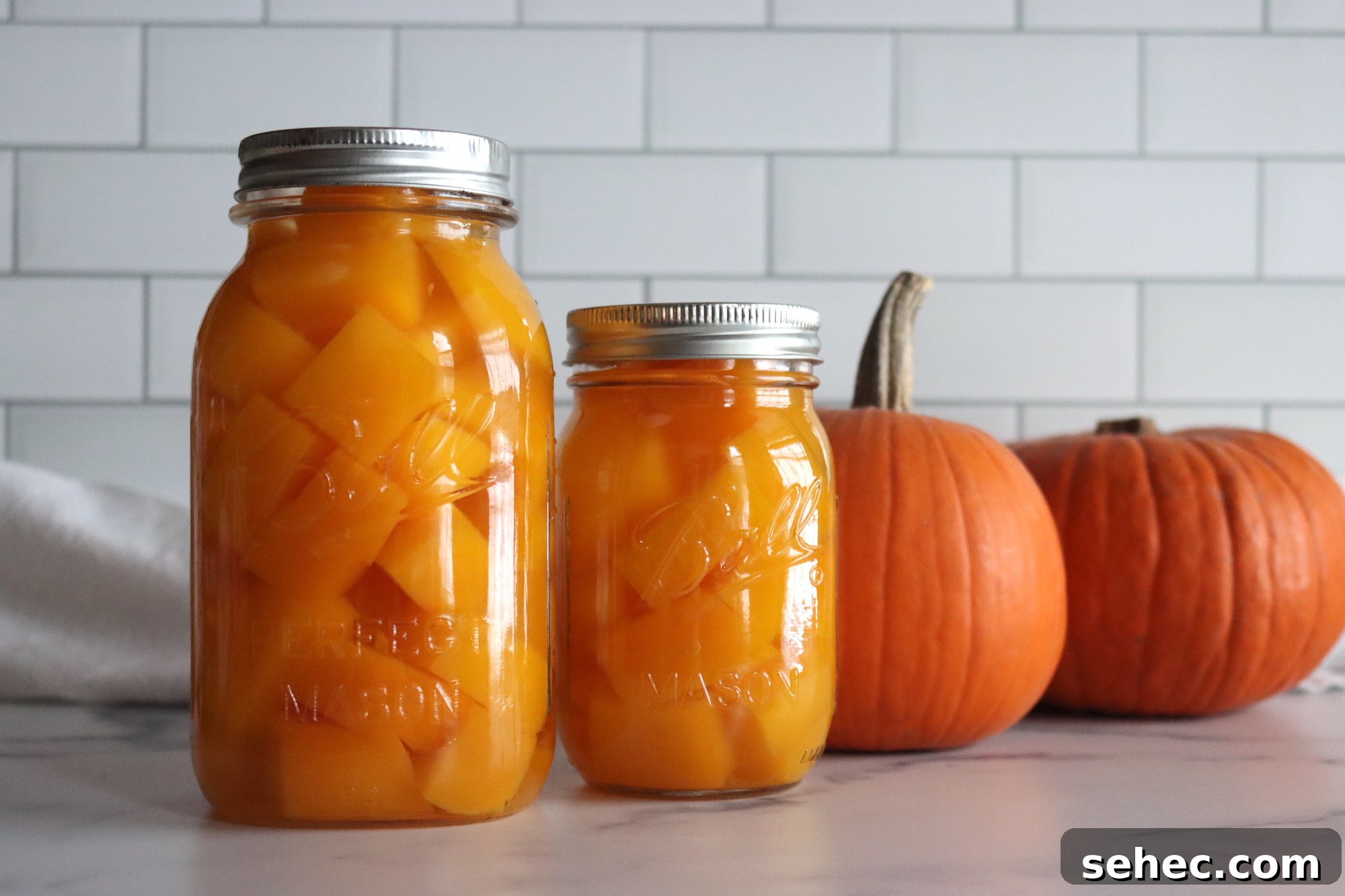
Home canning pumpkin requires a pressure canner, but the process is straightforward when you follow the approved steps. Pumpkin is a low-acid food, so it must be pressure canned for safety. The currently approved method is to can pumpkin and other firm winter squash in cubes, not as puree.
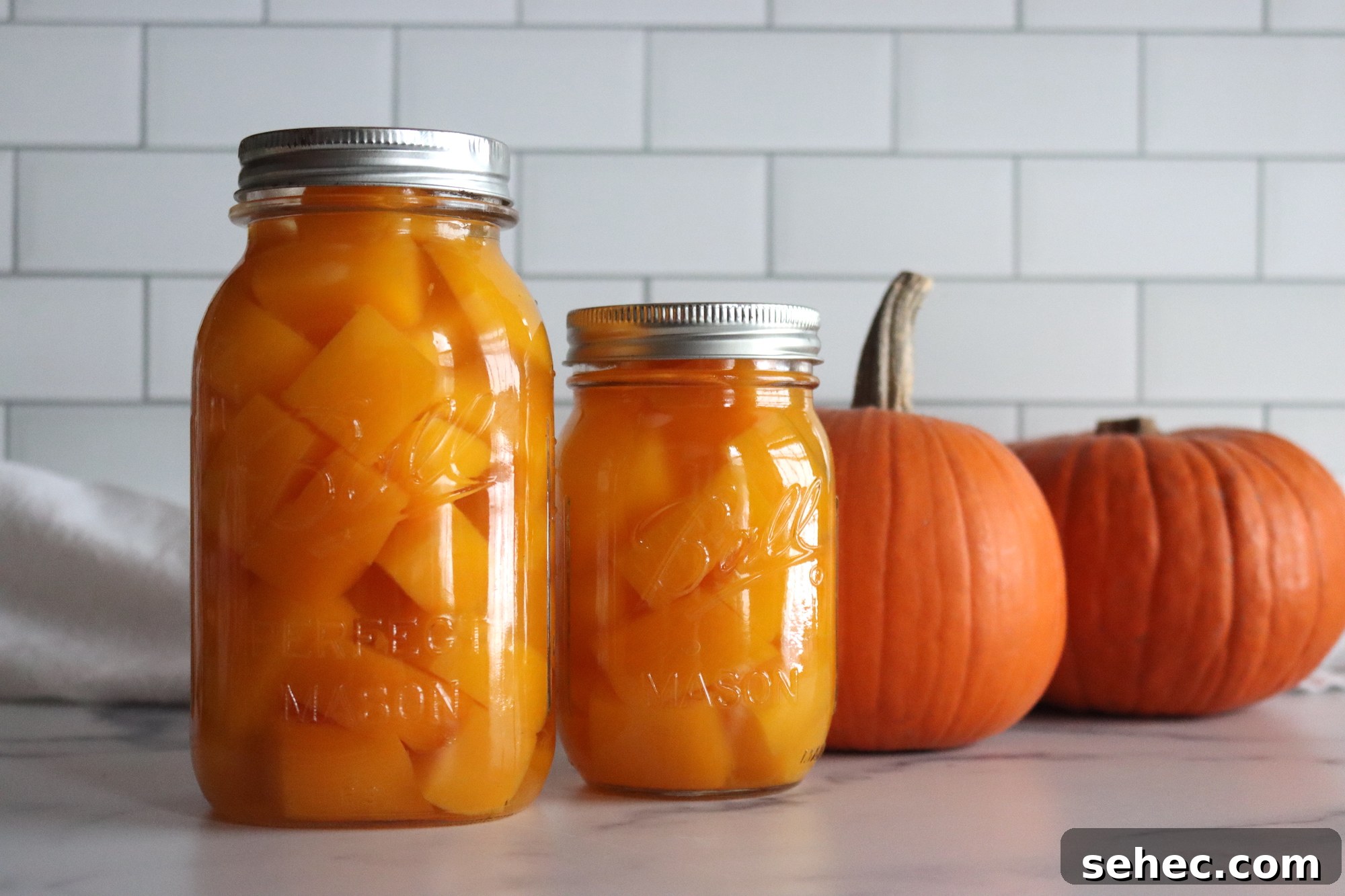
Canning pumpkin is a practical way to preserve a large harvest without filling the freezer or trying to store whole pumpkins for months. Whole pumpkins can keep well in a cool storage space, but not everyone has a root cellar, and pumpkins take up a lot of room. Once they are peeled, seeded, cubed, and packed into jars, they become much easier to store on a pantry shelf.
Freezing cooked pumpkin is another option, but it uses valuable freezer space and depends on a steady power supply. Pressure canning pumpkin gives you shelf-stable jars that are ready for soups, pies, breads, chili, curries, and other seasonal recipes.
Pressure Canning Pumpkin
Pumpkin is a low-acid vegetable, which means it cannot be safely processed in a boiling water bath canner. Water bath canning is suitable for high-acid foods such as many fruits, jams, and pickles, but it does not reach the temperatures needed to safely preserve low-acid foods like pumpkin.
For safe home canning, pumpkin must be processed in a pressure canner. Older methods sometimes mentioned water bath canning pumpkin, but those methods are not considered safe and should not be used.
Pumpkin Puree vs. Pumpkin Cubes
One of the most important rules for canning pumpkin is that it must be canned in cubes, not as puree. Pumpkin puree is dense and can heat unevenly in home canning jars. If the heat does not penetrate properly, the food may not be safely processed.
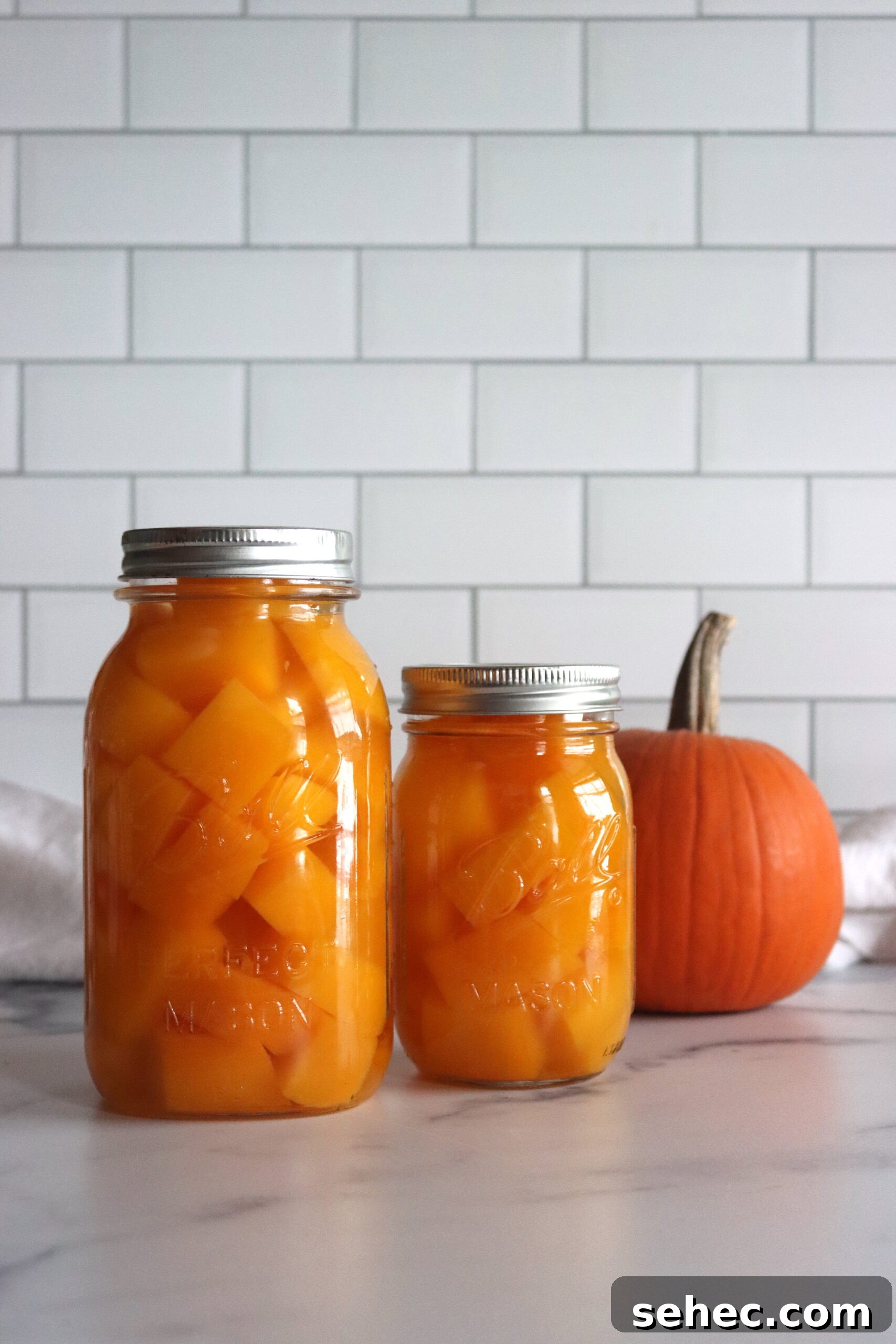
Commercial pumpkin puree is produced under controlled conditions using equipment and processes that are different from home canning. At home, the safe method is to cut pumpkin or firm winter squash into 1-inch cubes, blanch the cubes, pack them into jars, and process them in a pressure canner.
After opening a jar, you can mash or puree the pumpkin for pies, breads, soups, or sauces. Keeping it in cubes also makes it more versatile. Canned pumpkin cubes work well in soups, stews, chili, Thai-style curries, and other savory dishes.
Choosing the Right Pumpkin
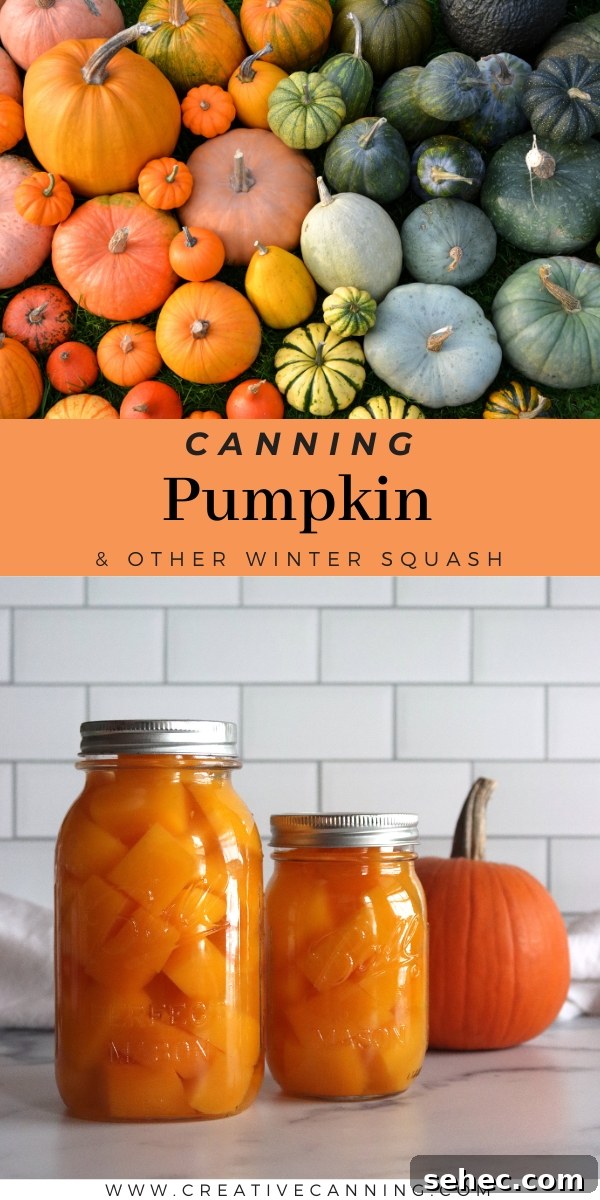
For canning, choose firm pie pumpkins or other dense winter squash varieties with smooth, non-stringy flesh. Pie pumpkins generally have better texture and flavor than large carving pumpkins, which are often watery and fibrous.
New England Cheese pumpkin is a good example of a rich, flavorful pumpkin that holds up well in jars. Standard pie pumpkins sold in grocery stores during autumn are also suitable.
Other firm winter squash varieties, such as butternut squash and blue Hubbard squash, may be canned using the same method. Avoid spaghetti squash because it does not hold its shape during processing. Since it breaks down instead of staying in cubes, it is not approved for home canning with this method.
Summer squash varieties such as zucchini, crookneck squash, and patty pan squash are also not approved for this cubed winter squash canning method because they become too soft and fall apart in the jar.
For best results, use firm, mature winter squash with dense flesh and good flavor.
How Much Pumpkin Do You Need?
The amount of pumpkin needed for a full canner load varies depending on the variety. Some pumpkins have thick flesh and small seed cavities, while others have more seeds, strings, and peel to discard.
As a general guide:
- An average of 16 pounds of whole pumpkin is needed for a canner load of 7 quarts.
- An average of 10 pounds of whole pumpkin is needed for a canner load of 9 pints.
That works out to about 2¼ pounds of whole pumpkin per quart. After peeling and seeding, the amount of prepared pumpkin will be lower. In many cases, about 1½ pounds of prepared pumpkin cubes will fit into a quart jar, though this can vary by variety.
Winter squash with a small seed cavity, such as butternut squash, may yield more usable flesh than some pumpkin varieties. Use these estimates as a starting point and adjust as needed.
Preparing the Pumpkin
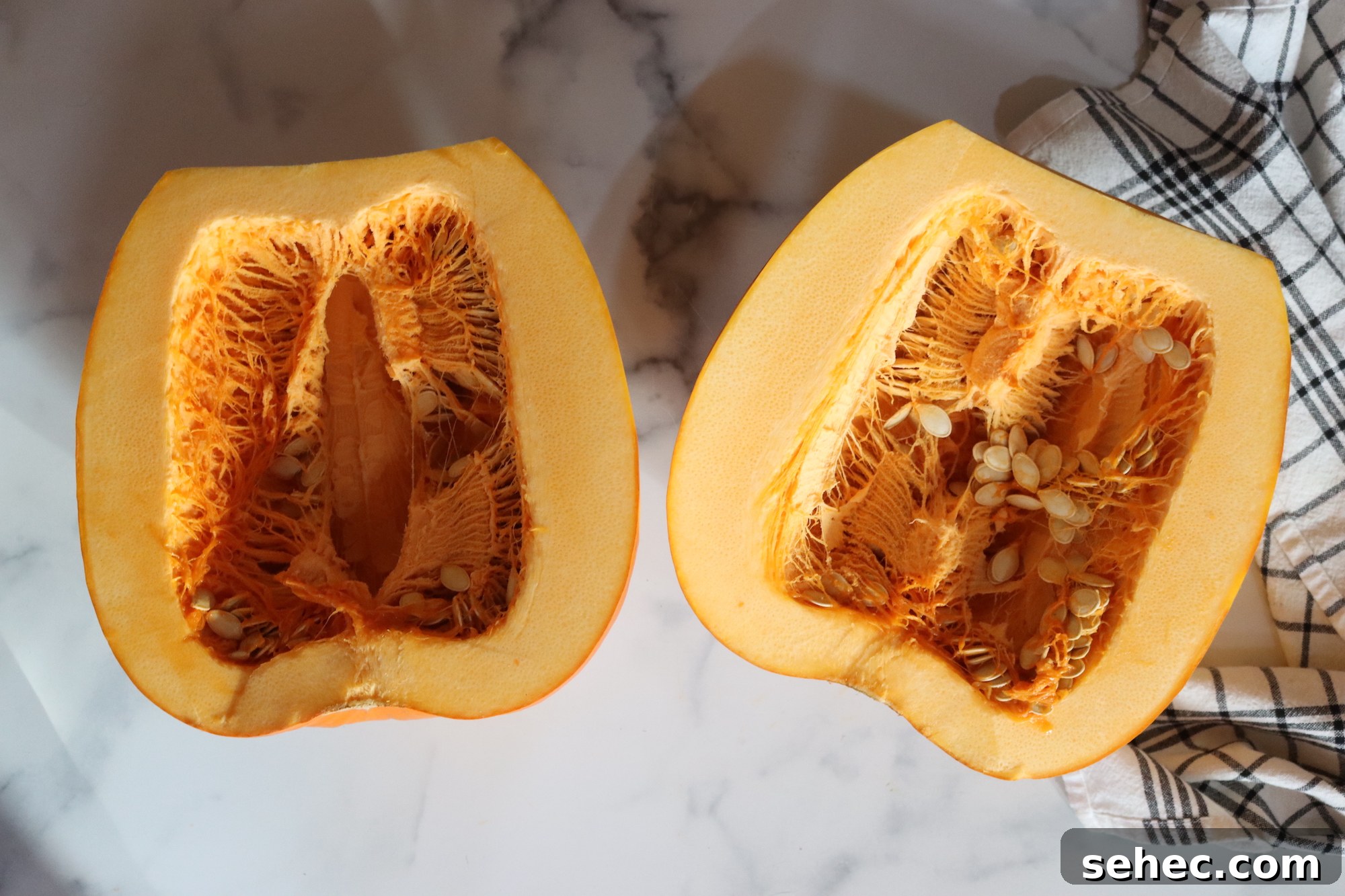
Preparing the pumpkin is usually the most time-consuming part of the process. Pumpkins can be hard to cut, so use a sturdy knife, work on a stable cutting board, and take your time. Be careful to keep your hands clear of the blade.
To prepare pumpkin for canning:
- Cut in Half: Carefully cut the pumpkin in half with a large, sharp knife.
- Scoop Out Seeds: Remove the seeds and stringy interior, leaving only the firm flesh.
- Slice: Cut the pumpkin halves into slices about 1 inch wide.
- Peel and Cube: Remove all peel, then cut the flesh into 1-inch cubes.
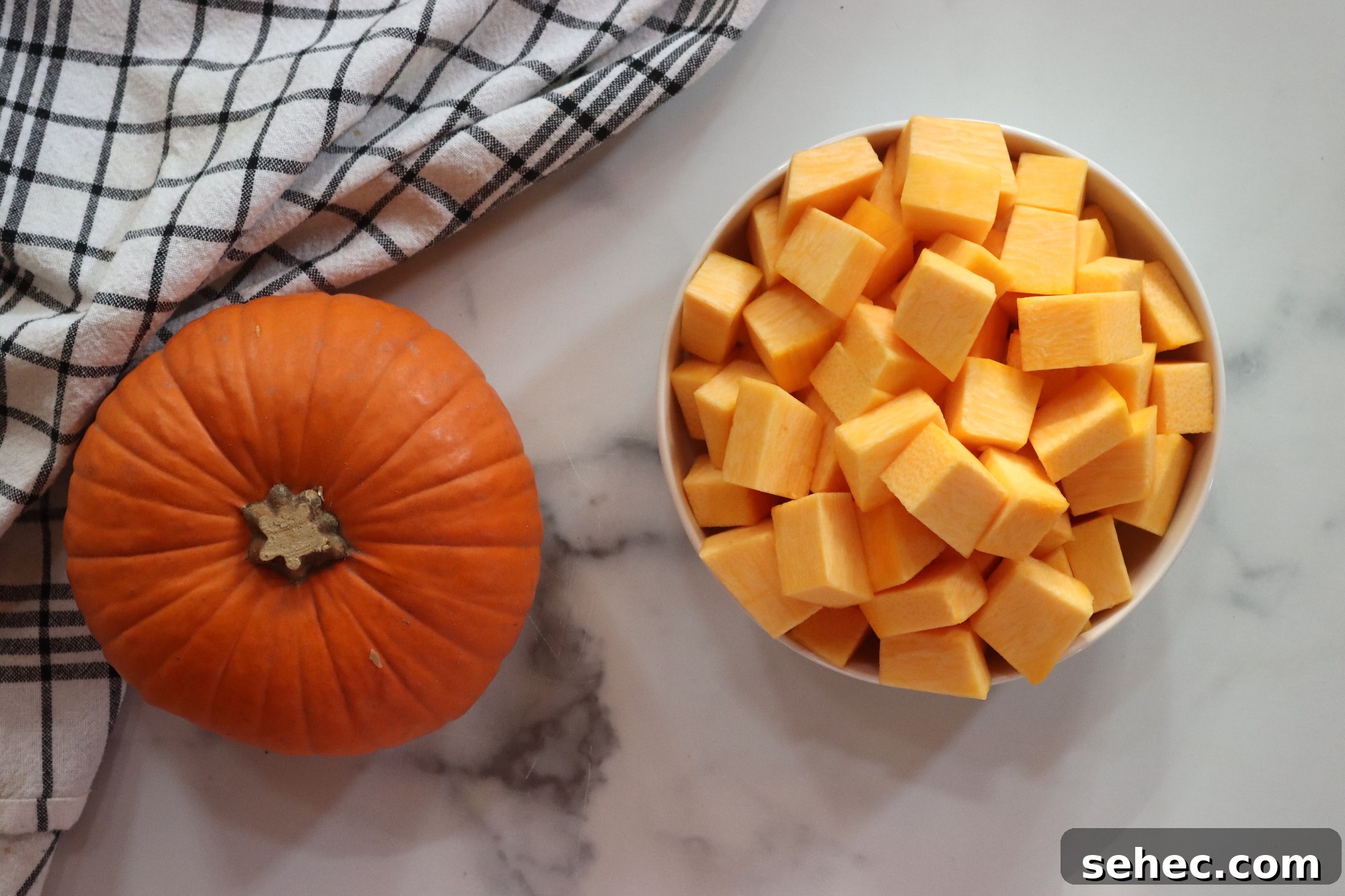
A quart jar generally holds about 1½ pounds of prepared pumpkin cubes, but the exact yield will depend on the pumpkin.
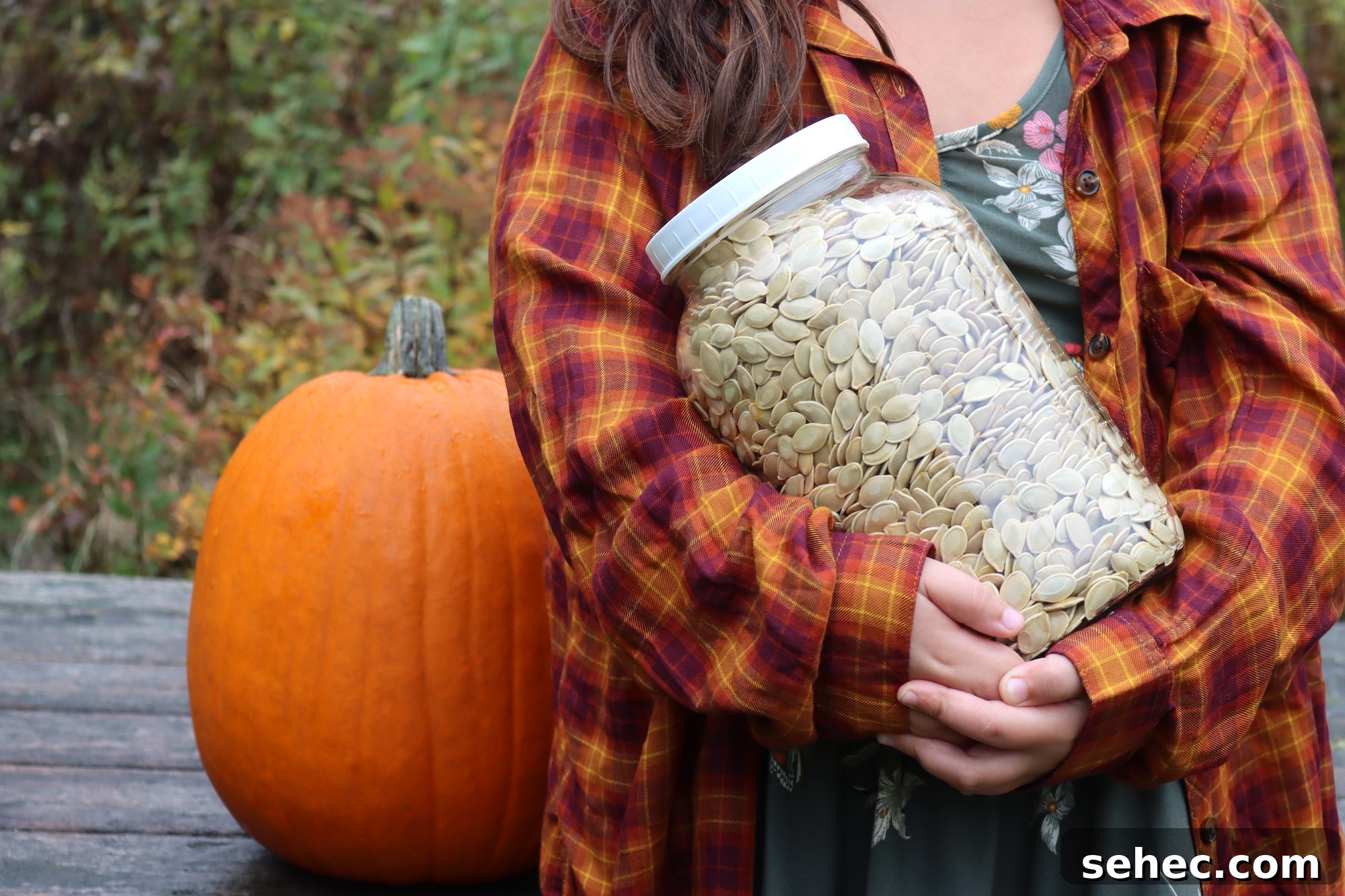
The seeds do not need to go to waste. They can be cleaned and roasted for a snack, or used as feed for poultry or livestock. If roasting pumpkin seeds, rinse away the stringy pulp first.
Canning Pumpkin in a Pressure Canner
Once the pumpkin is peeled and cubed, the pressure canning process is simple. Pumpkin is packed hot, so the jars, pumpkin, liquid, and canner should all be hot when the jars are loaded.
- Blanch the Pumpkin: Bring a large pot of water to a boil. Add the pumpkin cubes and blanch for 2 minutes. Blanching heats the cubes, helps remove trapped air, and helps the pumpkin hold together better during pressure canning.
- Prepare the Canner: Set up the pressure canner according to the manufacturer’s instructions. Most pressure canners need 2 to 3 inches of water in the bottom and a rack or trivet. Preheat the canner to a low simmer, about 180 degrees F, before loading the hot jars.
- Fill the Jars: Using a slotted spoon, pack hot pumpkin cubes into clean canning jars. Leave 1 inch of headspace. Cover the cubes with boiling water or light syrup, maintaining the same headspace. Remove air bubbles.
- Seal the Jars: Wipe the jar rims, apply two-piece canning lids, and tighten the bands to fingertip tight.
- Process the Jars: Place the jars in the pressure canner. Lock the lid and heat the canner until steam vents steadily. Vent for 10 minutes, then add the weight or close the vent according to your canner type. Process pints for 55 minutes and quarts for 90 minutes, adjusting pressure for altitude.
- Cool Down: When processing is complete, turn off the heat and allow the pressure canner to cool naturally. Do not force-cool the canner.
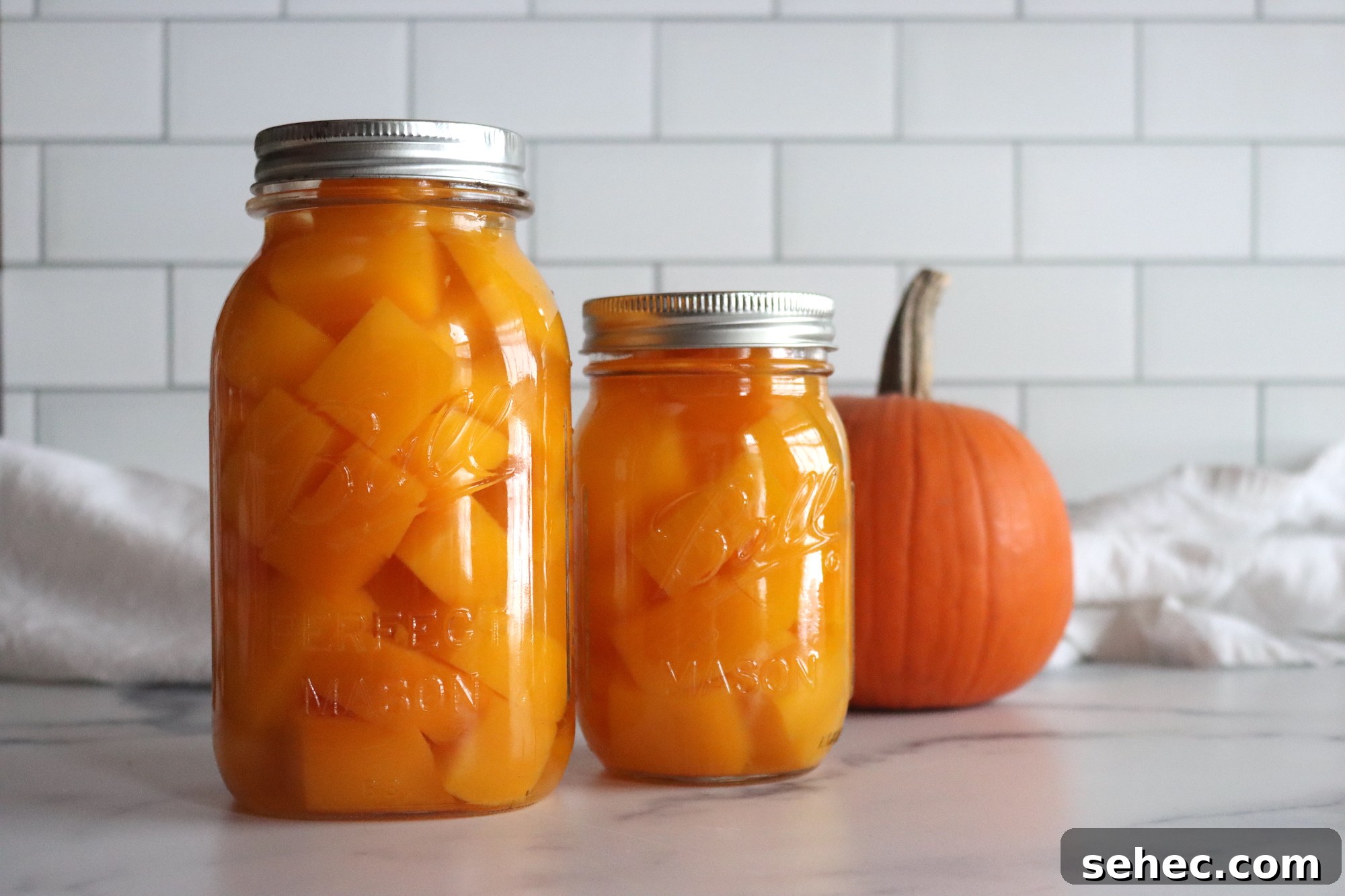
- Check Seals and Store: Remove the jars and let them cool completely on a towel or rack. Check the seals, label the jars, remove the rings, and store sealed jars in a cool pantry. Refrigerate any unsealed jars and use them promptly, or reprocess if appropriate.
Altitude Adjustments For Canning Pumpkin
With pressure canning, the processing time remains the same at higher elevations, but the required pressure increases. Pumpkin should be processed for 55 minutes in pint jars and 90 minutes in quart jars. Do not use jars larger than quarts. For smaller jars, use the pint processing time.
Adjust pressure as follows:
For dial gauge pressure canners:
- 0 to 2,000 feet in elevation – 11 lbs pressure
- 2,001 to 4,000 feet in elevation – 12 lbs pressure
- 4,001 to 6,000 feet in elevation – 13 lbs pressure
- 6,001 to 8,000 feet in elevation – 14 lbs pressure
For weighted gauge pressure canners:
- 0 to 1,000 feet in elevation – 10 lbs pressure
- Above 1,000 feet – 15 lbs pressure
Serving Home Canned Pumpkin
Home-canned pumpkin is stored as cubes in water or syrup, so it may need a little preparation before using in recipes. For pumpkin puree, pour the jar contents into a saucepan and simmer until some of the liquid cooks down, then mash or blend until smooth. This helps bring the flavor from the canning liquid back into the pumpkin.
You can also drain the cubes and use them anywhere you would use cooked pumpkin or winter squash. They are excellent in soups, chili, stews, risotto, ravioli fillings, gnocchi, pumpkin bread, and pumpkin pie.
For pumpkin soup, the extra liquid in the jar is often useful. Simply heat, season, and puree the pumpkin into a smooth soup base.
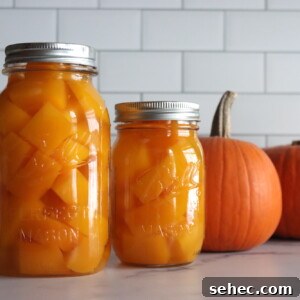
Canning Pumpkin (& Other Winter Squash)
Equipment
-
Pressure canner
Ingredients
- Pumpkin or firm winter squash
- Boiling water or light syrup, see notes
Instructions
-
Preheat the pressure canner to a simmer and prepare clean jars and two-piece canning lids.
-
Cut the pumpkin in half, scoop out the seeds and strings, slice into 1-inch-wide pieces, peel, and cut the flesh into 1-inch cubes.
-
Bring a large pot of water to a boil and blanch the pumpkin cubes for 2 minutes.
-
Pack the hot cubes into jars and cover with boiling water or syrup, leaving 1 inch of headspace.
-
Remove air bubbles, wipe the rims, apply lids, and tighten bands to fingertip tight.
-
Load jars into the hot pressure canner. Vent steam for 10 minutes, then bring the canner to the correct pressure. Process pints for 55 minutes and quarts for 90 minutes, adjusting pressure for altitude.
-
Allow the pressure canner to cool naturally. Remove jars and let them cool completely.
-
Check seals, label jars, remove rings, and store sealed jars in the pantry. Refrigerate any unsealed jars for immediate use or reprocess if needed.
Notes
Shelf Life
Properly pressure-canned and sealed pumpkin can be stored on the pantry shelf. Quality is best within 12 to 18 months, although sealed jars may remain safe longer if the seal is intact and there are no signs of spoilage.
Refrigerate pumpkin after opening.
Yield
The amount of pumpkin needed depends on the variety, but general estimates are:
- An average of 16 pounds is needed for a canner load of 7 quarts.
- An average of 10 pounds is needed for a canner load of 9 pints.
This is about 2¼ pounds of whole pumpkin per quart. After peeling and seeding, about 1½ pounds of prepared cubes may fit into a quart jar.
Altitude Adjustments For Canning Pumpkin
Processing times remain 55 minutes for pints and 90 minutes for quarts. Pressure must be adjusted for elevation.
For dial gauge pressure canners:
- 0 to 2,000 feet in elevation – 11 lbs pressure
- 2,001 to 4,000 feet in elevation – 12 lbs pressure
- 4,001 to 6,000 feet in elevation – 13 lbs pressure
- 6,001 to 8,000 feet in elevation – 14 lbs pressure
For weighted gauge pressure canners:
- 0 to 1,000 feet in elevation – 10 lbs pressure
- Above 1,000 feet – 15 lbs pressure
Canning Liquids
Use boiling water for savory recipes. Light or extra-light syrup can be used when the pumpkin is intended for sweet dishes such as pumpkin pie.
For a 9-pint canner batch, use:
- Extra-light syrup: 3/4 cup sugar to 6 1/2 cups water
- Light syrup: 1 1/2 cups sugar to 5 3/4 cups water
For a 7-quart canner batch, use:
- Extra-light syrup: 1 1/4 cups sugar to 10 1/2 cups water
- Light syrup: 2 1/4 cups sugar to 9 cups water
If using broth or stock as part of a soup base, follow approved pressure canning guidance for soup. Processing times may differ from plain pumpkin cubes.
Nutrition
Nutrition information is automatically calculated and should be used only as an approximation.
Autumn Canning Recipes
Looking for more fall canning ideas? These seasonal preserves and pantry staples pair well with autumn meals:
- Apple Jam
- Pear Butter
- Cranberry Apple Jam
- Thai Butternut Squash Soup
- Butternut Squash and White Bean Soup