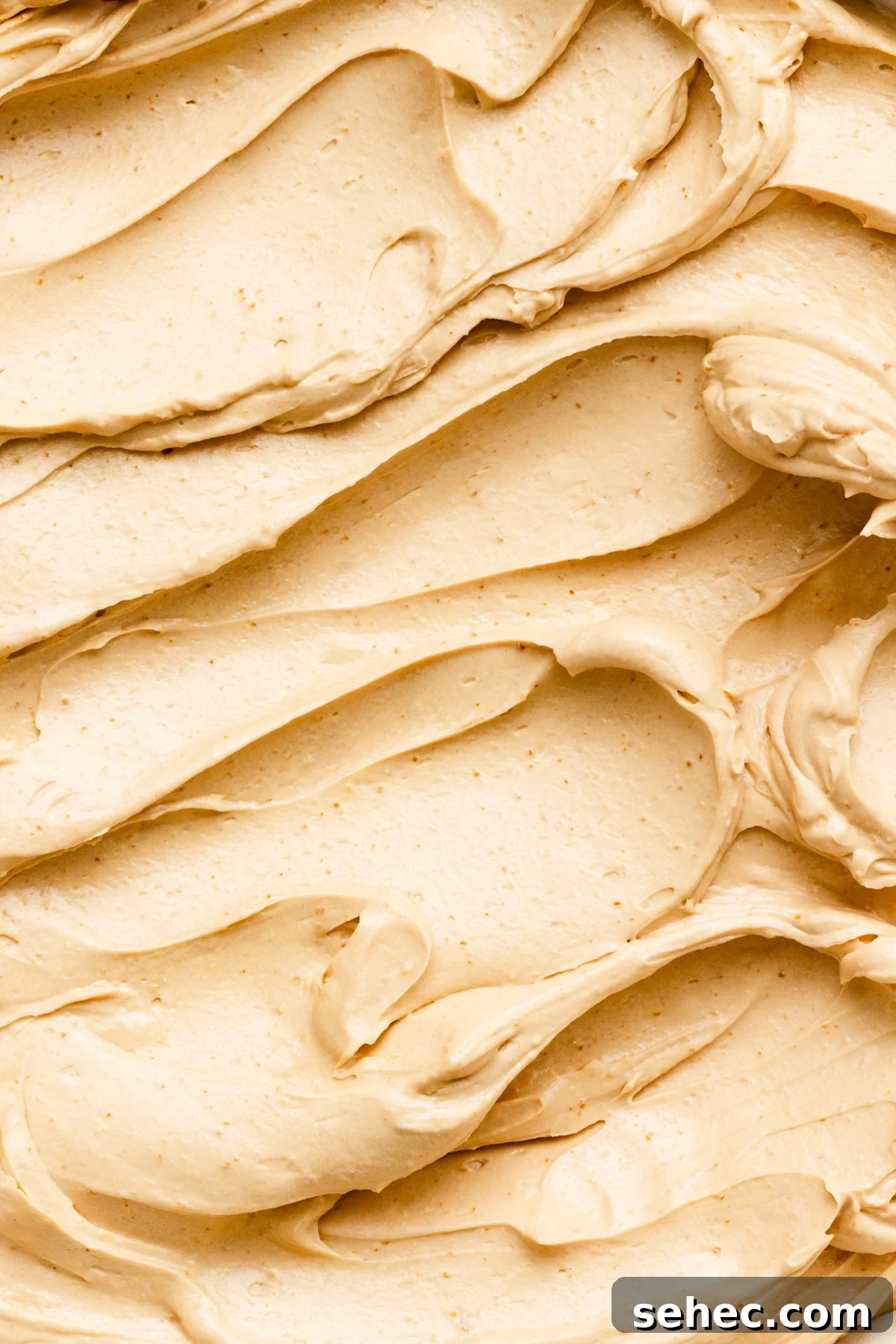
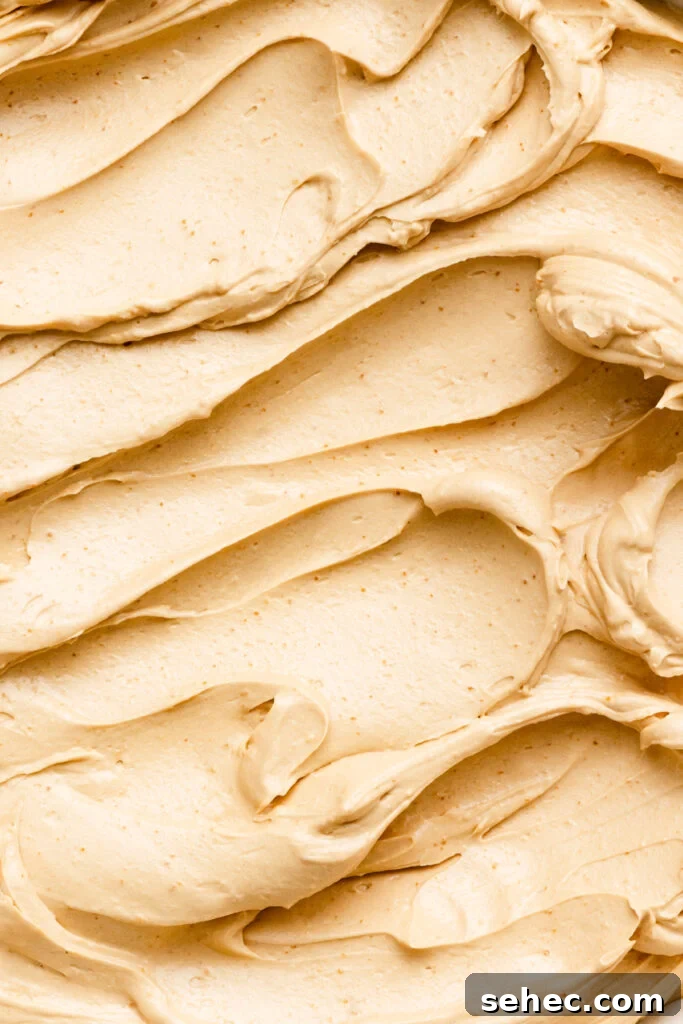
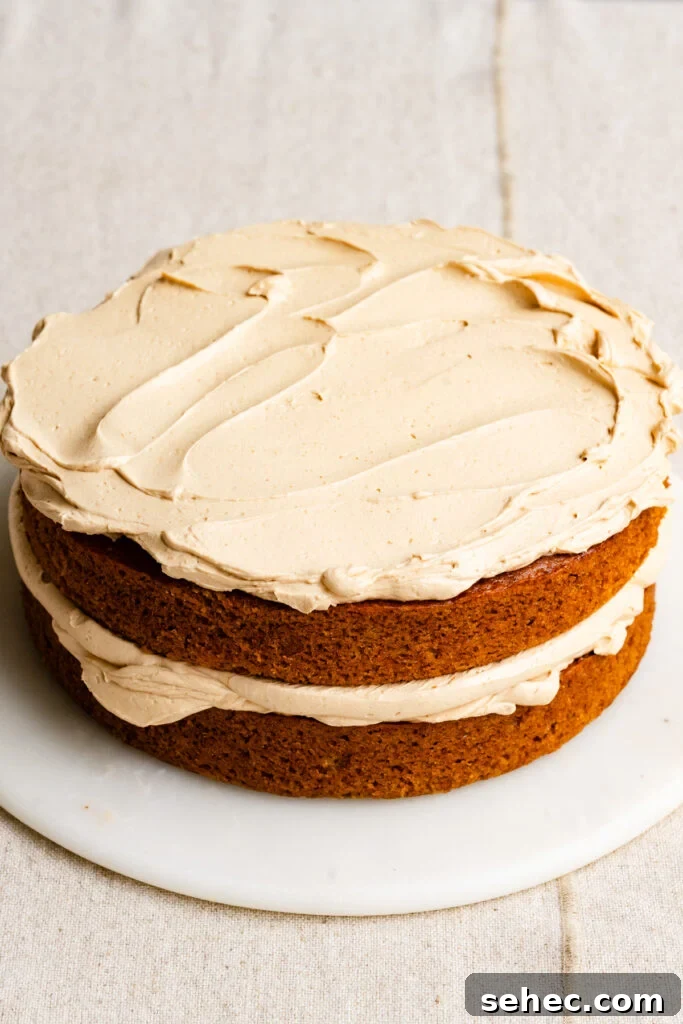
This brown sugar and brown butter buttercream frosting is rich, silky, and full of warm, nutty flavor. It is a Swiss meringue buttercream made with brown sugar, browned butter, vanilla, and a small pinch of salt for balance. The texture is smooth, creamy, and easy to spread or pipe, without the heavy sweetness that often comes with powdered sugar frosting.
If Swiss meringue buttercream feels intimidating, this recipe is a great place to start. The method is all about temperature, timing, and patience. The frosting may look too soft, curdled, or slightly separated at different stages, but that is normal. Keep mixing, adjust the temperature if needed, and the buttercream will come together into a glossy, spreadable frosting. It pairs beautifully with pumpkin cake, sweet potato cake, apple cake, spice cake, cupcakes, and other cozy bakes.
Key Ingredients & Test Notes
- Egg Whites – Room-temperature egg whites create the light, stable meringue base for this brown butter Swiss meringue buttercream. Make sure no yolk gets into the whites, and use a very clean mixing bowl and whisk.
- Test Note: Older egg whites often whip more easily into meringue than very fresh egg whites.
- Granulated Sugar – Granulated sugar dissolves into the egg whites over gentle heat, helping create a stable, glossy meringue.
- Test Note: Sugar also helps protect the egg whites from becoming dry or grainy during whipping.
- Brown Sugar – Brown sugar gives this buttercream its deeper flavor. It adds subtle molasses notes that work especially well with the browned butter.
- Unsalted Butter – Half of the butter is browned first, then cooled until it is soft but solid. The remaining butter should be softened enough to press with your fingertips, but it should not be melted, greasy, or oily.
- Test Note: European-style butter with about 82% butterfat tends to be softer at room temperature and blends smoothly into meringue, though standard unsalted butter also works.
- Milk Powder – Full-fat milk powder is optional, but it adds extra toasted milk-solid flavor to the brown butter. Add it after the butter foams and begins to brown.
- Test Note: Milk powder may leave tiny toasted flecks in the buttercream. These flecks add flavor and should not make the frosting gritty.
- Vanilla – Vanilla bean paste or pure vanilla extract enhances the brown sugar and browned butter flavor.
- Fine Sea Salt – A small pinch of salt helps balance the sweetness and makes the nutty flavor stand out.
How to Make Brown Butter Swiss Meringue Buttercream
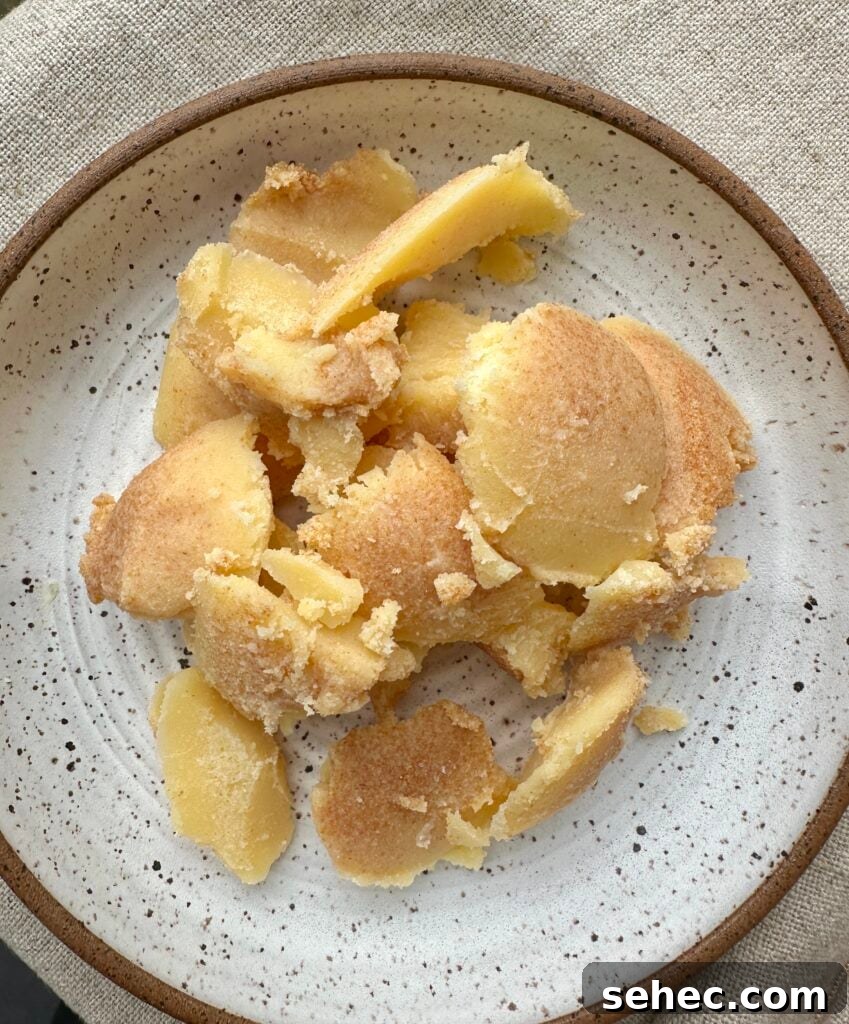
- Make the brown butter first. Start with more butter than the final amount needed because butter loses water as it browns. Once browned, cool it until it becomes soft and solid, similar to room-temperature butter.
- Separate the egg whites and place them in the clean metal bowl of a stand mixer. Save the yolks for another recipe.
- Add the granulated sugar and brown sugar to the egg whites.
- Set a pot with about 1 inch of water over medium heat and bring it to a gentle simmer. Place the mixing bowl over the pot to create a double boiler. The bottom of the bowl should not touch the water.
- Whisk the egg whites and sugar continuously until the mixture reaches 160℉ (72℃), or until the sugar has fully dissolved and the mixture no longer feels grainy between your fingertips.
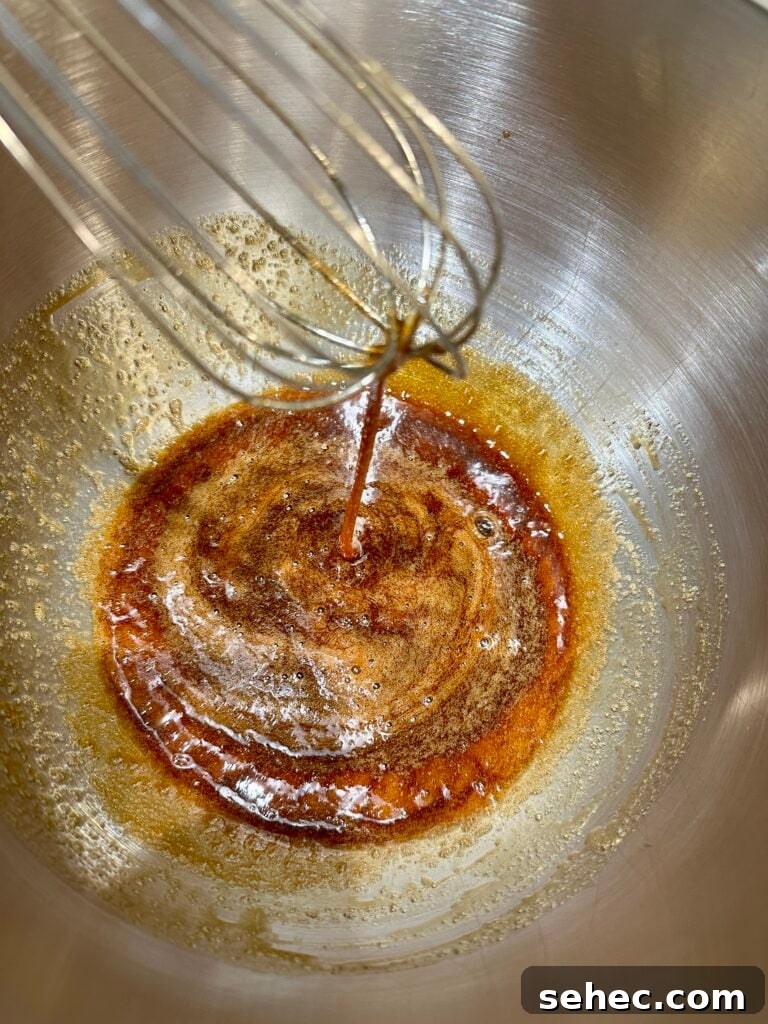
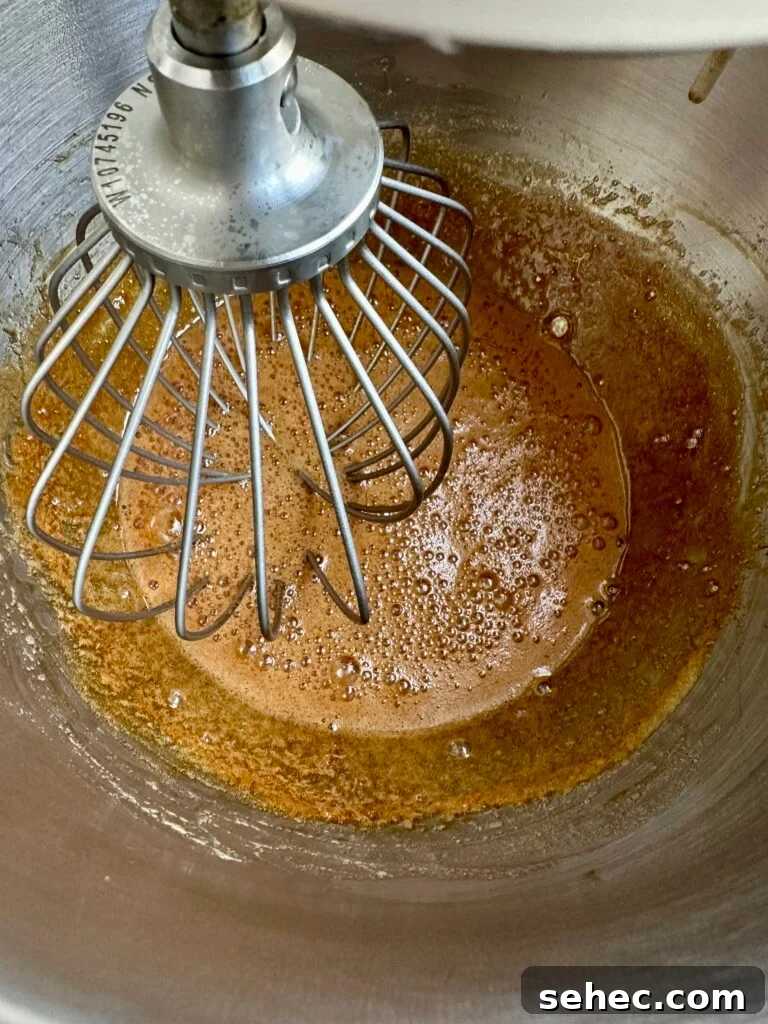
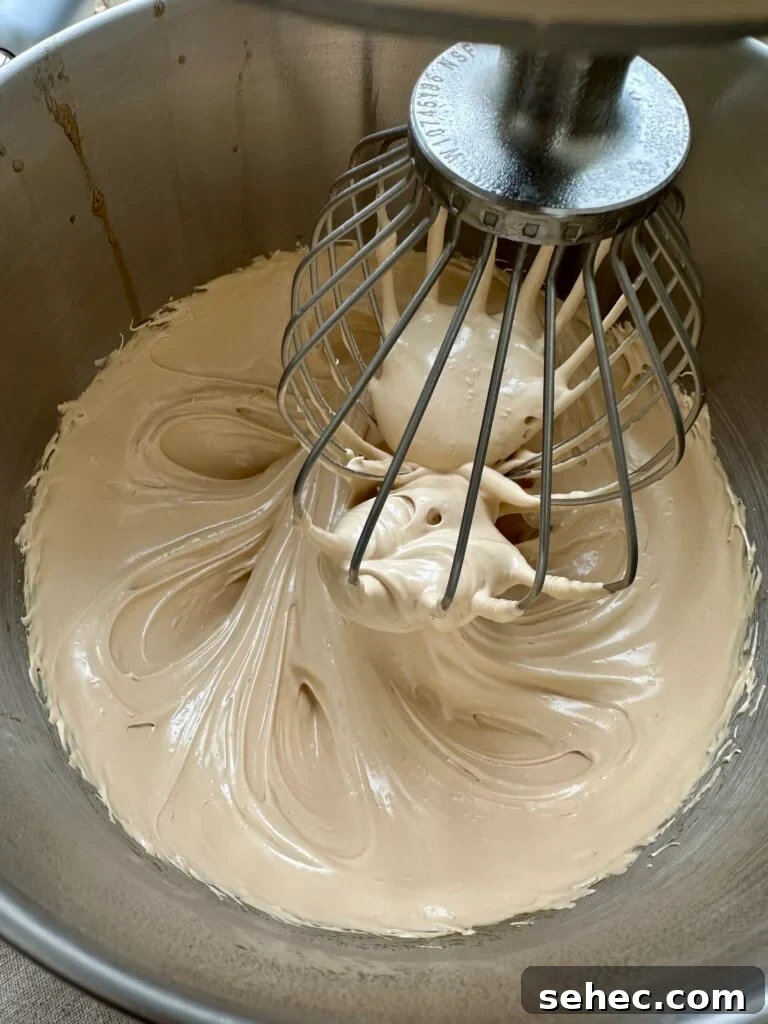
- Remove the bowl from the heat, wipe the bottom dry, and place it on the stand mixer. Whip with the whisk attachment until the meringue is thick, glossy, and holds stiff peaks.
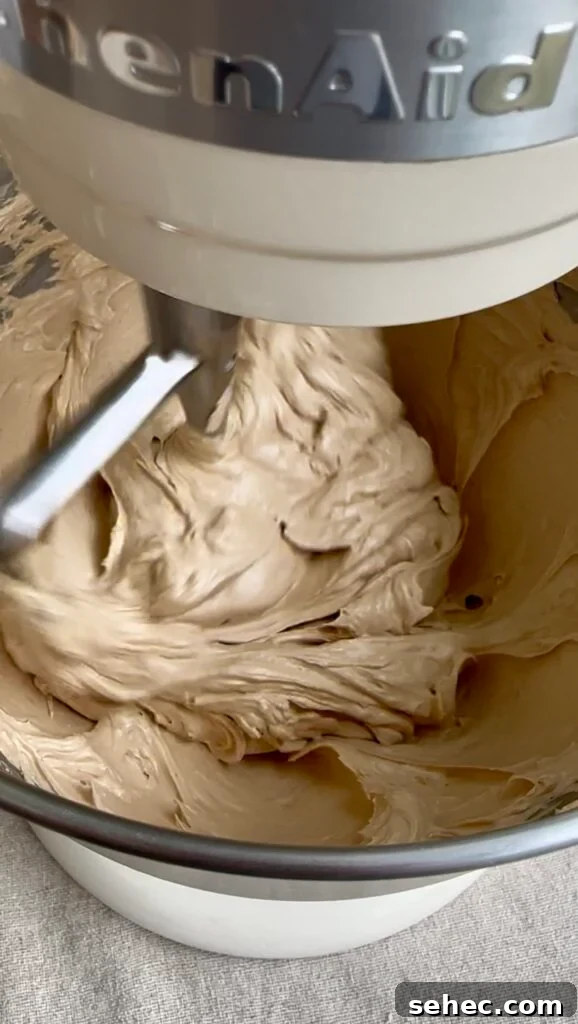
- Add the softened butter and cooled brown butter, about one tablespoon at a time, while the mixer runs on medium speed. Let each piece blend in before adding the next.
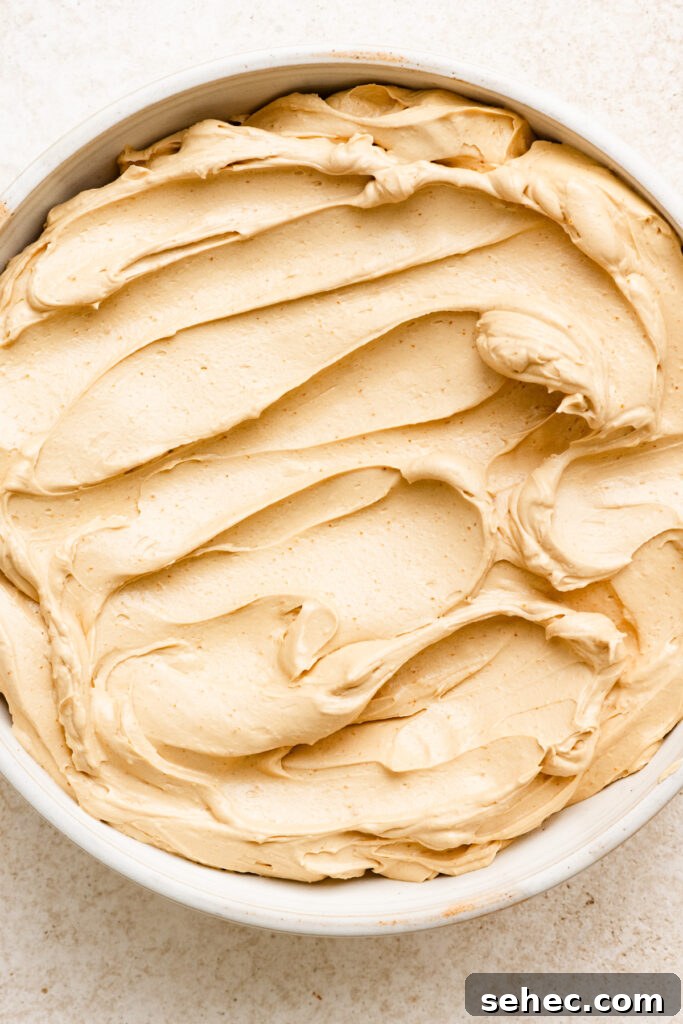
- Once the frosting is fluffy and smooth, mix in the vanilla and salt. Use the buttercream right away to frost cakes, cupcakes, or layered desserts.
Helpful Tips
- Clean Your Mixing Bowl and Whisk: Any trace of grease can stop egg whites from whipping properly. Wipe the bowl, whisk, and paddle attachment with a little fresh lemon juice before starting.
- Use Good Butter: Butter is the main flavor in this frosting, so choose one you enjoy. European-style butter gives a particularly creamy finish, but standard unsalted butter can also be used.
- Watch the Temperature: The meringue should be whipped to stiff peaks and the mixing bowl should feel cool or close to room temperature before you add butter. If the meringue is too warm, the butter can melt and the mixture may become soupy.
- A thermometer is helpful. Aim for the meringue to cool to about 75°F (23°C) before adding the butter.
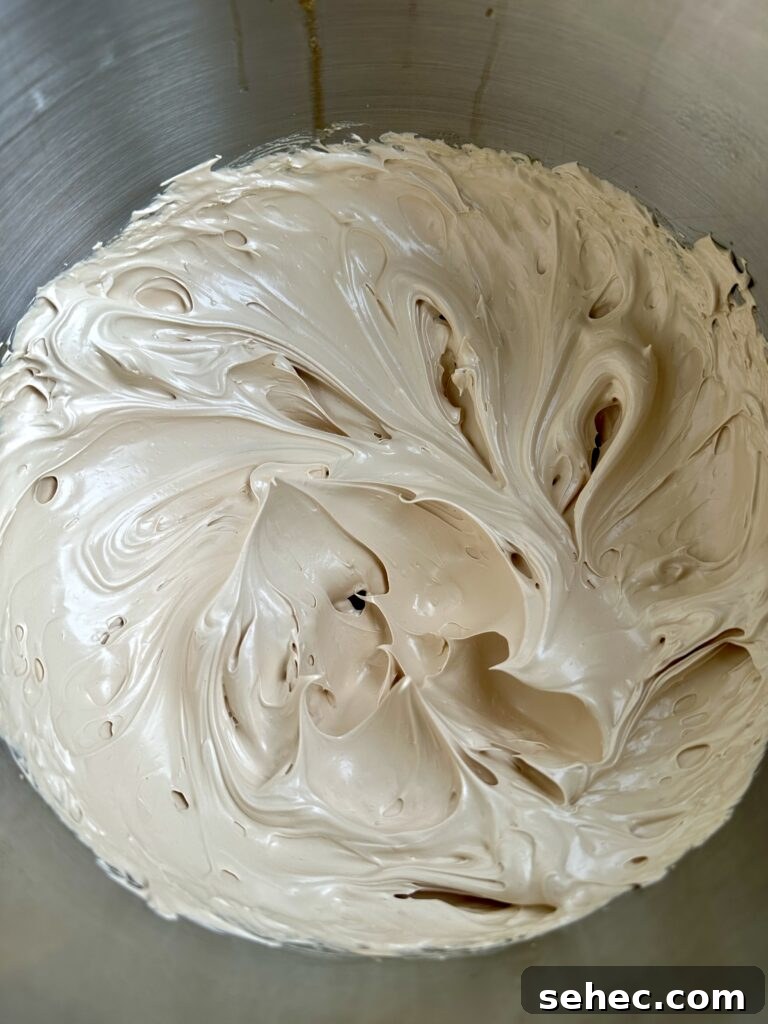
- Do Not Panic if It Curdles: Swiss meringue buttercream often looks loose, soupy, or curdled while the butter is being added. Keep mixing and allow the emulsion time to form.
- If the Buttercream Is Too Cold: If the frosting stays curdled after 5 to 10 minutes of mixing, gently warm the edges of the bowl over a double boiler for a few seconds, then continue whipping.
- You can also remove about one-quarter of the mixture, warm it briefly until slightly softened, then add it back to the bowl and beat until smooth.
- If the Buttercream Is Too Warm: If all the butter has been added and the mixture still will not thicken after several minutes of whipping, chill the bowl for about 10 minutes. Then whip again until the frosting becomes creamy and spreadable.
Buttercream Storage
Because this frosting is butter-based, it can soften or melt in a hot or humid room. Keep frosted cakes at cool room temperature and away from direct sunlight. If your kitchen is warm, store the cake in the refrigerator and bring it closer to room temperature before serving for the best texture.
Swiss meringue buttercream can be made up to two days ahead and kept covered at room temperature. It can also be refrigerated for up to two weeks. Chilled buttercream should be brought back to room temperature and whipped again until light, smooth, and fluffy before using.
Brown Butter Buttercream Frosting
Equipment
-
1 medium saucepan
-
1 electric stand mixer
-
1 medium pot for simmering water
Ingredients
- 260 grams (1 cup + 2 tablespoons) unsalted standard butter or European-style butter, 227 grams once browned
- 1 tablespoon full-fat milk powder, optional
- 180 grams (6 large) egg whites, room temperature
- 100 grams (1/2 cup) granulated sugar
- 200 grams (1 cup) light or dark brown sugar, loosely packed if using US measurements
- 227 grams (1 cup) unsalted standard butter or European-style butter, softened
- 2 teaspoons vanilla bean paste or pure vanilla extract
- Pinch flaky sea salt
Instructions
Make the Brown Butter
-
Place 260 grams of butter in a medium, light-colored saucepan over medium heat. The butter will lose water as it browns, leaving a smaller amount of browned butter.
-
Once melted, continue cooking for 5 to 8 minutes, swirling the pan occasionally. The butter will foam, and the milk solids will settle at the bottom and turn golden brown with a nutty aroma.
-
Remove from the heat and immediately whisk in the milk powder, if using.
-
Stir for 30 to 60 seconds, until the mixture smells deeply toasted and turns a rich golden color.
-
Set aside until the brown butter cools and becomes soft but solid. Do not use melted brown butter in the frosting. Refrigerate briefly to speed up the cooling process if needed.
Use a Double Boiler
-
Place the egg whites in the clean metal bowl of a stand mixer.
-
Add the granulated sugar and brown sugar. Set the bowl over a pot of gently simmering water, making sure the bowl does not touch the water.
-
Whisk continuously until the mixture reaches 160℉ (72℃). The sugar should be dissolved, and the mixture should feel smooth when rubbed carefully between your fingertips.
Whip the Meringue
-
Remove the bowl from the heat and dry the bottom with a towel. Place the bowl on the stand mixer and whip on high speed with the whisk attachment.
-
Whip for about 8 to 10 minutes, until the meringue is thick, glossy, and holds stiff peaks. The bowl should be cool or close to room temperature.
-
With the mixer on medium speed, add the softened butter and cooled brown butter one tablespoon at a time. Allow each addition to blend in before adding more.
-
The mixture may soften, deflate, look runny, or appear split. Keep mixing and continue adding the butter.
-
Once about half the butter has been added, stop the mixer and scrape the sides and bottom of the bowl with a silicone spatula.
-
Add the remaining butter and continue mixing until the frosting turns smooth and creamy. This can take 10 to 15 minutes after all the butter has been added.
-
If the buttercream does not come together, chill the bowl for 10 minutes, then whip again until silky.
-
Mix in the vanilla and salt on low speed until combined.
Smooth the Frosting
-
For fewer air bubbles, switch to the paddle attachment and mix on low speed for about 10 minutes. You can also smooth the frosting by pressing and folding it against the bowl with a silicone spatula.
Notes
Butter Used: Unsalted butter with 82% butterfat was used during testing.
Storage: Swiss meringue buttercream can be made up to two days ahead and kept covered at room temperature. It can also be refrigerated for up to two weeks. Bring chilled buttercream to room temperature and whip again before using.