Day Twenty: Two-Tier Cake Decorating Assignment
Day twenty was the final assignment day of the fifth module, and the task was to cover and decorate a two-tier cake. I had been looking forward to this cake decorating assignment because it felt like a chance to bring together everything I had been learning throughout the module. A two-tier cake always feels a little more special, and I had a clear picture in my mind of how I wanted the finished design to look. My original idea was much more detailed than the cake I eventually presented. I wanted to go all out with a large decorative bow on top, soft frills around the sides, and a more dramatic overall finish.
Unfortunately, this was one of those days when the cake simply did not want to cooperate. For some reason, everything seemed to go wrong at exactly the wrong time. What I imagined as a smooth and creative decorating session quickly turned into a series of changes, adjustments, and last-minute decisions. I decorated the cake, changed my mind, reworked it, and then ended up changing it again. In total, I altered the design three times before settling on the final look.
That process took far more time than I expected. Each change meant removing or adjusting part of the decoration, rethinking the design, and trying to make the cake look neat again. By the time I reached the final version, there was very little time left. Instead of the bold, frilly two-tier cake with a big bow that I had planned, I had to simplify everything and focus on creating a clean, presentable finish. It was not the elaborate design I had hoped for, but it was still a completed two-tier cake, and that felt like an achievement in itself.
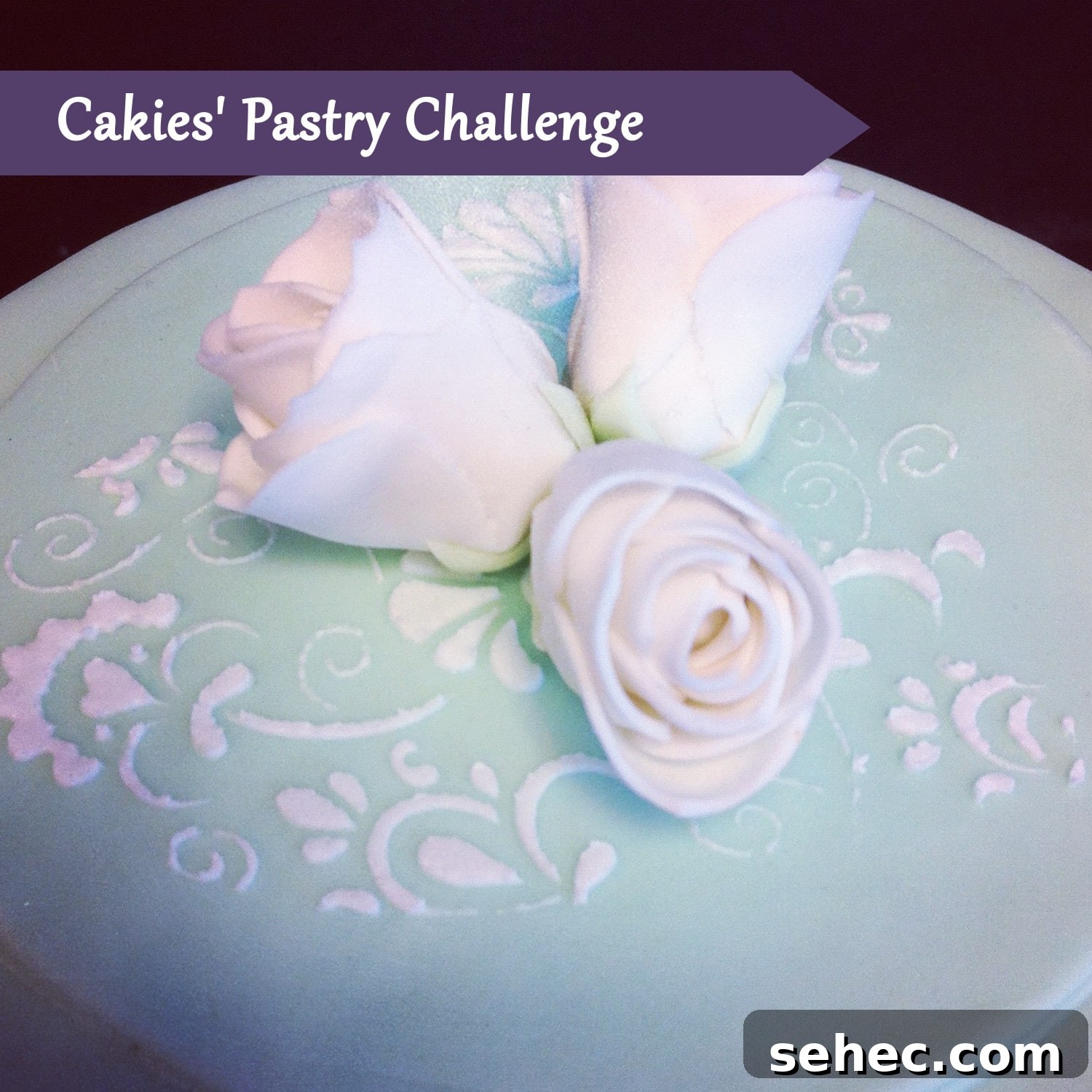
The final result was much simpler than my original plan, but the more I looked at it, the more I started to appreciate it. Sometimes a simple cake design can have its own charm. Instead of being covered in lots of decoration, the cake had a cleaner and more restrained look. It was not what I had set out to create, but it still had balance, neatness, and a finished appearance. In the end, I decided to call it my “minimalist” cake.
Minimalist cake decorating can be surprisingly effective, especially when the finish is tidy and the design does not look overcrowded. Although this cake was created because I ran out of time, the final style reminded me that not every cake needs to be heavily decorated to make an impression. A clean two-tier cake can still look elegant, even when the design is simple. The important part is that the cake is covered properly, the tiers look steady, and the decoration feels intentional rather than unfinished.
This assignment was also a useful reminder that cake decorating does not always go according to plan. Even when you begin with a strong idea, the process can change as you work. Sometimes a design does not translate as expected, sometimes there are technical problems, and sometimes the time pressure forces you to simplify. Learning how to adapt is just as important as learning the decorating techniques themselves. On this day, I had to let go of the original plan and make the best decision for the cake in front of me.
Looking back, I still like the cake. It may not have had the large bow, the frills, or the dramatic decoration I first imagined, but it represented a real moment in the learning process. It showed the challenges of working under pressure, the importance of flexibility, and the value of finishing a cake even when the day does not go smoothly. For a final assignment in the fifth module, it was definitely memorable.
So, while this two-tier cake decorating assignment did not turn out exactly as planned, it became a lesson in simplicity. I went into the day wanting to create something bold and decorative, and I came out with a clean, minimalist cake design. It was unexpected, but I still feel proud of it. Sometimes the cake you end up with is not the cake you imagined, but it can still be a cake worth appreciating.