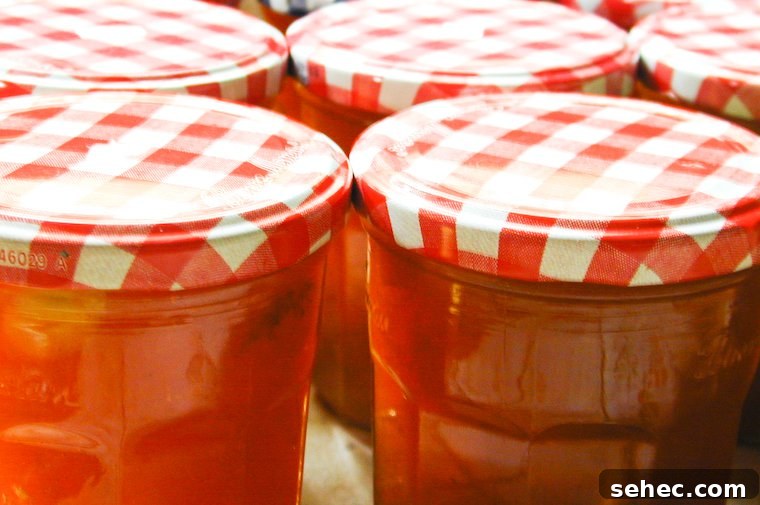
Apricot Jam with Almonds
Whenever I spend a few days at my parents’ house in the Vosges, my mother and I quickly begin making an invisible menu in our heads. We talk about what we want to cook, what we might bake, and which seasonal ingredients deserve our attention. On this visit, one idea kept coming back to me: homemade apricot jam. I had watched my mother make jam many times over the years, and I had prepared a few batches on my own, but somehow we had never actually made jam together.
At the Gérardmer market, one of the fruit stalls had a crate marked apricots for jam. The label was not especially clear, but the fruit was smaller than the regular apricots, not quite as picture-perfect, and more affordable. For jam-making, that is often exactly what you want: ripe, fragrant fruit with plenty of flavor. There was only one crate left, so we bought it with the quiet satisfaction that comes from getting the last of something good.
A couple of days later, we carried the apricots out to the garden table to pit and slice them. It was one of those simple moments that makes a recipe feel like more than a recipe. The sun was out, my mother and I were preparing fruit side by side, my father and my boyfriend were talking nearby, and my sister was resting inside. If great cheese comes from happy cows, I am convinced that great apricot jam comes from ripe apricots prepared in a sunny garden with someone you love.
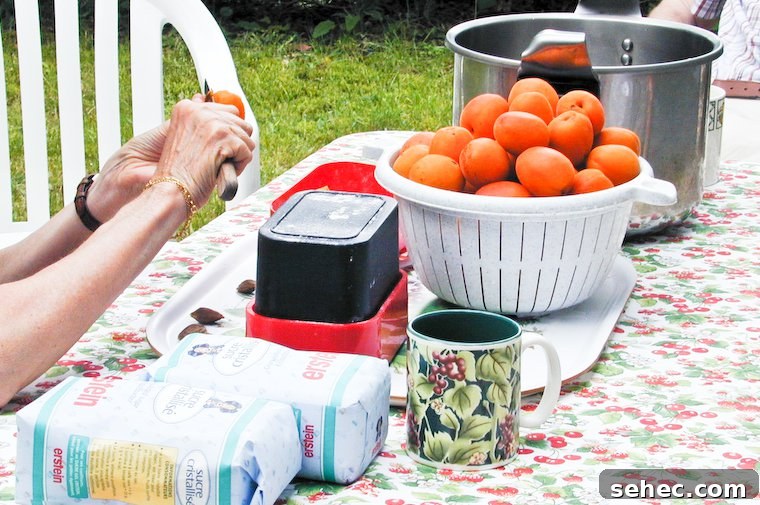
The pleasure of making jam with my mother is not only sentimental; it is also practical. When I make jam alone, I usually prepare just a couple of jars at a time. I do not eat huge quantities of jam, I like having different flavors on hand, storage space is limited, and good fruit in Paris can be expensive. With my mother, the scale changes completely. A jam session can easily mean a dozen jars, especially when the fruit has been picked ourselves or bought at a good price from the market.
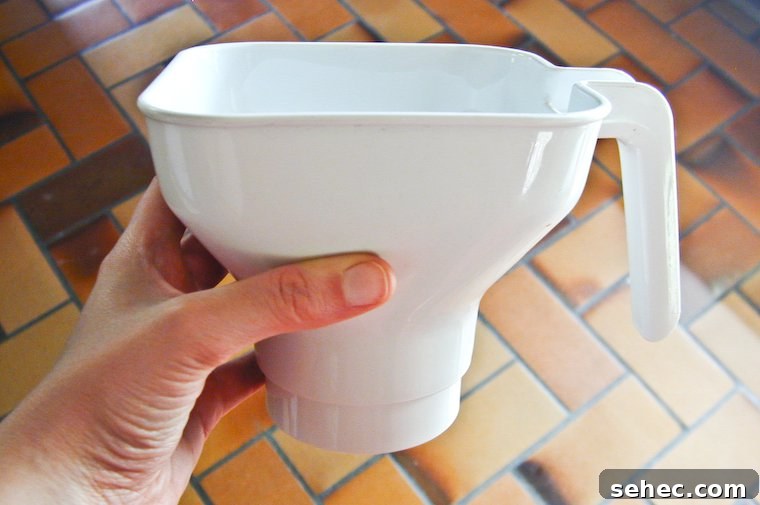
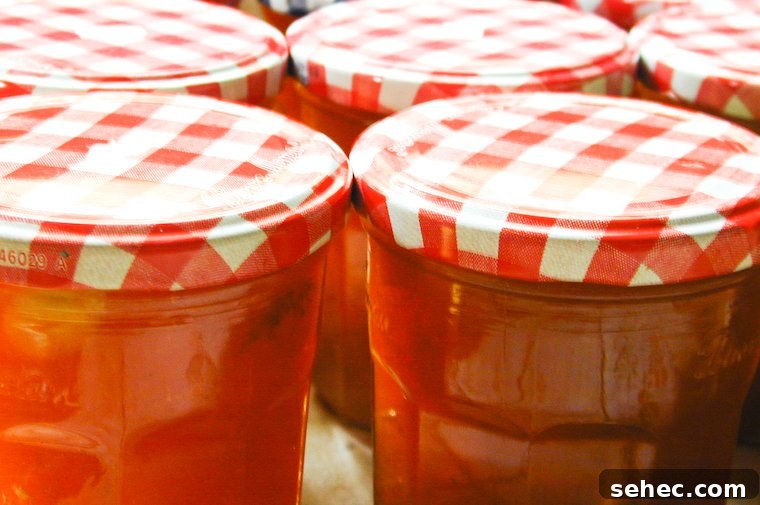
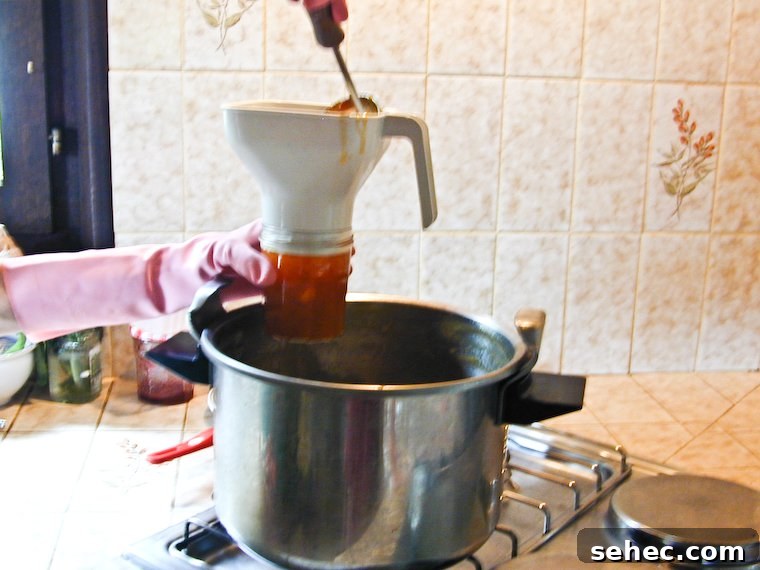
There is also something deeply satisfying about putting two kilos of fresh apricots and sugar into a large pot, cracking some of the stones to collect the tender almonds inside, and stirring the bubbling mixture with a long wooden spoon. The scent becomes warmer and deeper as the fruit cooks down, turning from bright orange to amber. When my mother decides the jam has reached the right consistency, the hot mixture is ladled into clean jars with the help of a wide jam funnel. The apricot almonds should be shared evenly among the jars, because those little crunchy bites are one of the best parts.
Then comes the hardest stage: waiting. The jars need time to cool, settle, and rest in a cool, dark place. In a few months, when the apricot and almond jam has deepened in flavor and the jars glow like captured summer, I know I will be very happy to open one.
Important note: this apricot jam recipe uses a small number of the almonds found inside apricot stones. They add a delicate almond flavor and a pleasant crunch. However, apricot kernels, like bitter almonds, contain hydrocyanic acid. The body can handle very small amounts, but eating 30 to 50 kernels in a short period of time can be dangerous or even fatal for an adult. Using only a few kernels spread across several jars of jam is common in traditional recipes, but the warning is important and should be taken seriously.

Have you tried this recipe?
Share your homemade apricot and almond jam photos and enjoy the taste of summer in a jar.
Prep Time: 40 minutes
Cook Time: 30 minutes
Total Time: 1 hour, 10 minutes
Makes 5 to 6 jars, about 370 grams or 13 ounces each
Ingredients
- 1.2 kilograms (2 2/3 pounds) ripe apricots
- 1 kilogram (5 cups) sugar, adjusted to match the weight of the prepared fruit
Instructions
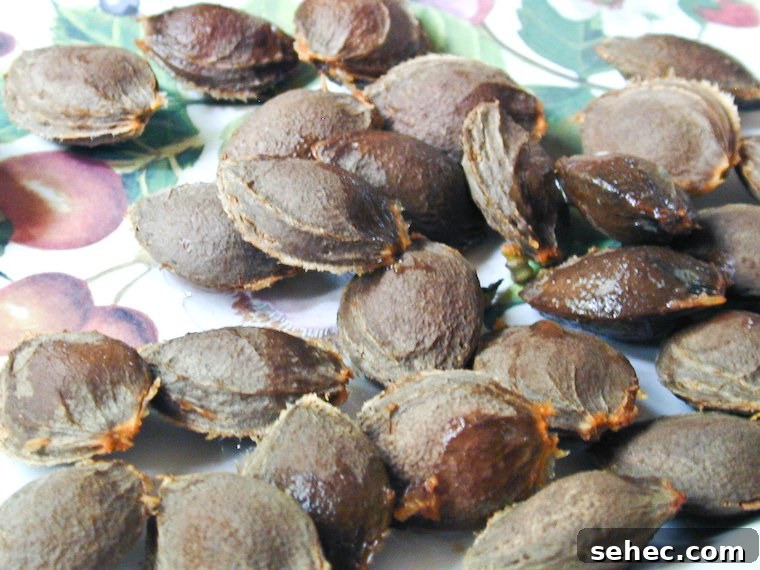
- Rinse the apricots, scrubbing them gently if needed, and dry them well. Cut each apricot in half, remove the stone, and slice the flesh into small pieces. Set the stones aside.
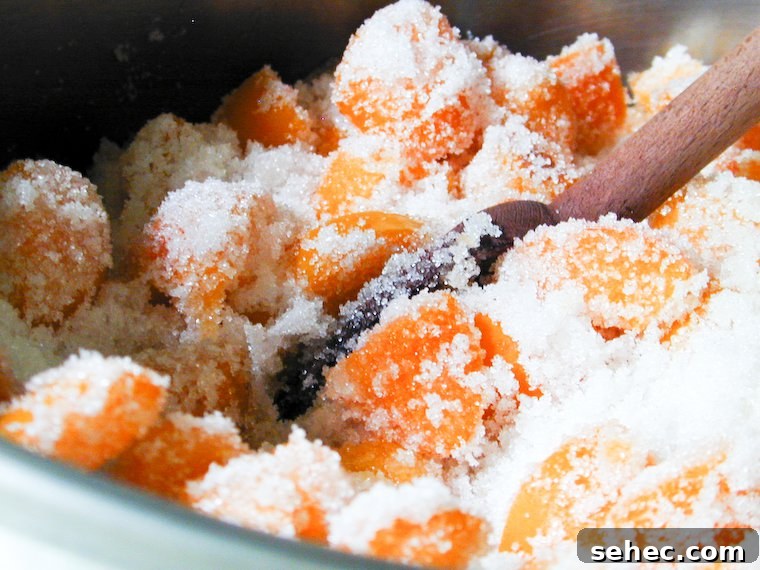
- Weigh the prepared apricot flesh. Transfer it to a large, heavy pan and add the same weight of sugar. If you start with 1.2 kilograms of whole apricots, you should have about 1 kilogram of prepared fruit, but weighing it is the best way to get the right balance.
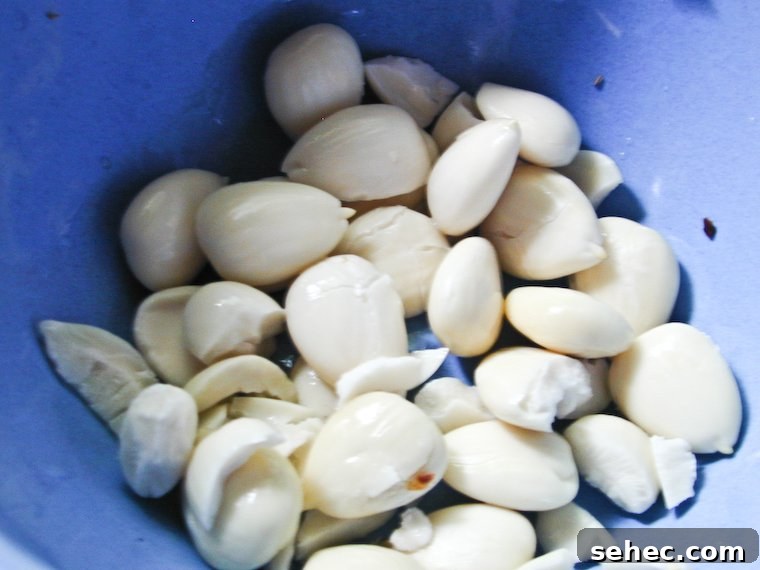
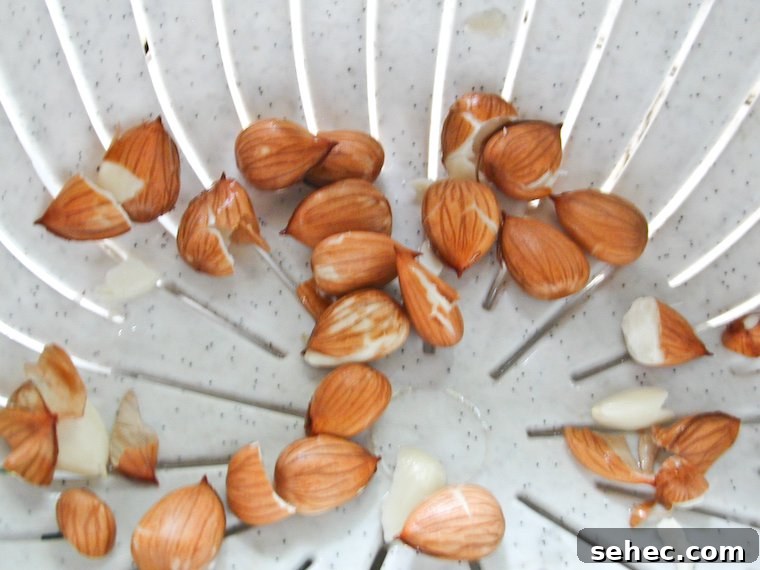
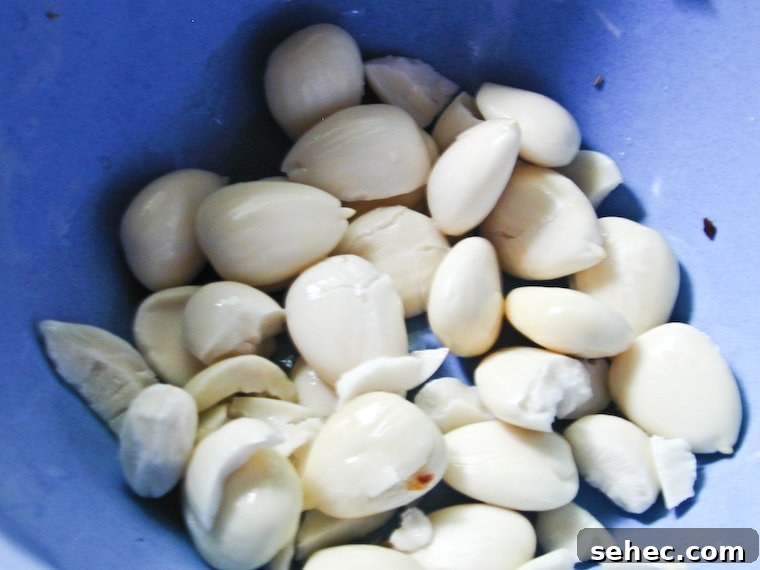
- Crack about 18 of the apricot stones with a nutcracker to remove the kernels inside, keeping the safety note above in mind. Bring a small saucepan of water to a boil, remove it from the heat, and add the kernels. Let them sit for about 30 seconds to blanch, then drain and rinse under cold water.
- Slip off the papery skins from the blanched kernels. Reserve the peeled apricot almonds and discard the shells and skins.
- Wash the glass jars and lids carefully. Soak them in boiling water for 10 minutes, then place them upside down on a clean kitchen towel to dry.
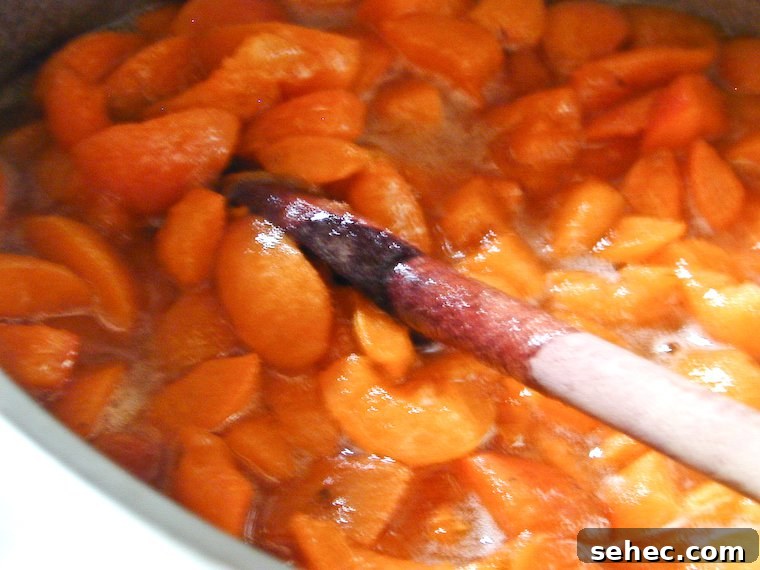
- Place a saucer in the freezer; it will be used later to test the set of the jam. Put the pan over medium heat and stir often with a wooden spoon until the apricots soften and release their juices. Increase the heat and bring the mixture to a boil. Cook for 20 to 25 minutes, maintaining a gentle boil and stirring regularly.
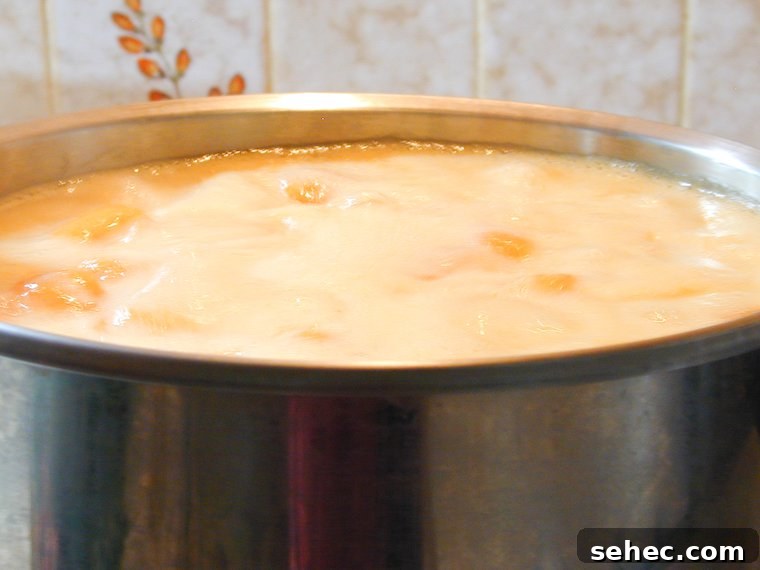
- Watch the jam closely. At first, the mixture may nearly double in volume and produce a thick, pale orange foam, which is why a large pan is important.
- After a while, the foam will settle, the mixture will reduce, and the color will deepen to a darker orange. About 15 minutes into cooking, stir in the peeled apricot almonds.
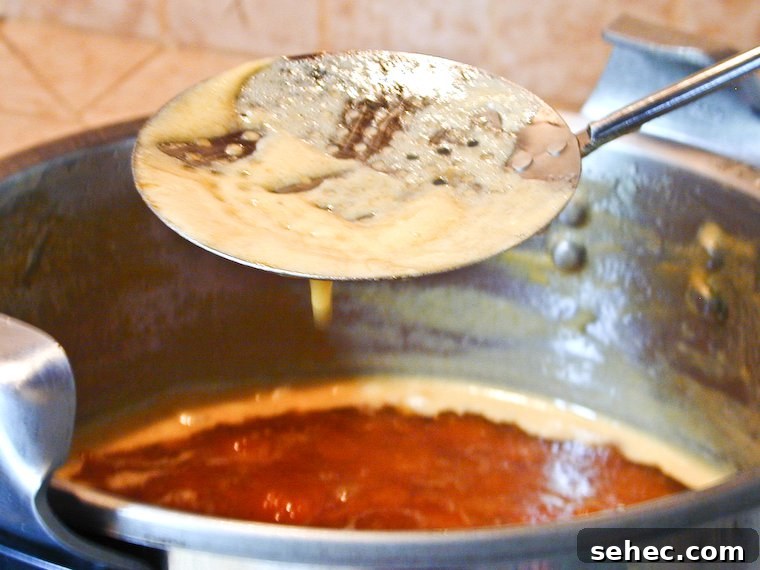
- Continue cooking until the jam begins to thicken. The change is subtle: when you lift the wooden spoon, the drops should look heavier and fall more slowly. Take the saucer from the freezer, place a drop of jam on it, and tilt the saucer. If the jam runs too quickly, continue boiling and test again after a few minutes.
- If you prefer a clearer jam, skim the foam from the surface with a slotted spoon. This step is optional, and the foam can be saved as a delicious topping for yogurt.
- Carefully pour the very hot jam into the prepared jars, filling them to the top. Use heatproof gloves and a jam funnel if you have one. Wipe away any spills, close the lids tightly, and let the jars cool upside down at room temperature. Store the apricot and almond jam in a cool, dark place for a few months before opening.
Notes
Important disclaimer: The jar-sealing method described here, which involves boiling the jars, closing them tightly, and letting them cool upside down, has been widely used in France for generations. For the highest level of safety in home canning, use properly sterilized equipment and follow current home-preserving guidelines.